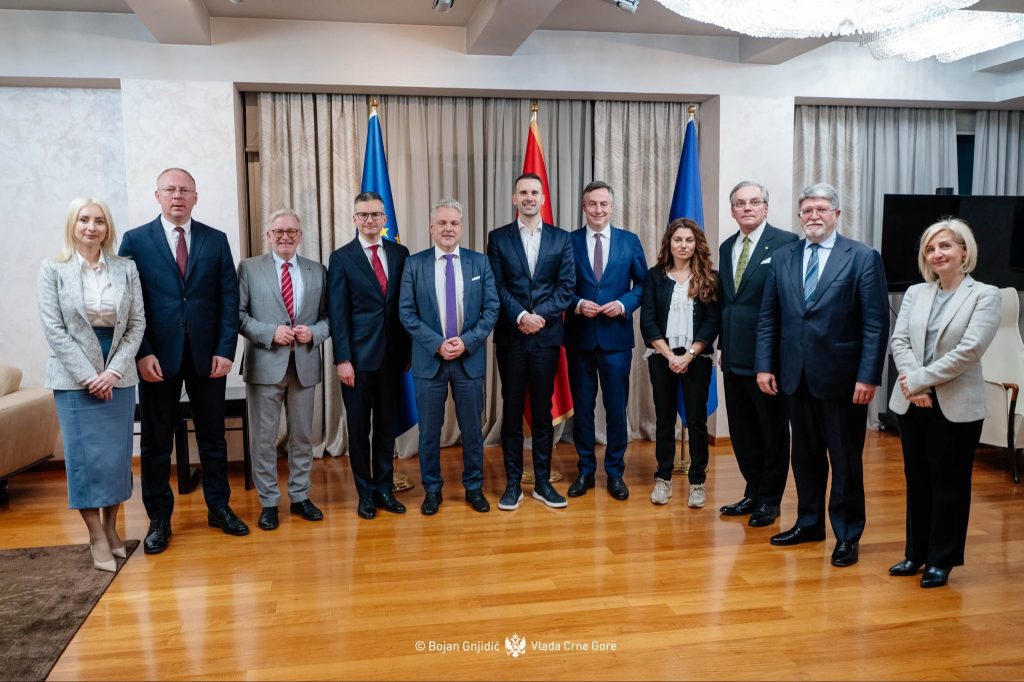
BRUSSELS – A delegation of the Committee on Foreign Affairs of the European Parliament (AFET) visited Podgorica and Tirana from 16 to 18 February, led by Committee Chair David McAllister (EPP, Germany). The visit enabled AFET MEPs to evaluate the state of play of accession negotiations and outstanding reform priorities in each country, and reaffirm Parliament’s commitment to supporting both countries on their European paths.
According to McAllister, “Montenegro and Albania are recognized by European Union officials as the most advanced candidate countries in the integration process”.
“The closing of the chapters in the accession negotiations with the EU demonstrates that Montenegro is committed to the future, and the focus should be on the implementation of reforms”, David McAllister said at a press conference in Podgorica, it was reported by Vijesti.
He noted that the report of the European Parliament’s Rapporteur for Montenegro, Marjan Šarec, “will be on our desk next week”.
In addition, he encouraged “all actors to stick to a common goal, so that Montenegro will become the next EU member state”.
“First, the focus should be on the implementation of reforms, and this implies judicial reform. The adoption of the law alone is not enough, reforms must be implemented”, McAllister stressed.
“The strong external threats lead to polarization in Montenegro”
Speaking about the current political situation in Montenegro, David McAllister mentioned “strong external threats that lead to polarization”.
Asked to clarify this position, McAllister noted that “most citizens support Euro-Altantic integration”, but that “Russia and Serbia have established media channels to achieve their goals”.
“Those activities were conducted to strengthen pro-Russian attitudes. Certain media outlets portray Montenegro as a ‘second Serbian state’, they legitimize the Kremlin’s policies and incite anti-NATO sentiment… There are also some academics who influence public opinion”, he remarked.
Prime Minister of Montenegro Milojko Spajić stated on X that “it is a pleasure to hear that AFET representatives are strong advocates of enlargement of the EU and that Montenegro is fully supported on its EU accession path”.
“Closing the negotiating chapters with the EU is a key priority of Montenegro in the year in which we mark the 20th anniversary of the restoration of independence and we expect the political support of all 27 member states. In the meeting with the delegation of the European Parliament’s Committee on Foreign Affairs, led by David McAllister, we reaffirmed our political and institutional commitment to meeting the commitments of the European agenda and the Growth Plan”, Spajić noted after the meeting with AFET delegation.
“There is no place for the violent protests in a functioning democracy”
In Tirana, David McAllister stated that the “implementation of the legislation is very important”, stressing that MEPs are concerned about the political polarization in the country.
“There is no place for the violent protests in a functioning democracy… We think that the EU integration is a priority, but are we concerned about political polarization. Most of you need to engage in a dialogue…. So, there is still a lot of work to do”, he said, it was reported by the Albanian media.
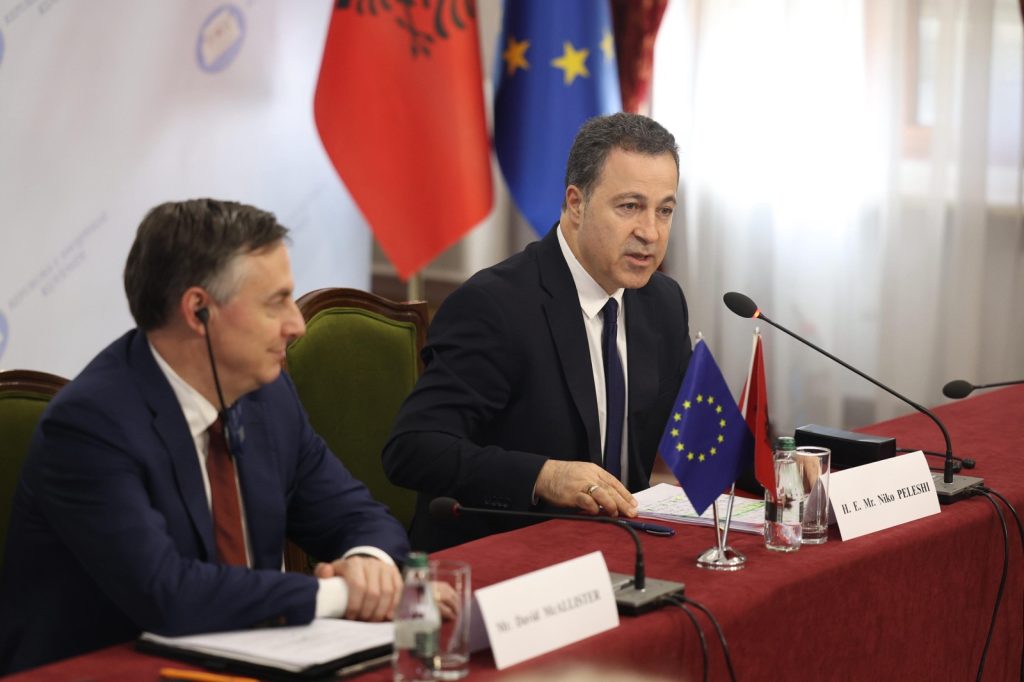
In the meeting with the AFET delegation, Elisa Spiropali, Albanian Minister for Europe and Foreign Affairs, described 2026 as “a key year to implement the agreed plans”. She also thanked the EP “for its continued support of Albania’s EU path”.
For his part, Niko Peleshi, a Speaker of the Assembly, emphasized that Albania “aims to complete negotiations by 2027 and achieve European Union membership by 2030”.
He also reaffirmed Albania’s alignment with the European Union’s foreign and security policy and described the parliament’s cooperation with the European Parliament as central to advancing EU membership