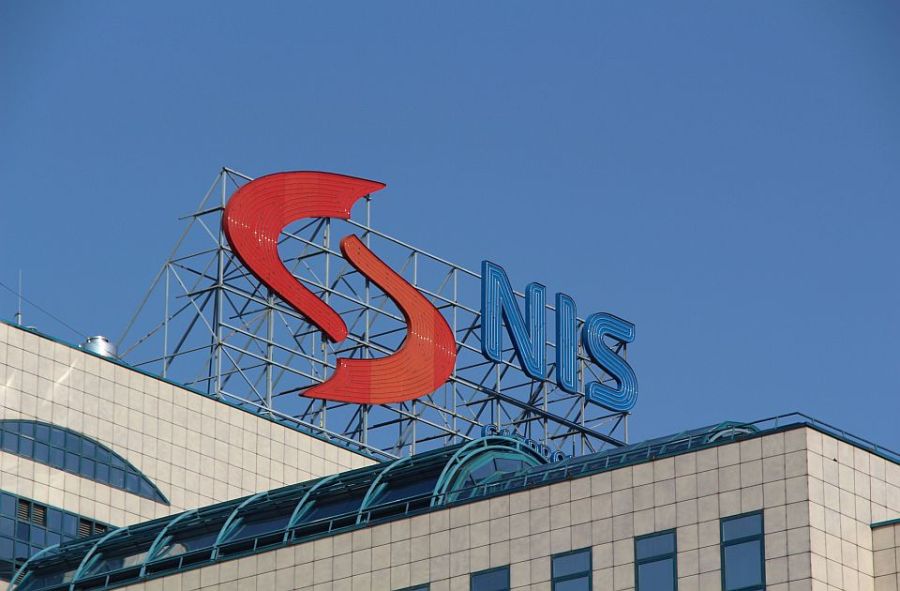
WASHINGTON / BELGRADE – The US Treasury Department’s Office of Foreign Assets Control (OFAC) has issued a license allowing Serbia’s Oil Industry (NIS) and other entities to conduct negotiations until 24 March 2026. The license, however, does not permit the company to resume normal operations.
According to the license, seen by the Serbian media outlet Insajder, negotiations are underway with the Hungarian oil company MOL. The document explicitly states that any agreement must demonstrate a permanent and complete exit of Russian ownership and control from NIS.
The sanctions preventing NIS from operating have been in force since early October. This has led, among other consequences, to the oil refinery in Pančevo, the largest oil procurer of the Serbian market, to stop functioning.
MOL has been informally mentioned as one of the main potential buyers of the Russian stake in NIS for several months.
As reported by Insajder, the document signed by OFAC’s Deputy Director for Licensing on 23 December, authorises license holders to engage in all transactions that are ordinarily incident and necessary to negotiate an agreement on the permanent divestment of ownership and control of Russian entities and their intermediaries from NIS.
According to Insajder, Section 1 of the document lists the following as license holders: the law firm Baker & McKenzie LLP; NIS a.d. Novi Sad; MOL Hungarian Oil and Gas Public Limited Company; the Government of the Republic of Serbia; PJSC Gazprom Neft; PJSC Gazprom; and JSC Intelligence.
However, the license makes clear that it does not authorise the execution of any agreement to divest Russian ownership and control arising from the approved transactions. It is specifically noted that implementing such an agreement would require separate authorisation from OFAC.
Serbian President Aleksandar Vučić confirmed several days ago that there is information indicating that Gazprom representatives are negotiating the sale of NIS to Hungary’s MOL.
However, he said yesterday that he has not yet seen the proposed solution for NIS reported by a Russian portal, naming MOL, that would satisfy both the Russian and Serbian sides. He stressed that Serbia’s problem will not be resolved merely by extending the deadline for negotiations for the Russian side, adding that the issue must be addressed swiftly because “time is running out” for Serbia.
The largest stake in NIS is still held by Gazprom Neft, a subsidiary of Gazprom, with 44.9 per cent, while the Serbian state owns 29.9%. The remainder is held by minority shareholders.
The United States placed NIS on its sanctions list on 10 January due to what it described as a “secondary risk,” namely, majority Russian ownership. The sanctions are intended, among other things, to prevent the financing of the war in Ukraine through revenues generated by Russian energy companies.
In the meantime, NIS’s ownership structure has been altered several times, but it remains majority-owned by Russian companies. Gazprom withdrew from NIS’s ownership in September, after which one of the significant shareholders became another Gazprom-managed company, the St. Petersburg–based firm Intelligence.