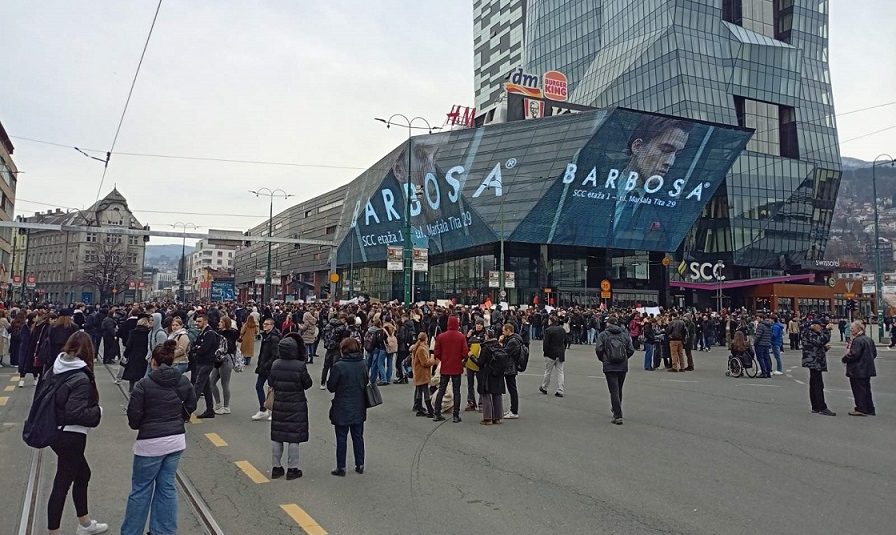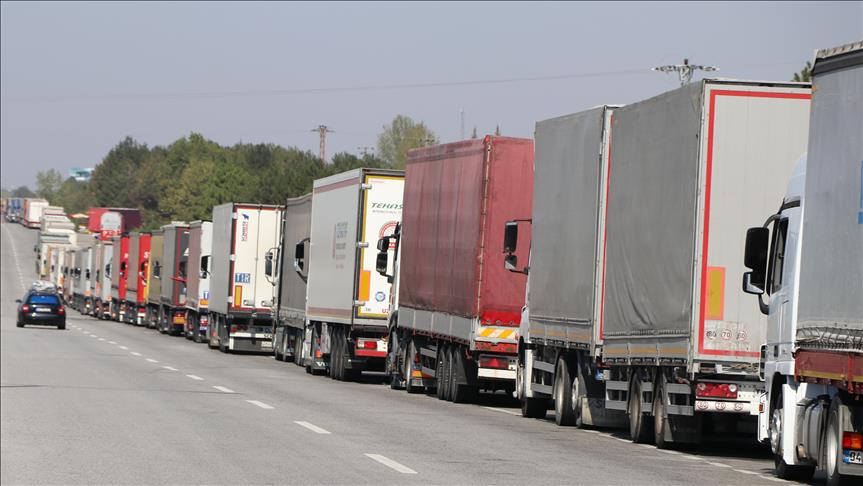
BELGRADE – Truck drivers from Bosnia and Herzegovina, Montenegro, North Macedonia and Serbia blocked freight border terminals towards the Schengen Area today, to protest the new EU Entry-Exit system (EES), which has been gradually implemented since October 2025. The blockade, which the transport workers claim will last until the demands are met, began at noon, which implies that there are no imports and exports in these countries through border crossings with the EU.
Transport associations from the four countries in the region claim that the ESS “threatens their ability to work”, since a maximum stay of 90 days in the Schengen Area over a period of 180 days “is not sufficient for professional truck drivers from non-EU countries”. In this context, the EU is urged to grant truck drivers the status of cross-border workers.
Virtually all crossings had been blocked, including the entrance and exit to the Port of Bar
The President of the Association of Carriers of Serbia, Neđo Mandić, told RTS today that virtually all crossings had been blocked.
“The entire Schengen Area is blocked by Bosnian, Montenegrin, Serbian and North Macedonian truck drivers. We all started at the same time, we all have the same requirements, and we all hold all borders towards the Schengen Area”, Mandić said.
Vijesti reported that the trucks owned by the Association of Carriers of Montenegro were parked at the extensions near several border crossings, including the entrance and exit to the Port of Bar, in front of the free zone terminal, and that the blockade was expected to last at least three days.
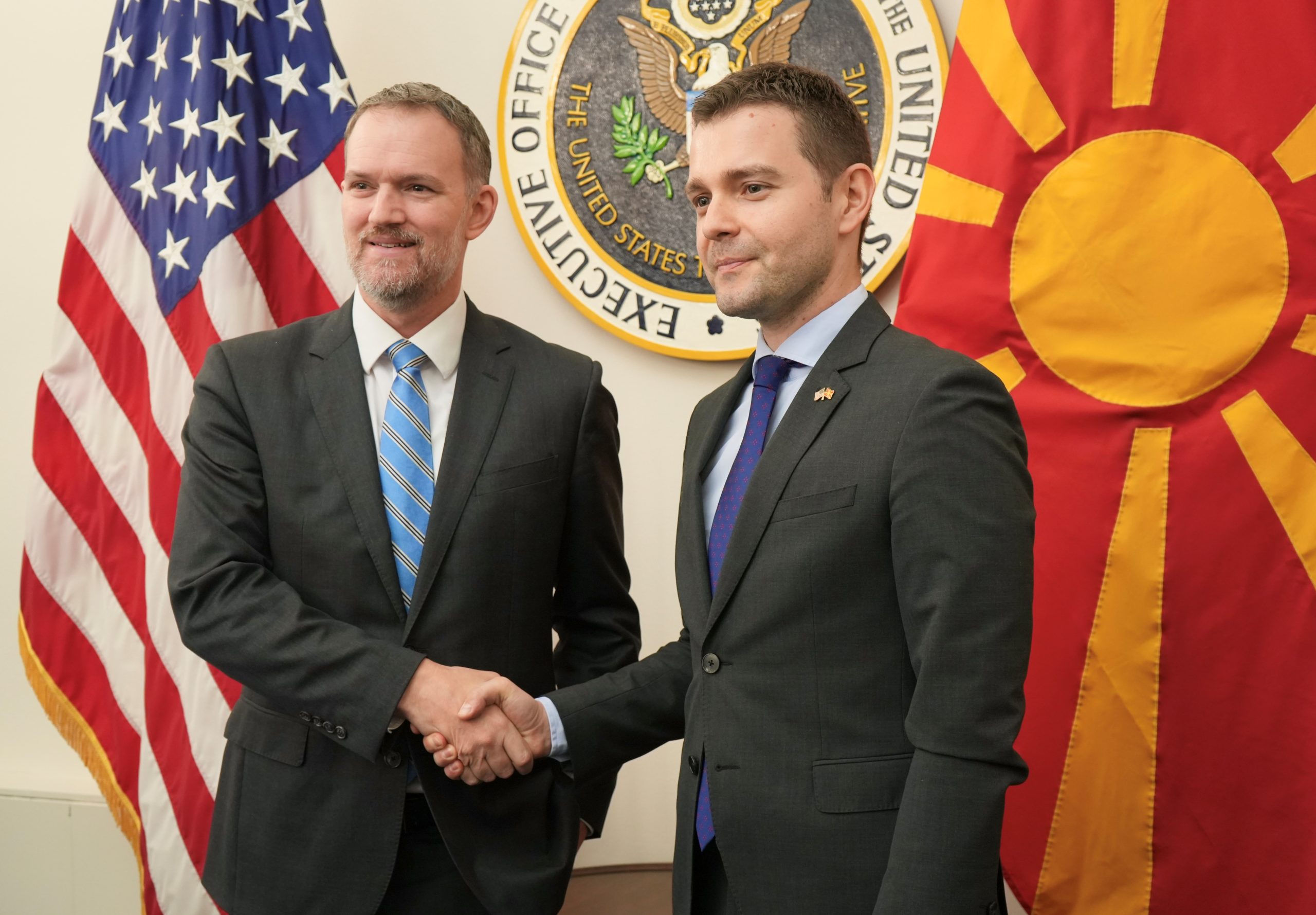
Edin Forto, the Minister of Communications and Transport of Bosnia Herzegovina, told N1 BiH that he understood the dissatisfaction and supported the protest of truck drivers.
“Today, truck drivers are not begging, they are demanding the right to work, we are appealing to the EU and Brussels, all these countries. What can our representatives do? They can institutionally act together towards the European Commission, towards the EU embassies in BiH, of all member states. Only through joint action can we achieve results”, Forto said.
Several media outlets in Serbia reported that the Serbian Chamber of Commerce and Eurochambers, which brings together chambers of commerce across Europe, sent a letter to the institutions of the European Union and the governments of the member states, “warning of the long-standing problem of applying the rule on the restriction of stay to 90 days in any 180-day period for professional truck drivers”.
The letter states that more than 60 percent of the total trade of the region takes place with the European Union, which is why delays in transport jeopardize logistics chains, business relations and contractual obligations, both when it comes to companies from the region and companies from the EU.
Portal Sloboden pečat quoted Biljana Muratovska, the Secretary General of the Association of Employers of Transport Companies “Makam-trans” from North Macedonia, that truck drivers “do not seek any preferential solutions, but want to be equal with employees in rail and air transport, as well as with those who work in shipping industry”.
EC: This is an issue that has our closest attention and something which is being worked on
The EES implies digital registration of citizens of non-EU countries, when traveling to 29 European countries. The system collects and stores biometric data such as fingerprints, facial images and other travel information, which will eventually replace the current passport stamping system.
Marcus Lamer, a European Commission Spokesman, said today that the EC was aware of the concerns raised by truck drivers from the Western Balkans, that it was closely monitoring the situation and that it was in contact with partners in the region, FoNet agency reported.
Lamer stressed at a media conference that there were no new rules, that the Schengen Agreement provided for a certain flexibility, and that there might be a need for some professions to stay longer than 90 days, “as these are professions that require a lot of movement, such as truck drivers or athletes, so a great attention is paid to the issue”.
“This is an issue that has our closest attention and something which is being worked on and is being thought about”, Lamer said, adding that it would be discussed later this week, when the visa strategy is scheduled to be discussed.