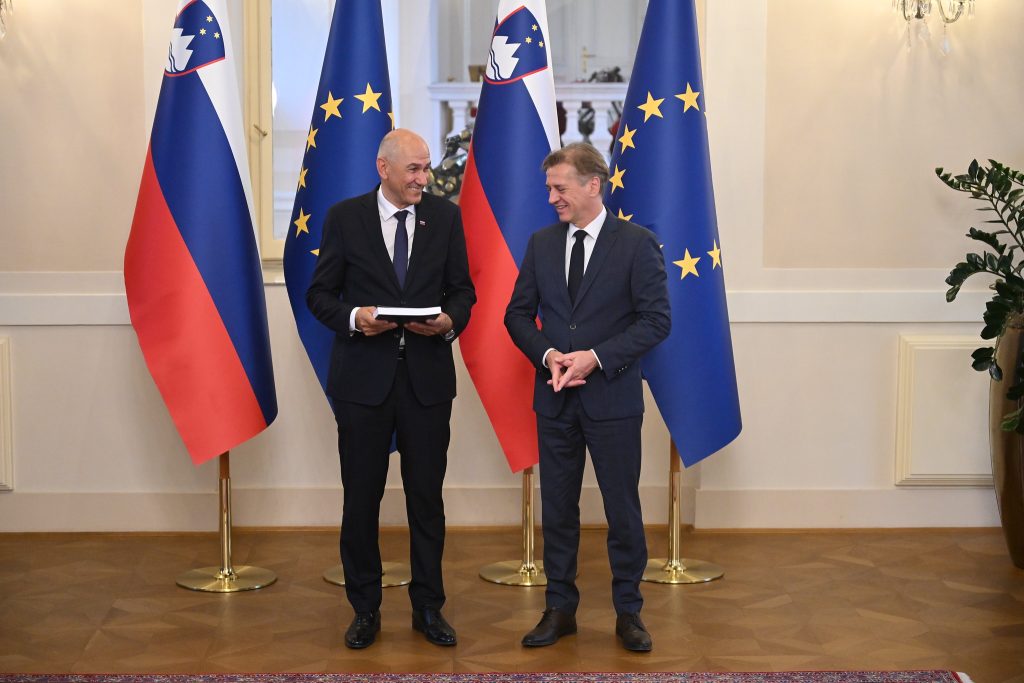
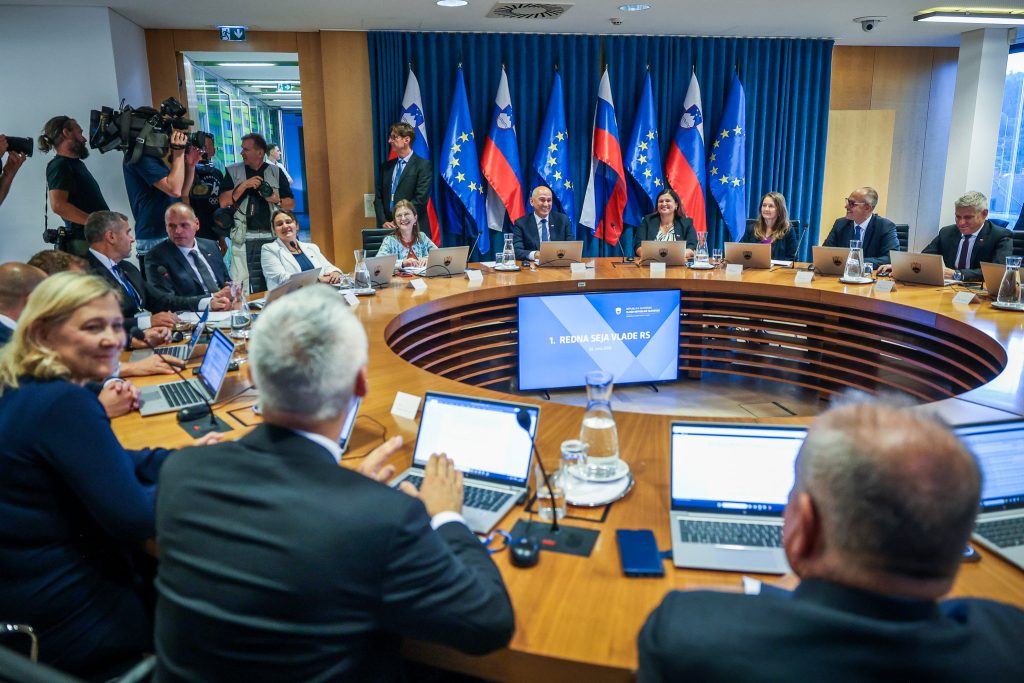
Slovenia’s parliament approved Janez Janša’s centre-right government last week, completing a political reversal months in the making.
It marked the end of four years under the center-left government of Robert Golob, who narrowly won parliamentary elections in March but failed to secure the coalition he needed to remain in power.
Janša was approved as prime minister-designate on 22 May after he formed a five-party governing coalition, which now holds 43 seats in the 90-seat parliament. It will rely on votes from the pro-Russian “Resni.ca” party to pass legislation requiring an absolute majority.
Janša’s appointment marks the return of a veteran politician whose last term sparked fears that his illiberal governance at home could spread beyond Slovenia’s borders. As his next term begins, observers in Slovenia, Brussels, and the Western Balkans are watching to see what role the EU country will play in Europe under his leadership.
Janša has served three previous terms as Slovenia’s prime minister. While his career has been marked by controversy, concerns about his return to office primarily stem from his 2020–22 term, during which he was widely criticised for policies that undermined democratic norms.
Janša’s third administration passed pandemic policy through decrees later ruled unconstitutional, installed loyalist appointees at the national public broadcaster, and carried out sustained attacks on journalists. Anti-government protests took place continuously from 2020 until Janša’s electoral defeat in 2022.
The tumult of this period raised concerns about Slovenia’s democratic health under Janša and the potential disruptions his government could bring to the EU. As Janša begins his fourth term, similar concerns are resurfacing.
“In Brussels, his nationalist agenda is expected to clash with some European policies, particularly anything on climate, LGBTQ+, or women’s rights,” writes EUobserver Editor-in-Chief Elena Sánchez Nicolás. His coalition has also pitched plans to reform public television, end direct public funding for NGOs, and restrict the right to strike.
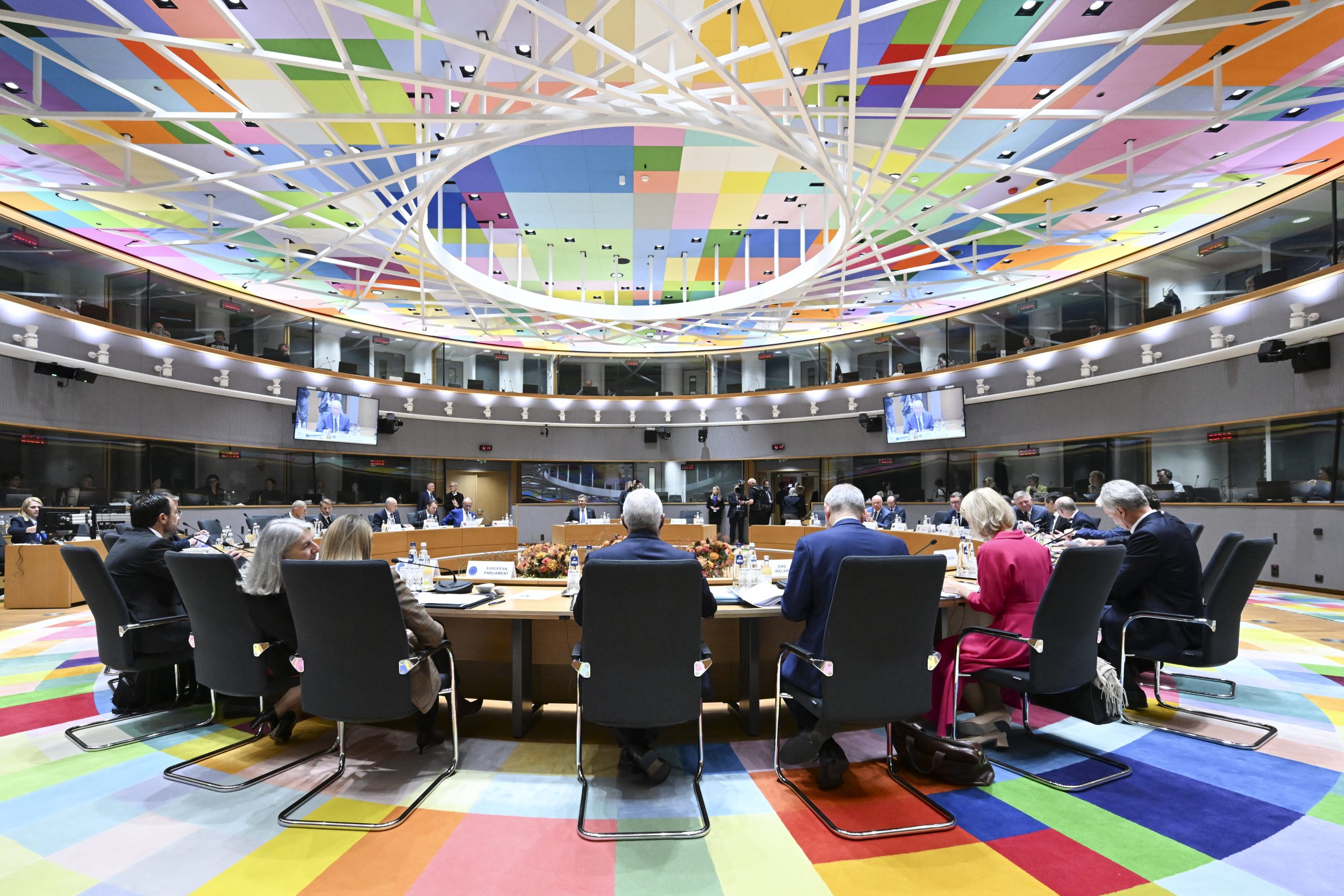
The European Parliament’s response to Janša has been pointed. In February, the Socialists and Democrats released a statement urging the European People’s Party to expel SDS. “There must be no place in Europe’s democratic family for parties that align themselves with those who pose a direct threat to the European project, our security and sovereignty,” the statement read.
Slovenian MEP Matjaž Nemec similarly cautioned that Janša could use EU politics as a vehicle for nationalist positioning. “For Brussels,” he writes, “the greater concern is that the new coalition could make Slovenia a less predictable and reliable partner in the [European] Council.”
Janša’s close ties to leaders like Viktor Orbán and Robert Fico – figures associated with the wave of right-wing, illiberal leadership reshaping European politics – have deepened these worries. With parallels in their positions on migration, media, and the rule of law, many observers are questioning whether Janša could become another disruptive member of the EU aligned with Europe’s illiberal camp.
Positioning of the European stage
Analysts say these comparisons are complicated by Janša’s positions on European security, which are likely to shape his approach to the EU in his fourth term.
Where Orbán and his allies cultivated ties with Moscow and obstructed EU consensus on Ukraine, Janša has been a consistent advocate for Kyiv since Russia’s invasion in 2022. He considers both Russia and China threats to European security, advocates for strengthening EU defense and the NATO alliance, and supports Ukraine’s integration into the bloc.
These are the issues where Janša is likely to seek influence in Brussels, says Tomaž Deželan, a professor of political science at the University of Ljubljana.
“He wants to be considered a force,” Deželan told European Western Balkans, adding that as the leader of a small member state with limited strategic importance in major geopolitical issues, Janša will likely seek opportunities to present himself as a strong, consequential leader.
Deželan points to Janša’s March 2022 trip to Kyiv alongside the Polish and Czech prime ministers, which made them the first Western leaders to visit Ukraine since the invasion began. The visit helped Janša position himself as a relevant actor on European security, Deželan says.
This is the type of political capital Janša is likely to pursue in the EU, rather than earning a reputation as a “dark” illiberal figure, Deželan predicts. He adds that Janša understands the EU’s relevance to Slovenia and remembers that overt illiberalism has come with electoral costs at home in the past.
Even so, Deželan expects tensions over issues such as press freedom and civil liberties to continue to arise throughout Janša’s term. He also does not expect the government to pursue an agenda promoting democratization, human rights, or a more social Europe. “We are still living in an era of illiberalism and democratic downslides,” he says.
A test for Slovenia’s credibility in the Balkans
Janša’s return also carries implications for the Western Balkans, as he is both a vocal supporter of the region’s European integration and the subject of regional controversy.
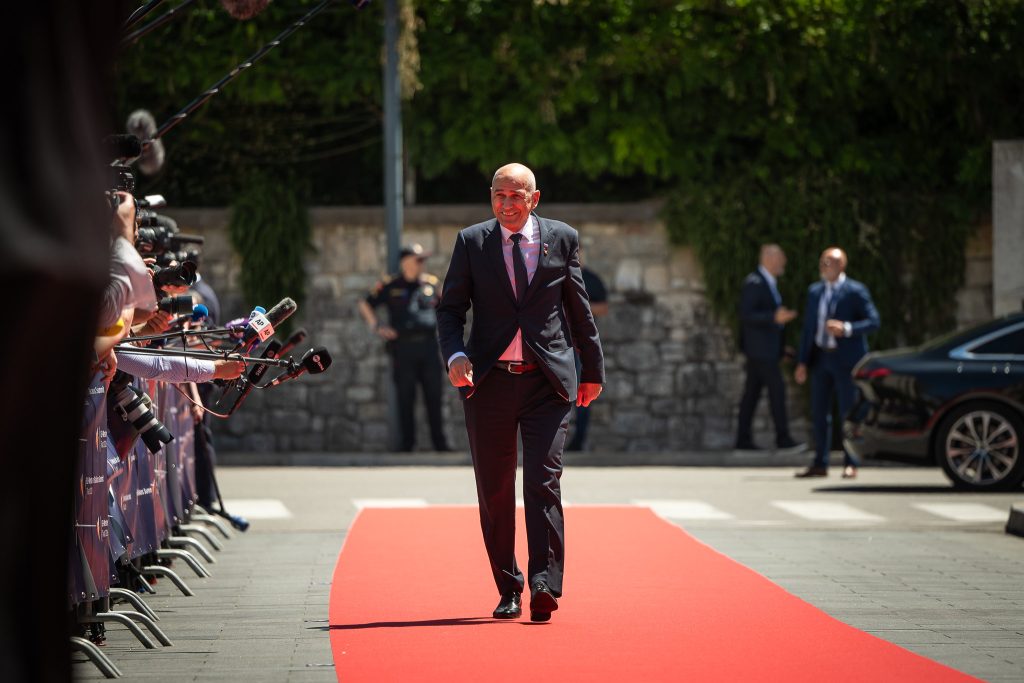
Janša has long been an advocate of EU enlargement in the Western Balkans, and his new government signals that the issue remains a policy priority. Janša attended the EU–Western Balkans Summit in early June, where he reiterated this position and said candidate countries should be integrated into European structures even before full accession.
As the first former Yugoslav republic to join the EU, Slovenia has often been held up as a model of successful, stable membership and has played a key part as an interlocutor in Western Balkan enlargement discussions. Yet analysts argue that domestic political tensions and foreign-policy controversies under Janša’s leadership have undermined Slovenia’s credibility in that role.
Janša made headlines in 2021 following the leak of a non-paper – an unofficial document circulated in closed discussions in the EU – proposing the redrawing of Bosnia and Herzegovina’s borders along ethnic lines, joining Serb- and Croat-majority territories to Serbia and Croatia and folding Albanian-majority areas of Kosovo and North Macedonia into Albania. Though Janša denied authorship, the document was widely attributed to his office and sparked fears across the region of renewed ethnic conflict.
The incident demonstrated that under Janša, Slovenia “became a subject of illiberal trends and is no longer considered the lighthouse of transition to liberal democracy and Europeanisation it used to be,” analysts Faris Kočan and Marko Lovec wrote in 2021.
The doubts of Slovenia’s credibility persist today. Augustin Palokaj, a journalist for KOHA, argues that Slovenia’s image as a stable EU member has been complicated by signs that Janša is following the populist playbook of other Central European leaders, as well as recent examples of Slovenian politicians bringing domestic disputes into the European arena.
Palokaj points to disputes between Golob and Janša over alleged election interference and SDS criticisms of European Commissioner for Enlargement Marta Kos. Janša has said it is “not acceptable” for Kos to maintain her position, alleging that she used to be an informant for the Yugoslav secret police, claims that have fueled speculation the SDS will push for her removal. Deželan, however, views this as political signaling aimed at appeasing Janša’s base rather than a serious objective.
While it can still serve as an example for the region, Palokaj writes, “Slovenia is also proving that even in Europe today, things are not as we are used to seeing them.”