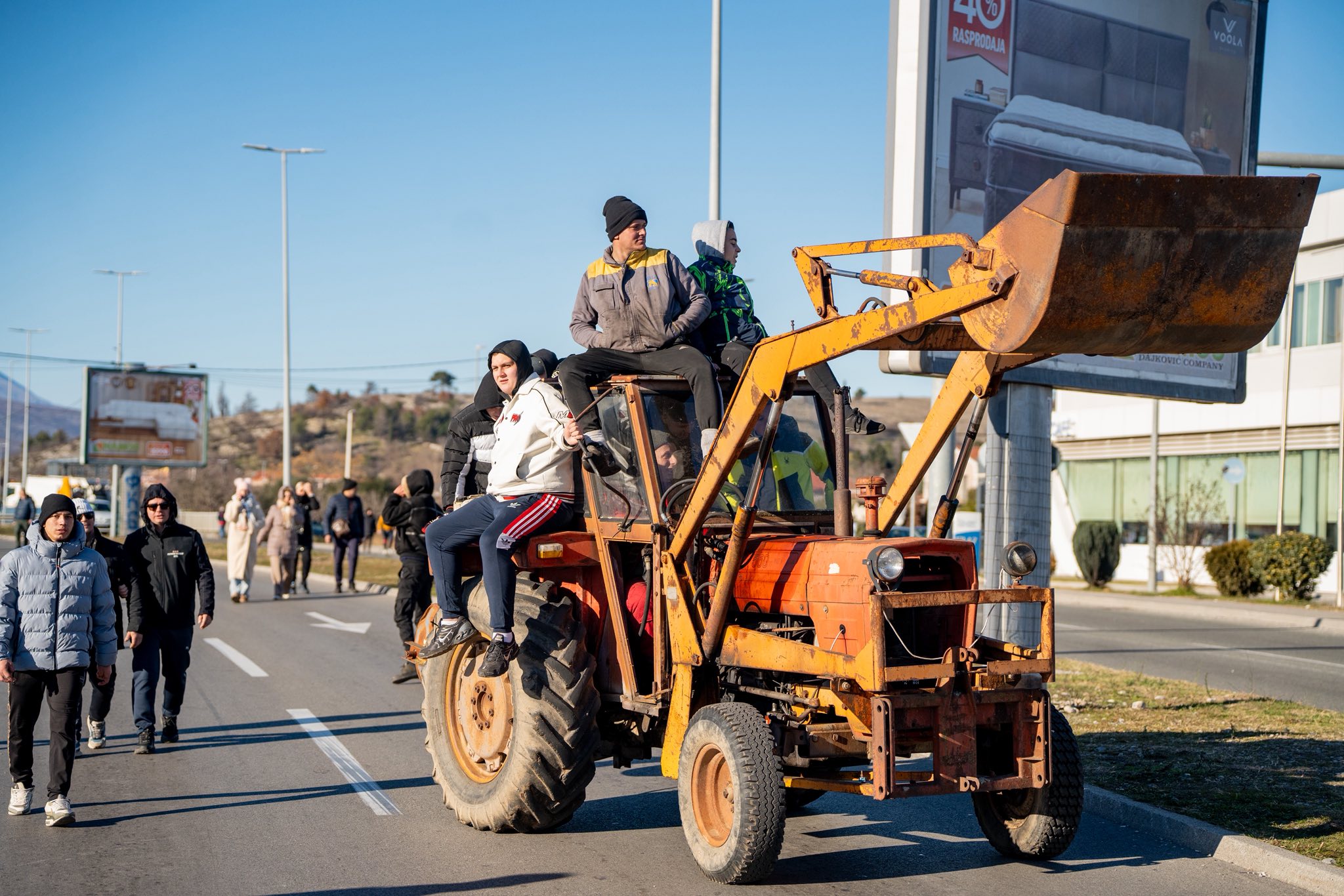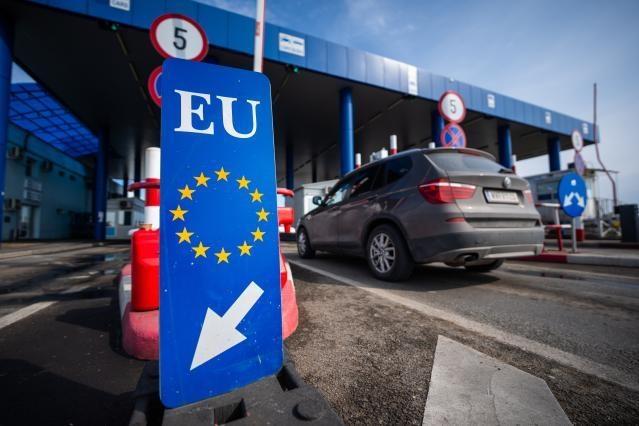
Western Balkans truck drivers announced that they were going to block EU border terminals towards the Schengen Area on 26 January to protest the European Union’s new Entry/Exit System. Transport associations from Bosnia and Herzegovina, Montenegro, North Macedonia and Serbia claim that the EES “threatens their ability to work”.
The Permanent Secretariat of the Transport Community, an international organisation in the field of mobility and transport, states for EWB that they “understand that concerns exist regarding the implementation of the new European Entry/Exit System, an EU-wide digital system designed to register the entry and exit of third-country nationals at the external borders of the Schengen Area, including relevant travel data”.
“First and foremost, it is important to underline that the rules governing entry into and exit from the Schengen Area have not changed; rather, what has changed is the manner in which travel data are processed”, the Permanent Secretariat of the TC remarks.
The Entry/Exit System (EES), which has been gradually introduced starting from 12 October 2025, implies digital registration of citizens of non-EU countries, including those from the Western Balkans Six, when they travel to 29 European countries. The system collects and stores biometric data such as fingerprints, facial images and other travel information, thereby replacing the passport stamps.
“The professional drivers should be treated as cross-border workers”
Some truck drivers complained about the EES, allowing a maximum stay of 90 days in any 180-day period to professional drivers from non-EU countries, despite the frequent cross-border travel required by their jobs.
“If you divide 90 days over six months, drivers are left with at most 15 days of actual presence in the Schengen area. The day of entry counts as the first day, the day of exit as the last, and these are transports that must be frequent”, Neđo Mandić, a representative of the Association of Transports of Serbia, told N1.
According to N1, a few truck drivers accused the EU of trying to attract skilled labour from the region.
“We believe this is a very cunning intention of the European Union to take our most qualified workforce and take all our drivers”, Đorđije Lješnjak of the Montenegrin Transporters’ Association said.
The European Commission: EES already provides a certain flexibility
Several media outlets in Serbia reported that the European Commission “is closely following the announced protest of the Association of carriers in international transport from the Western Balkans and is in contact with the Western Balkan partners”.
“The EES does not introduce new rules on the length of short-term stays in the Schengen area, but allows better enforcement of the rules. Under the Schengen Agreement, non-EU citizens can stay in the EU for 90 days within 180 days, and any longer period must be covered by a long-term visa or residence permit”, Marcus Lamer, a European Commissioner Spokesperson said, it was reported by 021 web portal.
Lamer added that the current agreement on the EES “already provides a certain flexibility, which is enabled for cross-border workers, for those who often use the same crossing and people with special permits”.
“Those persons do not register in the EES, but they are susceptible to random control… The decisions about random controls are on the EU member states”, he remarked.
European Western Balkans reached out to the European Commission for further comment, but did not receive a reply as of the time of writing of this article.
The Transport Community: We remain in regular contact with transport and trade associations, as well as with the EC
The Permanent Secretariat of the Transport Community stresses to EWB that TC “has limited competences, as this matter falls under the exclusive responsibility of the European Commission and the EU Member States”.
“Nevertheless, we have carefully listened to these concerns and conveyed them directly to the European Commission. In addition, on 24 April 2025, the Transport Community initiated and organised an informative session on the application of Schengen rules to professional drivers from the WB. The issue was also discussed at the last two Ministerial Council meetings of the Transport Community, held in Belgrade on 16 May 2025, and most recently in Brussels on 5 December 2025”, the statement notes.
The Permanent Secretariat of the TC underlines that “the legislation in question concerns the organisation of entry and exit procedures to the Schengen Area”.
As such, the role of the Transport Community in this field is limited, as this legislation does not fall within the scope of the Transport Community Treaty. All regulatory matters related to the Schengen framework remain under the competence of the European Commission and the EU Member States.
“We remain in regular contact with transport and trade associations, as well as with the European Commission, given our full awareness of the importance of this issue for professional drivers across the region”, the Permanent Secretariat of the TC concludes.