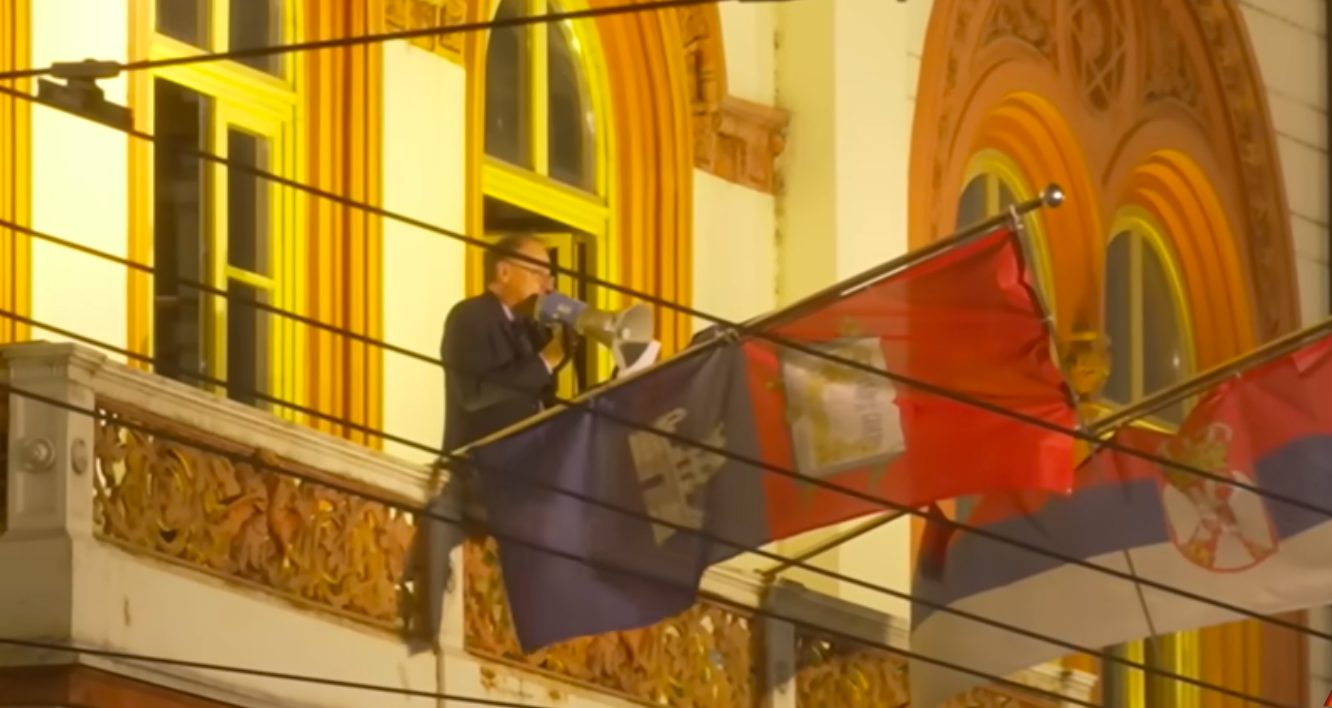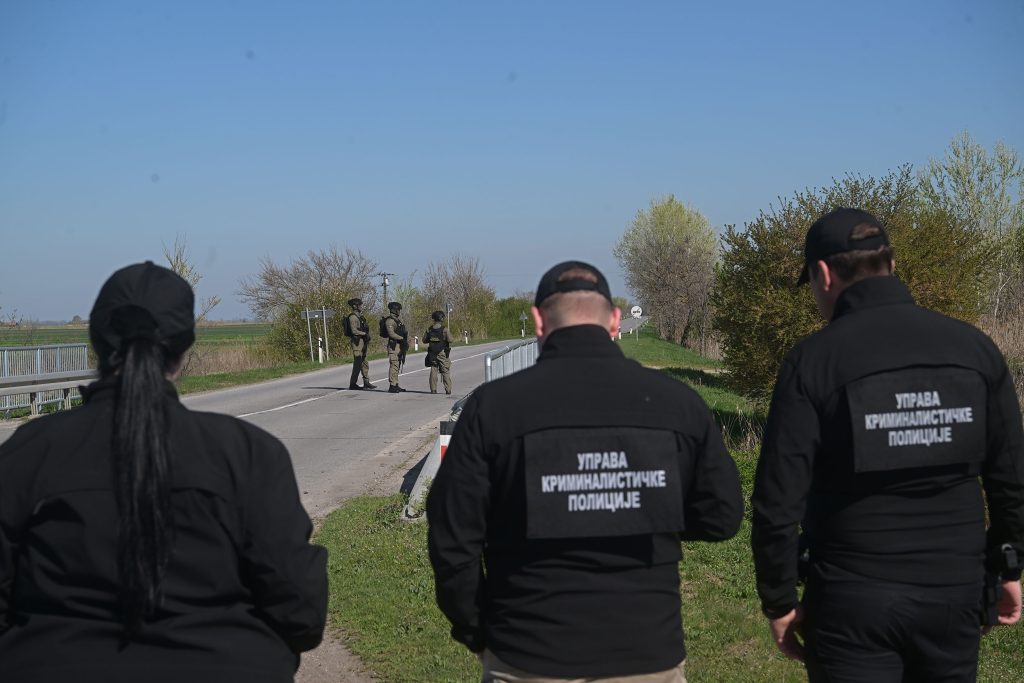
BELGRADE / BUDAPEST – Director of the Serbian Military Security Agency (VBA) Đuro Jovanić addressed the media on Sunday following the announcement that explosives had been found near the Serbian-Hungarian gas pipeline in the north of the country. According to Jovanić, VBA “had information that a person from a group of migrants, who is militarily trained, would attempt to carry out sabotage on gas infrastructure”.
He said that VBA was searching for that person and that they would be arrested.
“The only question is whether the search will last three days or several months”, Jovanić said.
He said that it is disinformation that the members of the Serbian Army acted to help a third side “by finding a Ukrainian explosive and by doing that, accusing the Ukrainians of trying to organise this diversion”.
This is not true, Jovanić said, because, as he explained, “the manufacturer of the explosives does not necessarily mean they are the one who ordered or carried it out.”
“We found explosives specially packaged, hermetically sealed, detonator caps – specially prepared and packed for transport, as well as detonating cord and suitable tools and equipment for preparing this explosive for carrying out sabotage. Based on the markings on the explosives, it can be seen that they were produced in the US. Is anybody now going to say that at this moment, that something like this suits the US?,” stated the director of the VBA.
Jovanić concluded that the Serbian army does not interfere in political processes in the Republic of Serbia and even less so in other countries.
On 5 April, near the village of Velebit, close to the TurkStream gas pipeline, two large backpacks containing explosives and detonating cord were found – this was first announced yesterday by the President of Serbia, Aleksandar Vučić.
Shortly afterwards, Vučić posted on Instagram that he had an urgent conversation with Hungarian Prime Minister Viktor Orbán and informed him of the initial results of the investigation concerning the “endangerment of critical gas infrastructure connecting Serbia and Hungary.”
Later on Sunday, Orbán convened a Defence Council session. Afterwards, he announced that the government “placed the Hungarian section of the TurkStream gas pipeline under reinforced military monitoring and protection”.
The Hungarian Prime Minister headed to the Hungarian-Serbian border on Monday.
“Yesterday, they wanted to blow up the gas pipeline on the Serbian section. We are going to see whether everything is in order on the Hungarian side,” Orbán wrote on social media before departing.
Orbán flew by helicopter to the border near Szeged, accompanied by Foreign Minister Péter Szijjártó.
Doubts about the official version
The events of Sunday took place just one week before the elections in Hungary, where Orbán could lose power after 16 years, writes N1.
Several Hungarian media outlets reported that a few days ago, security experts warned about the possibility of false-flag operations, in which Hungarian interests would allegedly be endangered.
Security expert Péter Boda said that Hungarian law enforcement or the army could find some explosive device near critical infrastructure. “So, they find such an explosive device – lo and behold, it has some ‘Ukrainian’ text on it, which is not that difficult to obtain from Soviet times – hide it, and even bring it into the country,” Boda said.
Russia expert András Rácz stated on 2 April, three days before the events, that it is not impossible for such a staged attack to take place precisely in Serbia.
“Serbia is an ideal location because the regime there maintains very friendly relations with Russia, so there is a high probability that they could be asked to ‘turn a blind eye’ when organizing a false-flag operation,” Rácz wrote on Facebook.
Back on 25 February, investigative journalist Balázs Kaufmann also pointed to Serbia, publishing a message he received from a source: “Serbia. Against Hungarian interests, Serbs or Russians will carry out a false attack in the next three weeks. That is all we know for now. Orbán’s goal is to introduce a state of emergency. They abandoned such an action in Hungary, but Orbán wants to push it through.”
Hungarian opposition leader Péter Magyar said that the events in Serbia involving the discovered explosives represent a “false-flag operation.”
Magyar wrote on X that the Hungarian Prime Minister Viktor Orbán ought to have invited him to a meeting of the Defense Council, as he claims he will soon take over his position.
He added that after his Tisza party comes to power, they will find out “who the political clients and perpetrators of that crime against the state were,” Hungarian portal 24.hu reported.