BELGRADE – “The European Union is aware of the latest allegations of the use of spyware to illegally track student activists and opposition politicians in Serbia. Such a practice would be unacceptable if the allegations were confirmed”, Radio Free Europe reported.
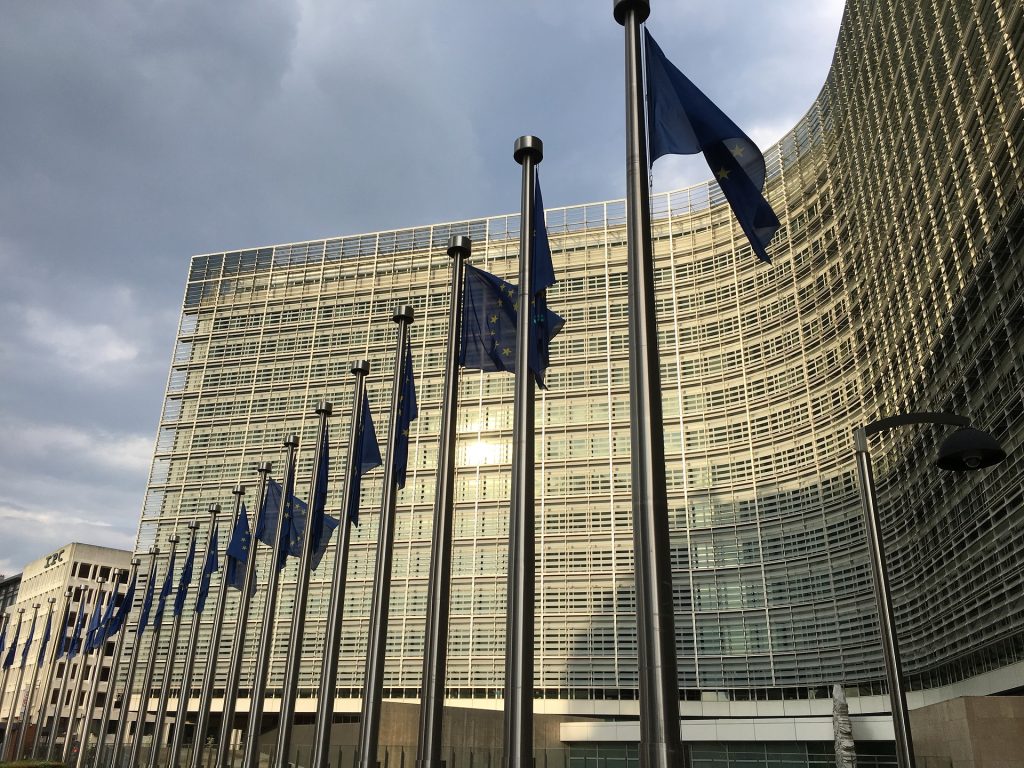
A spokesman of the European Commission told RFE: “We remind that any attempts to illegally access the data of citizens and political opponents, if confirmed, are unacceptable”.
The reaction of the EU came after the latest allegations about the use of illicit spy software against the student movement and opposition politicians in Serbia.
At least 14 people in Serbia were targeted with advanced spyware since the beginning of 2026 – the largest documented wave of such surveillance in the country to date, announced SHARE Foundation on 2 September.
“Those targeted include members of the student movement, activists, a member of parliament, and a local councilor, all from opposition parties. The timing coincides with the local elections held on 29 March 2026”, the statement from SHARE Foundation says.
According to the statement, twelve people contacted the SHARE digital forensics experts after receiving a warning on their phones that they had been targeted in a spyware attack. Apple issues these warnings with high confidence when a user has been targeted by mercenary spyware.
SHARE Foundation’s forensic analysis later confirmed two more infections – with a new version of NoviSpy, spyware first discovered in Serbia in 2024.
Radomir Lazović, MP and Co-president of the opposition Green-Left Front, stated that he was wiretapped at the same time as students, during the local elections in Serbia, but also during intensive contacts with officials of the European Union, when the representatives of Serbian opposition in Brussels, Strasbourg and Paris informed the international public about the events in the country.
On the other hand, Serbian President Aleksandar Vučić and the Security Information Agency (BIA) rejected allegations of wiretapping the student movement. Vučić said, among other things, that such claims are “stupid and pointless” and that they were “made without any evidence”.
Andreas Schieder, a Member of the Socialists and Democrats group in the European Parliament told Nova.rs that the forensic confirmation of Pegasus spyware on the phones of members of the student movement represents a “serious escalation” and called on the European Union to act.
Schieder said that claims that Serbian authorities used spyware to track activists and journalists had been present for some time, and that such practices had previously been harshly criticized at the European level.
“These practices have already been strongly criticized at European level, with repeated calls for a full and transparent investigation. The fact that the existence of Pegasus has now been forensically confirmed on the phones of members of the student movement represents a serious escalation”, Schieder noted.
According to him, the situation was particularly worrying ahead of the upcoming parliamentary election.
“A government that puts students, activists and political opponents under scrutiny cannot credibly claim that it creates the conditions for free and fair elections”, Schieder remarked.
The Rector’s Collegium of the University of Belgrade expressed serious concern about allegations regarding monitoring and unauthorized collection of data.
“We strongly condemn any form of unauthorized surveillance or endangering the privacy of students. The academic community must be a space of free thought, dialogue and security, and any form of pressure or monitoring is directly contrary to the basic principles of civil and academic freedom”, stated the Rector’s collegium of the University of Belgrade.
The statement stresses that “it is of particular concern that representatives of official institutions in their performances relativize and minimize the severity of the allegations made by students”.
By contrast, the President of the Constitutional Court of Serbia, Vladimir Petrov, stated that the students in the blockade were not spied on, but that they may have been illegally wiretapped, but expressed doubt that the state of Serbia was behind it.
“Well, it is not spying, you are spying on the state. You can spy on, say, the Constitutional Court, the president of the Constitutional Court, the president of the Republic, some sectors in the country, and so on. This could be unauthorized, possibly recording, eavesdropping, and so on. If it happened at all”, Petrov told TV Pink.
Petrov further minimized the whole case with the message that those who participate in political life must also be ready for someone to eavesdrop on them.
“If those students in the blockade thought that no one listens to them, it is the same as when we think, we who are in important functions and positions, that no one listens to us. Well, the first thing I take is that I’m probably listened to,” Petrov said, adding: “Now, you know how, if you have nothing to hide especially, especially in the form of violent acts, behavior that has criminal consequences, and so on, why should you worry about whether someone is listening or not”.
The article has been updated.