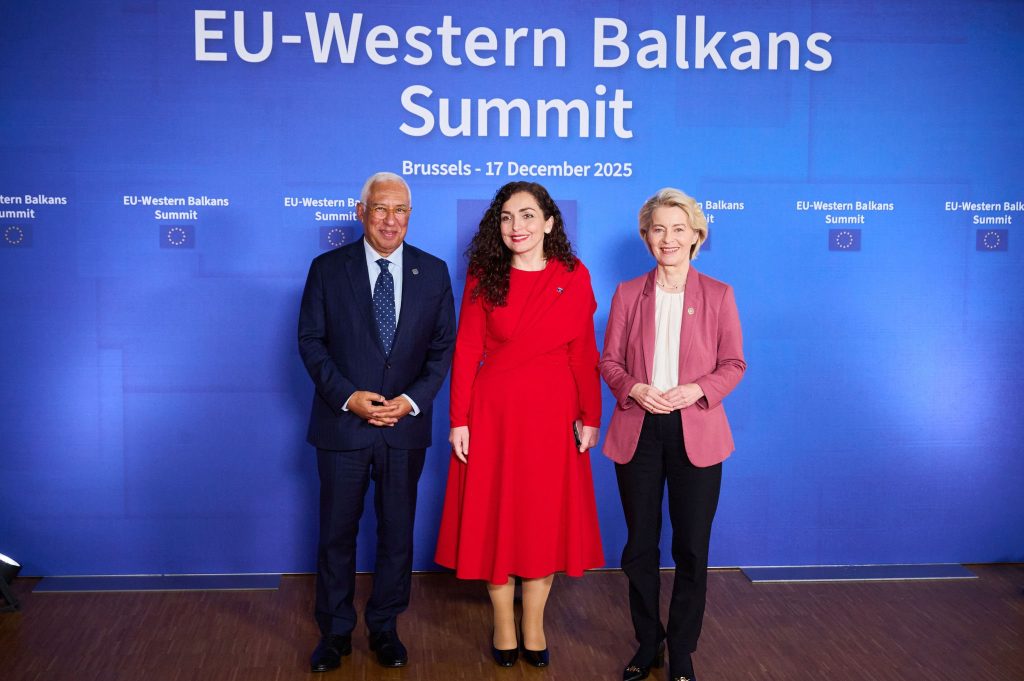
BRUSSELS – Last night, Vjosa Osmani, President of Kosovo, said that the European Union will end all punitive measures on Kosovo in late January. Such an announcement was made after the EU-Western Balkans Summit in Brussels.
“During intensive talks with our partners, a decision was made to lift all measures against Kosovo, with a large part to be lifted today and the rest at the end of January. Accordingly, the funds will also be unblocked, a very large part immediately, and the other part at the end of January”, Osmani remarked.
Similarly, Ursula von der Leyen, President of the European Commission, stated that the EU was moving forward to lift the measures on Kosovo.
“Good news for Kosovo! The transfer of local governance in the north after the recent local elections was peaceful. Thanks to this, I am glad to announce that we are moving forward to lift the measures on Kosovo. We are programming €216 million of financial assistance. And we intend to release €205 million early next year”, she wrote on X.
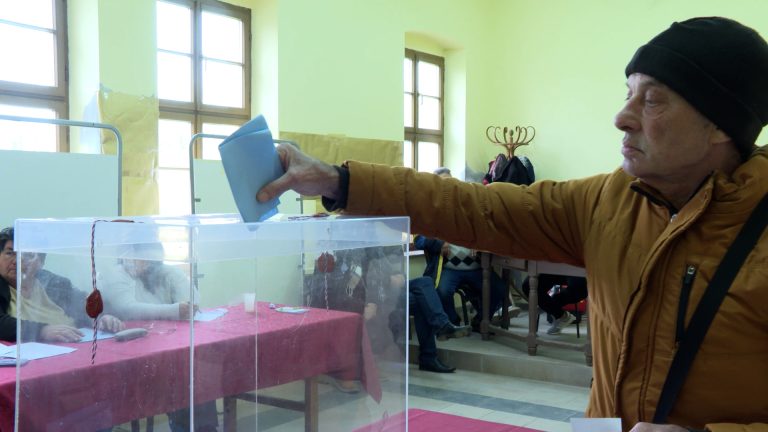
In addition, on 17 December, Besnik Bislimi, First Deputy Prime Minister of the Acting Government of Kosovo, stated that he had received an official letter from Gert Jan Koopman, Director-General of the EC’ Directorate-General for Neighbourhood and Enlargement Negotiations. According to the letter, financial resources have been released for four projects as a result of what has been assessed as “the proper transfer of local government in the north”, following the local elections of 12 October.
The media in Pristina reported that these projects were related to IPA programmes, worth 34.6 million euros.
“Based on these and in line with the Commission’s communication on Enlargement 2025, I am pleased to inform you that the Commission will further lift some of the EU measures, specifically those related to the EU funds program and the contracting of priority projects”, the letter notes.
The punitive measures against Kosovo were introduced by the European Union in June 2023 due to the country’s failure to de-escalate tensions in its northern municipalities. Specifically, these measures were a response Government’s decision to install ethnically Albanian mayors in Serb-majority municipalities following elections that were largely boycotted by the Serb population.
The EU’s measures included the suspension of high-level visits, the suspension of EU-funded projects, and a reduction in financial assistance. The EU’s primary demand for the lifting of these measures was for Kosovo to take steps to de-escalate the situation, including holding new, inclusive local elections in the northern municipalities.