PARIS – Political elites in the Western Balkans, with Serbia particularly standing out at the moment, often avoid implementing genuine reforms that should lead to democratisation within the EU accession process. In order to enable a successful integration of candidate countries, the EU needs to regain credibility on the issue of democracy.
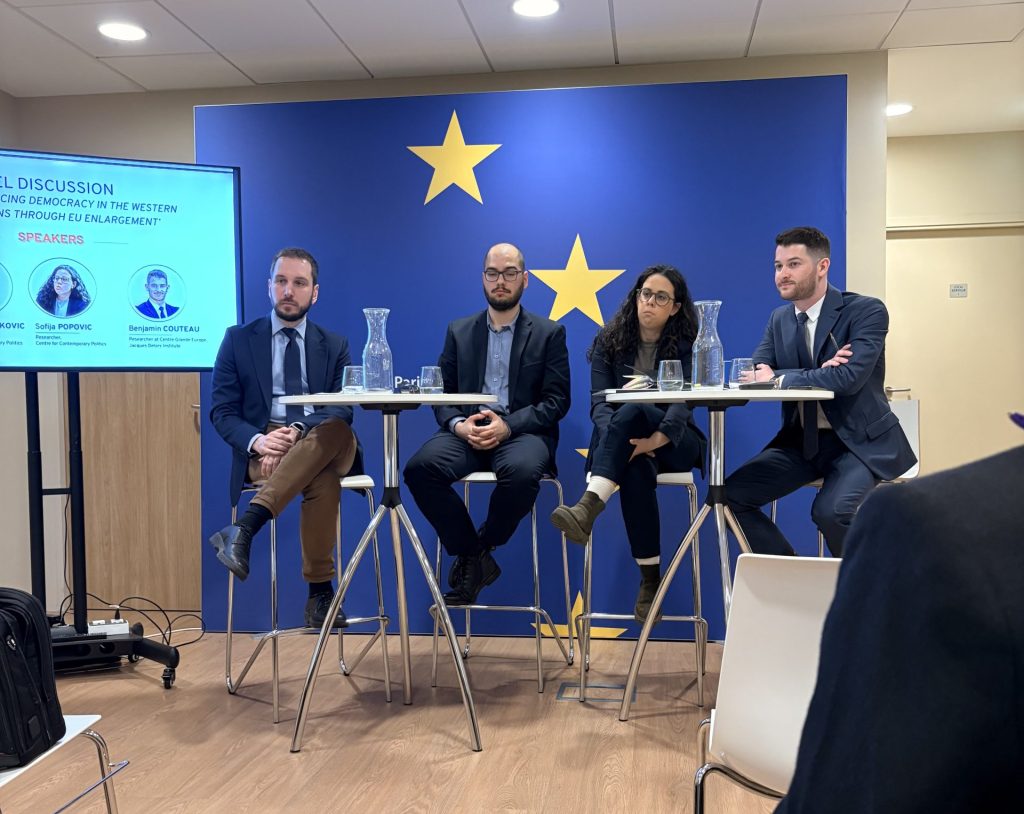
These were the main conclusions of the event titled “Advancing Democracy in the Western Balkans through EU Enlargement”, co-hosted by the Centre Grande Europe of the Jacques Delors Institute and Belgrade-based Centre for Contemporary Politics, which took place on 25 March in Paris.
At the event, moderated by Benjamin Couteau, Research Fellow at the Centre Grande Europe, researchers from Serbia presented a policy study “Flawed Reforms: How Western Balkan countries dilute or instrumentalise rule of law reforms in their EU accession process” and policy brief “Serbia’s stalemate on Cluster 3: Test for the EU’s credibility”. They published as a part of the project “Advancing Democracy through EU Enlargement”, implemented by the Jacques Delors Institute and the Centre for Contemporary Politics.
Nikola Burazer, programme director of the Centre for Contemporary Politics, stated that, despite the fact that democracy is one of the key conditions for EU membership and that democratisation went together with EU integration during previous enlargements, in the Western Balkans, democracy frequently did not go hand in hand with EU integration, and countries went back even during accession negotiations.
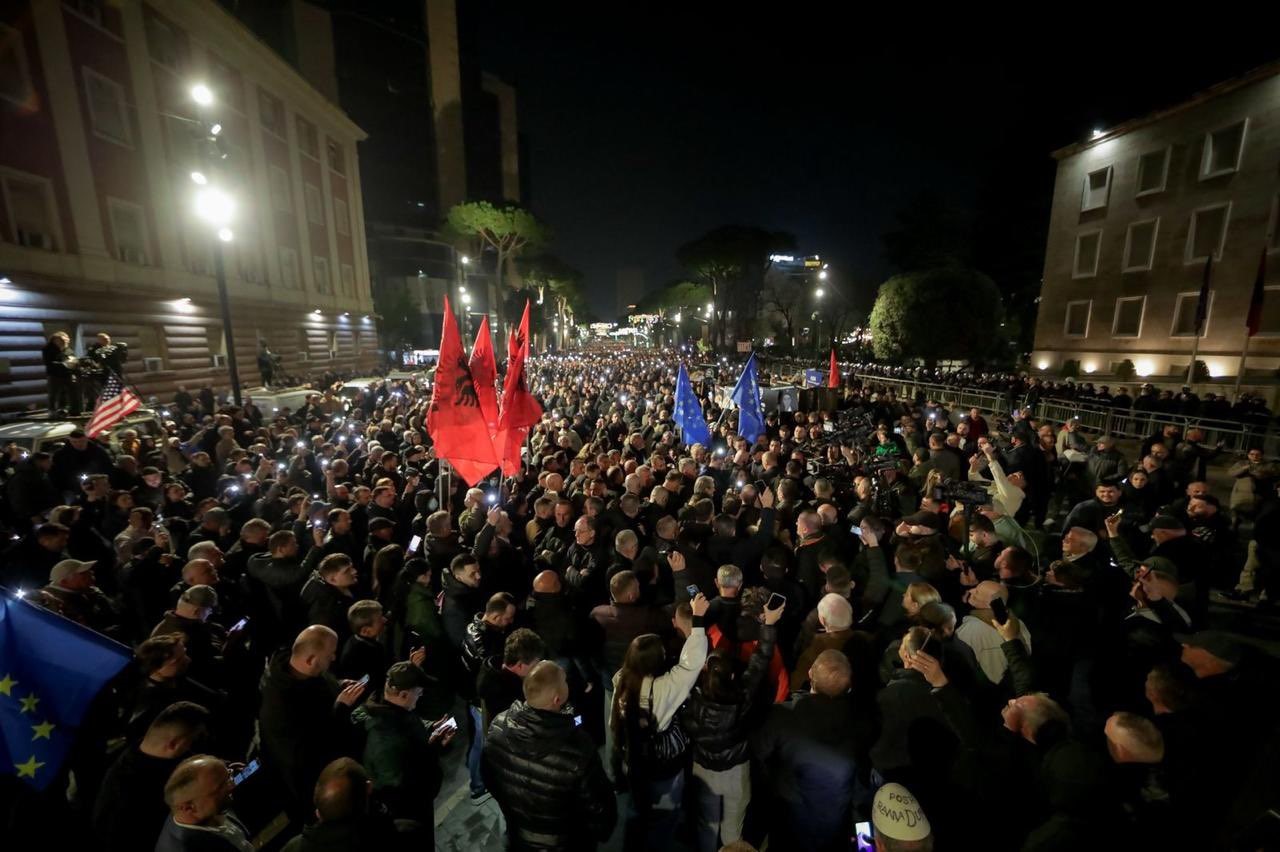
“The most striking example is Serbia, where there has been a serious backsliding when it comes to elections, media freedom, corruption, and a severe political crisis that began in 2019 with the opposition’s parliamentary boycott, continued with the 2020 electoral boycott. It culminated after the 1 November 2024 Novi Sad railway station tragedy and the ensuing mass protests that were met with increasing repression”, Burazer said.
He added that the EU was previously silent or passive when it came to the severe democratic backsliding and political crisis in Serbia.
“EU officials frequently heaped praise on President Vučić, official European Commission reports did not note any backsliding until 2025, and the country made some progress in EU accession despite democratic regression. The two phases of EP-mediated dialogue failed to bring any pressure on the Serbian government, and the EU has often pushed pro-EU actors to have a dishonest dialogue with the government. Many pro-EU citizens of Serbia stopped believing the EU is their ally and ally of democracy”, Burazer said.
According to him, ignoring the problem just made it worse.
“The objective of our project is to help EU integration deliver on democracy through providing recommendations to the EU on how to improve its actions, communication and outreach to pro-democracy actors”, Burazer concluded.
Aleksandar Ivković, Researcher at the Centre for Contemporary Politics, presented the findings of the policy study titled “Flawed Reforms”.
According to Ivković, the analysis of the laws adopted in the context of the EU accession process in the Western Balkans from 2020 to 2025 shows that 25% of them were criticised upon adoption by either the European Commission or the domestic civil society organisations, or both.
“This shows that political elites in the candidate countries, in the guise of implementing pro-EU reforms, often miss an opportunity to address important issues in their respective EU accession process, or even introduce provisions that lead to backsliding”, Ivković said.
He added that even the laws that were criticised most harshly were rarely revised, showing that entrenched interests of the political elites are often more important than implementing genuine reforms in the EU accession process.
“What is also worrying is that there are cases in which the assessments of the European Commission and domestic civil society organisations in these countries completely diverge from one another, hurting the credibility of both sides. These cases should be avoided”, Ivković stressed.
Sofija Popović, Researcher at the Centre for Contemporary Politics, presented the findings of the study on reforms Serbia pledged to implement in order to open Cluster 3. The results of the research show that the most important reforms related to fundamentals, including the election of the new media regulator, had not been delivered.
“Despite repeated claims from Serbian officials that the country is treated unfairly, the government does not appear genuinely willing to implement necessary reforms for opening Cluster 3”, Popović said.
On the contrary, she added, protests led by students and political crisis following the tragic events in Novi Sad in November 2024 have revealed a pattern of authoritarian behavior by the authorities towards the media, civil society, and judiciary.