North Macedonia is being asked to amend its Constitution to enumerate Bulgarians among the communities listed in its Preamble. The change is presented as the step that would allow EU accession negotiations to advance. Yet the government opposes proceeding without safeguards against further Bulgarian conditions. The change may appear modest: the 2021 census recorded 3,504 residents identifying as Bulgarian. Why should explicitly naming this community in the Constitution create such a problem?
The answer lies in Bulgaria’s position on Macedonian identity itself. In its 2020 Explanatory Memorandum, circulated to EU member states, Bulgaria portrays Macedonian identity and language as artificial creations imposed by Yugoslav communism to erase the population’s alleged Bulgarian identity. The underlying logic closely resembles Putin’s denial of Ukraine’s distinct nationhood: the neighboring nation is claimed as part of one’s own, and its distinct national identity is treated as a product of communist engineering.
The issue therefore extends far beyond the status of a small community. Constitutional inclusion would give Sofia an additional basis for presenting demands over Macedonian history and identity as protection of that community. The existing accession arrangements already allow Bulgaria to invoke bilateral commitments to withhold consent to progress. This article examines how that pressure could operate through disputes over census results, historical teaching and commemoration, and communist-era archives.
How the demands entered accession
The route into accession was to present Bulgaria’s detailed demands as implementation of the 2017 Treaty of Friendship between Macedonia and Bulgaria, even where they extended substantially beyond its express provisions. The Treaty established general commitments to cooperation. Article 12 created a joint intergovernmental commission to review implementation and agree measures.
In October 2019, Bulgaria adopted its Framework Position, setting out its conditions for supporting Macedonia’s EU progress. These included demands concerning historical teaching, archives, public inscriptions, alleged hate speech, and state-funded cultural production. In November 2020, Bulgaria blocked approval of the EU negotiating framework.
The French EU presidency brokered arrangements to overcome that blockade in July 2022. Macedonia accepted the Second Protocol, a bilateral document adopted through the Treaty’s intergovernmental commission under Article 12. The Protocol turned many of Bulgaria’s demands into detailed commitments presented as implementation of the Treaty.
The EU negotiating framework then made Treaty implementation, expressly including these Article 12 reviews and measures, part of the assessment of accession progress. The Council of the EU’s conclusions also expressly welcome the Protocol.
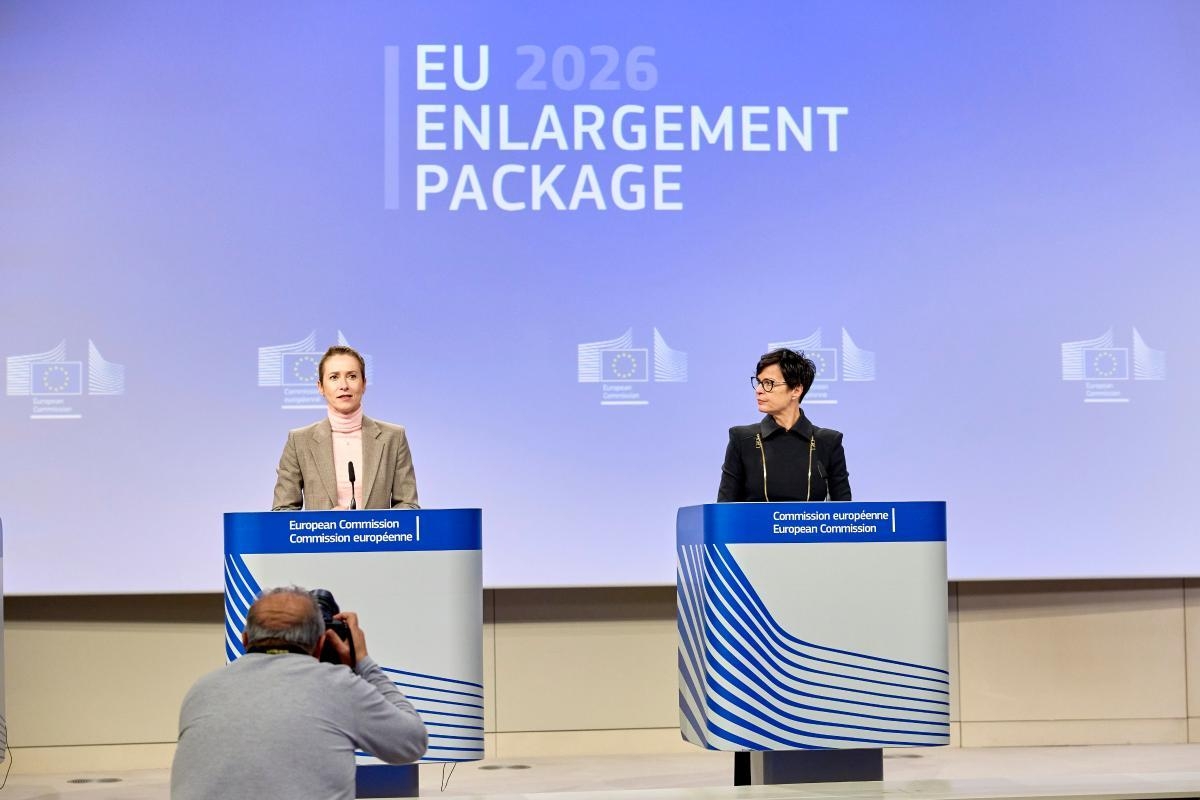
The European Commission’s 2026 report already treats implementation of the Protocol as essential. It also records that the separate historical commission established under the Treaty met four times “but without tangible outcomes.” The Treaty established that commission; the Protocol subsequently specified expectations of clear results and their implementation in education. The Commission’s assessment thus already reflects the Protocol’s emphasis on historical results, even before the constitutional amendments.
At accession decisions requiring unanimous consent, Sofia can invoke these commitments to justify withholding approval. Bulgaria already describes them as European obligations and constitutional inclusion as only the first step. Its demands thus return as European commitments North Macedonia is expected to fulfill.
The following three situations draw on Bulgaria’s existing positions and conduct to show what demands it is likely to pursue during negotiations after constitutional inclusion.
A census that does not produce the expected population
Consider Bulgaria’s challenge to the 2021 census, which recorded 3,504 residents identifying as Bulgarian. Sofia invokes much larger figures: in July 2024, President Rumen Radev said that at least 120,000 Macedonian citizens had obtained Bulgarian citizenship through documented Bulgarian origin. Deputy Foreign Minister Marin Raykov claimed in April 2026 that more than 210,000 people from North Macedonia had documented Bulgarian origin.
Setting these totals against each other makes the census appear to have missed a large population, although citizenship records cannot establish how many residents identify as Bulgarian. Vasiliki Neofotistos documented Macedonians seeking Bulgarian passports for mobility and economic opportunities, while Mina Hristova’s fieldwork recorded people maintaining Macedonian identification while acquiring Bulgarian documents. Their accounts show why a declaration made to obtain citizenship cannot simply replace the identity people express in their own country’s census.
Ancestry documents do not settle the question either. An ancestor’s administrative or religious classification requires interpretation and does not automatically establish their national self-identification, still less a descendant’s. Citizenship records establish what applicants declared and Bulgarian authorities accepted as grounds for granting citizenship; they do not determine those applicants’ ethnic identification as citizens of North Macedonia.
Bulgaria’s policy nevertheless collapses those distinctions. Its 2014 national strategy counts Macedonian citizens who acquired Bulgarian citizenship after 1990 among ethnic Bulgarians. Its Foreign Ministry questioned the census while invoking citizenship figures, applying a revealing double standard: the declaration that brings an EU passport is taken at face value, while the one that brings no such benefit requires an explanation.
The Protocol’s provisions on Bulgarian rights give Sofia a way to bring this population claim into accession negotiations. They require “sustainable results” in protecting Bulgarian identity without specifying how those results are to be measured, and conspicuously cite neither the Framework Convention for the Protection of National Minorities nor the European Convention on Human Rights. Bulgaria’s April 2026 statement on the minority-rights Action Plan already connects discrimination allegations to its conditions for supporting accession progress.
Sofia could portray the gap between the existing census results and its population claims as evidence of continuing suppression and a hostile anti-Bulgarian climate, echoing accusations already advanced in its 2020 Explanatory Memorandum. Its own population claims would then become the test of the census’s credibility. On that basis, it could maintain a blockade and demand a new census or special verification, insisting on assurances that the results would reflect its claims about the number of Bulgarians.
The practical problem is therefore who decides what counts as adequate protection. European standards protect freely expressed identity. Bulgaria’s approach allows the failure to declare the identity Sofia expects to become evidence that this identity is being suppressed.
Historians who meet but do not agree
The same claim of suppressed Bulgarian identity extends into historical teaching. Accepting Bulgaria’s account would mean teaching Macedonians that their present identity was constructed by suppressing an underlying Bulgarian one, with the implied prospect of “rediscovering” their alleged Bulgarian origins.
The historical commission’s mandate is to discuss historical and educational questions, but discussion does not guarantee agreement. Experts can examine the same sources and disagree. The Protocol calls for intensified work and clear results. It also commits both governments to supporting and encouraging the commission to complete its work on “all periods” of what it calls common history, with the resulting recommendations fully implemented in education before North Macedonia joins the EU. Bulgaria’s Framework Position prescribes the conclusions: Macedonian history before 1944, when the Macedonian republic was established within Yugoslavia, is to be treated as Bulgarian history.
Bulgarian co-chair Angel Dimitrov has defended the Memorandum as reflecting the achievements of Bulgarian historical scholarship. Yet a collective declaration by Bulgarian historians and other scholars rejected its underlying thinking as outdated, romantic, and mythological and opposed imposing Bulgaria’s official historical account. Dimitrov attributes his Macedonian colleagues’ resistance to political considerations, yet defending conclusions prescribed by his own government apparently qualifies as independent scholarship.
The consequences of judging the commission by its results were already visible in the 2020 veto. In November that year, Foreign Minister Ekaterina Zaharieva cited insufficient progress in its work, and Bulgaria refused to approve the negotiating framework, citing inadequate implementation of the Treaty. Failure to agree on historical interpretations was thus treated as Macedonia’s failure to fulfill a bilateral obligation.
The same reasoning could govern subsequent accession decisions: Sofia could make consent to the next stage conditional on a commission recommendation accepting its interpretation. Macedonian historians could attend every meeting, examine the evidence, and explain their disagreement, yet their work would count as insufficient. The demand would concern the conclusion they must reach, rather than whether the commission had done its work.
Sofia could pursue historical revisions through minority-protection claims even without the commission’s agreement. The revolutionary Goce Delchev illustrates the stakes: Bulgaria claims him as Bulgarian and rejects accounts placing him within a distinct Macedonian national history. The commission has reached no agreement on him since its establishment in 2018. Although the Protocol provides for implementing agreed recommendations, Sofia could argue that such accounts deprive the constitutionally enumerated Bulgarian community of its heritage. It could then demand textbook changes and withhold accession consent on that basis. What Macedonian children learn about him would become a test of respect for Bulgarian rights. The same argument could extend across curricula, museums, commemorations, and other historical figures.
The Protocol itself expressly includes textbooks and monument inscriptions in its procedures for identifying and addressing hate speech. Sofia could invoke those provisions to demand changes to accounts of Bulgarian wartime conduct, presenting such changes as protection of the Bulgarian community from alleged hostility.
Bulgaria, an Axis ally of Nazi Germany, occupied much of what is today North Macedonia during World War II. Its authorities pursued coercive assimilation and violently suppressed resistance. As documented by the United States Holocaust Memorial Museum, Bulgarian military and police officials rounded up Jews and deported them into German custody. The International Holocaust Remembrance Alliance commemorates 7,144 Macedonian Jews deported to Treblinka.
Objections to depicting this history have already been linked to accession. In 2011, Bulgarian MEPs accused the Macedonian film The Third Half of spreading hatred over its portrayal of wartime persecution; in 2012, Foreign Minister Nikolai Mladenov connected the controversy to Macedonia’s EU aspirations. The 2019 Framework Position subsequently demanded changes to inscriptions using formulations such as “Bulgarian fascist occupier.”
Documenting the actions of state and occupation authorities does not assign collective guilt to Bulgarians today. Treating historical accountability as an ethnic insult shifts the accusation from those who committed the acts to those who document them. By contrast, portraying Macedonian identity as a falsification stigmatizes the national community and justifies pressure to change how it understands and presents its own history. The reversal is stark: denying Macedonian identity becomes a defense of historical truth, while documenting the Bulgarian state’s wartime conduct becomes hatred toward Bulgarians.
The Protocol gives these accusations practical force through diplomatic monitoring and procedures for removal, while cultural funding can be suspended or recovered for breaches of hate-speech undertakings. Sofia could demand a changed textbook, a removed inscription, or a withdrawn exhibition, invoking these commitments to block accession progress. A dispute over historical presentation would become a demand to demonstrate compliance with European obligations against hatred.
Yet those procedures cite no Council of Europe instrument and supply no criteria for distinguishing an account of state responsibility from hostility toward Bulgarians as a community. The Council of Europe’s approach requires proportionate responses that protect freedom of expression. The procedure does not explain how such accusations are to be tested against those standards, leaving room for Sofia to turn an allegation of hatred into a demand for removal and block accession progress until that demand is met.
Archives that do not confirm the accusation
The Protocol extends this pressure into the communist-era archives, requiring a legal framework for opening state-security archives for 1945–1991. It also requires reaffirming condemnation and an apology for what it calls “injustices and repressions committed in the past” by Yugoslav communist authorities based on “ethno-political self-determination,” including against Bulgarians.
Bulgaria approaches those archives with its verdict already written. The allegations predate Macedonia’s independence. A 1990 memorandum by the Union of Macedonian Cultural and Educational Societies in Bulgaria, an organization asserting the “Bulgarian identity” of Macedonians, claimed that more than 16,000 people had been killed since 1944 for their alleged Bulgarian identity, without identifying archival evidence or a method of calculation.
A 1998 book cited 23,000 killed or missing during 1944–1980, again without an archival reference or calculation. A 2007–2008 policy report asserted 30,000 executions without supplying supporting evidence. The figures changed, but their authority somehow grew.
By 2020, Bulgaria’s official Memorandum was telling EU partners that archives established more than 20,000 executions in 1944–1946 and more than 100,000 Bulgarians killed, imprisoned, exiled, or sent to camps. The execution claim now covered just three years. Yet the document identified no archival collection, victim register, or calculation establishing these extraordinary totals.
The scholarly rejection came from Bulgaria itself. Bulgarian historians Stefan Detchev and Chavdar Marinov dismissed comparable figures as fantasies and nonsense, challenging their evidentiary foundations and the retrospective classification of diverse political victims as ethnic Bulgarians. A collective declaration by Bulgarian historians and other scholars also condemned the Memorandum’s victim total as beyond reasonable bounds. Yet the Memorandum accuses Macedonian historiography of fabrication while presenting fabricated repression figures as archival truth.
Macedonia’s archives have already undergone substantial disclosure. Individual access existed from 2000, and the State Archives published nine volumes of security-service documents in 2016. The material documents extensive political surveillance affecting people with different political affiliations, but does not substantiate Bulgaria’s extraordinary ethnic-Bulgarian victim totals. Restrictions on particular records do not establish concealment.
Sofia could nevertheless demand further searches and withhold accession consent until Macedonia produces evidence confirming Bulgaria’s claims. Each failure to find that evidence could become grounds for another demand. North Macedonia would remain on trial for allegedly hiding the truth because its archives do not confirm Bulgaria’s fabrications, while the claims themselves escape scrutiny.
Why constitutional change would not secure accession progress
Across all three situations, the same mechanism recurs: Bulgaria could make accession progress depend on acceptance of its historical and identity claims. Once Bulgarians are explicitly named in the Constitution, Sofia could present demands to revise Macedonian history as necessary to protect a constitutionally named community’s heritage and identity. The historical demands would remain the same, but Bulgaria would have an additional constitutional reference for pursuing them.
The European Commission’s enlargement methodology requires accession conditions to be objective and verifiable, so candidates know how their performance will be assessed. Enacting a reform or implementing a measure can be verified. Bulgaria’s historical and identity demands introduce a different test: whether Macedonia accepts Sofia’s claims about its past and national identity.
Bulgaria’s denial of the Macedonian language extends this uncertainty to the point of membership itself. In its unilateral declaration accompanying the 2022 accession arrangements, Bulgaria denies the existence of Macedonian as a distinct language, portraying it as merely a recodified form of Bulgarian. Under Article 342 of the Treaty on the Functioning of the European Union, the Council decides institutional language rules unanimously. Bulgaria could therefore obstruct Macedonian’s inclusion among official EU languages even if every other member state supports it.
Preventing identity claims from governing accession
Even opposition from other member states would not ensure that pressure falls on Sofia. The 2020 blockade was followed by arrangements incorporating Treaty implementation and Article 12 measures into accession. That outcome gives Bulgaria reason to expect another blockade could again end with its demands written into the terms. North Macedonia, rather than Bulgaria, could again be asked to concede.
That the government of North Macedonia accepted the package in 2022 does not answer the problem identified here. Acceptance came amid mass protests, and opposition persisted: a March 2025 poll found that 82% of ethnic Macedonian respondents and 64% overall opposed including Bulgarians under the existing conditions, even if that meant further delays. The government that took office in 2024 opposes amendments without additional safeguards.
The objection concerns the conditions attached to inclusion. Bulgarians already enjoy rights to association and expression of identity. Naming Bulgarians in the Constitution would not create rights they already enjoy. Under the existing accession arrangements, however, protecting those rights could become entangled with demands to accept Bulgaria’s claim that Macedonians are Bulgarians whose identity was changed by Yugoslav communism.
Two safeguards are necessary. First, constitutional amendments should be conditional and accompanied by an enforceable mechanism allowing their effects to be reversed if historical, linguistic, or identity demands block progress despite fulfillment of relevant EU benchmarks. The mechanism must be designed within North Macedonia’s constitutional order. Existing protections for all citizens and communities, including Bulgarians, would remain. Croats, Montenegrins, and other smaller communities not individually named in the Preamble already enjoy rights to equality, freedom of association, and the preservation and expression of their identity.
Second, the accession arrangements must provide a binding guarantee that progress will not depend on accepting Bulgaria’s historical, linguistic, or identity claims, including when framed as minority protection or good-neighborliness. The Protocol’s scope and provisions must be revised as necessary to give effect to that guarantee. Macedonian’s equal standing as an official EU language must also be secured.
These changes would not remove Bulgaria’s veto, but they would strip historical and identity demands of their status as agreed accession conditions. Sofia could still block progress, but it would have to defend its own demands rather than claim that Macedonia was failing to fulfill European commitments. The aim is to raise the political cost of recurring blockades while retaining obligations to protect minority rights and meet the EU’s democratic and rule-of-law standards.
A country whose European future depends on accepting its neighbor’s claims about its past is treated as an object of correction rather than an equal partner. Calling this friendship or Treaty implementation does not resolve the contradiction. North Macedonia would have changed its Constitution, yet fulfilling the EU’s reform criteria would still not secure progress. Bulgaria would retain the power to make acceptance of its historical and identity claims the deciding condition, backed by accession arrangements that allow Sofia to present those demands as European commitments North Macedonia has yet to fulfill.
Views expressed in the Opinion section belong to the authors and do not necessarily reflect the views of European Western Balkans.