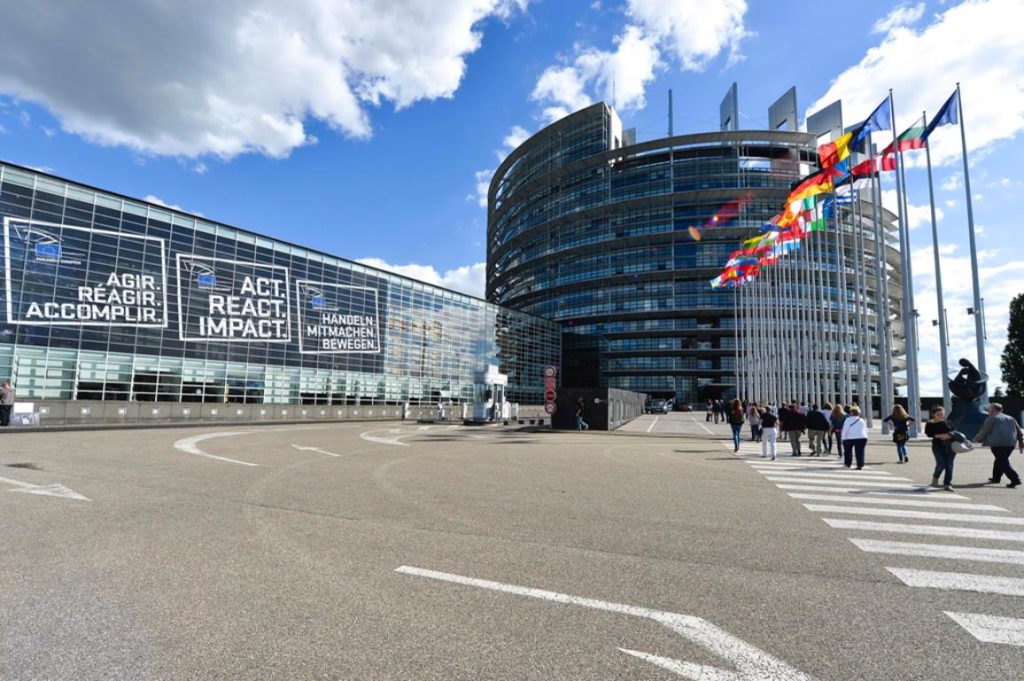
STRASBOURG – Last night, the European Parliament held a debate regarding a draft resolution marking the 35th anniversary of the fall and destruction of Vukovar. A vote on the resolution is scheduled for Thursday, 26 November.
The text, which was harshly criticized by the Student List in Serbia, had been jointly submitted by Croatian MEPs from four political groups: Karlo Ressler (EPP), Tonino Picula (S&D), Stephen Nikola Bartulica (ECR), and Gordan Bosanac (Greens).
The motion is titled: “European Parliament resolution on the 35th anniversary of the fall and destruction of Vukovar”.
The resolution recalls the destruction of Vukovar during “the Greater Serbia aggression” led by Slobodan Milošević, as well as the serious crimes committed during the siege and following the city’s fall”, Jutarnji list reported.
“Vukovar is the first European city since the Second World War to be literally destroyed by nearly three months of military siege and heavy bombardment”, the text reads.
The resolution notes that since the destruction of Vukovar in 1991 and the Srebrenica genocide in 1995, crimes have been committed that challenge the “never again” promise made after the Second World War.
The text also recalls Slobodan Milošević’s speech at Gazimestan, where he signaled the wars that followed.
Picula: Vukovar is a common European responsibility
Karlo Ressler stressed the significance of Vukovar receiving formal recognition at the European level.
“Vukovar represents a unique national, historical, and civilizational moment for Croatia. On the 35th anniversary of the city’s fall, it deserves to be formally acknowledged at the European level for the first time. It carries vital historical lessons not only for Croatia but for the entire European continent. I feel it is my duty to advance this, together with my Croatian and European colleagues”, Ressler said.
Tonino Picula, who also serves as the European Parliament’s Rapporteur for Serbia, stated that Vukovar is significant for all of Europe, especially in the context of the war in Ukraine.
“Vukovar is not only a Croatian wound; it is a part of European history and the European conscience. Thirty-five years after the fall of the city, the European Parliament is confirming with this resolution what international courts have already established: Vukovar was a victim of aggression. The crimes at Ovčara, Velepromet, and in the camps in Serbia are not a matter of interpretation—they are established facts.
“It is important that this resolution is supported by political groups of different orientations. This shows that the memory of Vukovar does not belong to just one country or any single political faction, but that Vukovar is a common European responsibility,” Picula said.
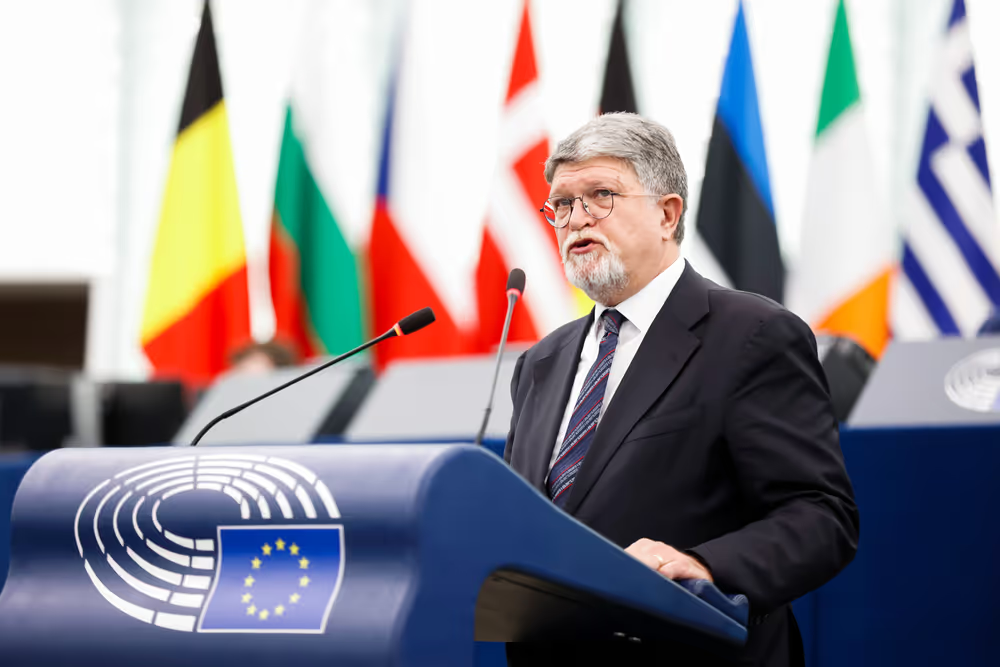
“As Parliament’s Rapporteur for Serbia, I stress that this is an integral part of its European path. There is no serious rapprochement with the Union without addressing the past. Public tributes to a convicted war criminal, as we recently saw at Mladić’s funeral in Belgrade, demonstrate how much work remains unfinished,” he added.
This resolution calls for the establishment of peace, ensuring that the wounds of the past do not fuel future divisions, and emphasizes the need to reveal the truth about the missing, stop the glorification of convicted war criminals, and respect the victims through remembrance.
“More than three decades after the end of the Croatian War of Independence, 1,725 cases of missing persons remain unresolved. This includes 1,341 individuals whose fate is unknown and 384 whose deaths have been confirmed, but whose burial sites have not yet been located. The continued uncertainty prolongs the suffering of their families and leaves deep human wounds open. Determining the fate of the missing and locating the bodies of those killed, regardless of ethnicity, is a fundamental human obligation and essential for true reconciliation”.
The text explicitly states: “It is not true that Vukovar was deliberately sacrificed.”
Special mention is made of locations where the JNA and other Serb units held prisoners, such as Stajićevo, Begejac, Niš, Belgrade, Novi Sad, and Sremska Mitrovica, as well as occupied areas within Croatia, such as Velepromet in Vukovar.
The resolution requires Serbia to engage sincerely in efforts to uncover the truth about the missing.
“We call on the competent authorities to cooperate to determine the fate of the missing. In particular, we call on Serbia to provide access to relevant war archives, disclose all available information on the location of individual and mass graves, fight impunity for war crimes, and enable the identification and dignified return of victims’ bodies to their families. We call on Serbia to finally adopt the long-awaited law on missing persons in a truly inclusive and transparent manner”, the motion reads.
Student List: True reconciliation is not possible by imposing one-sided interpretations of the past
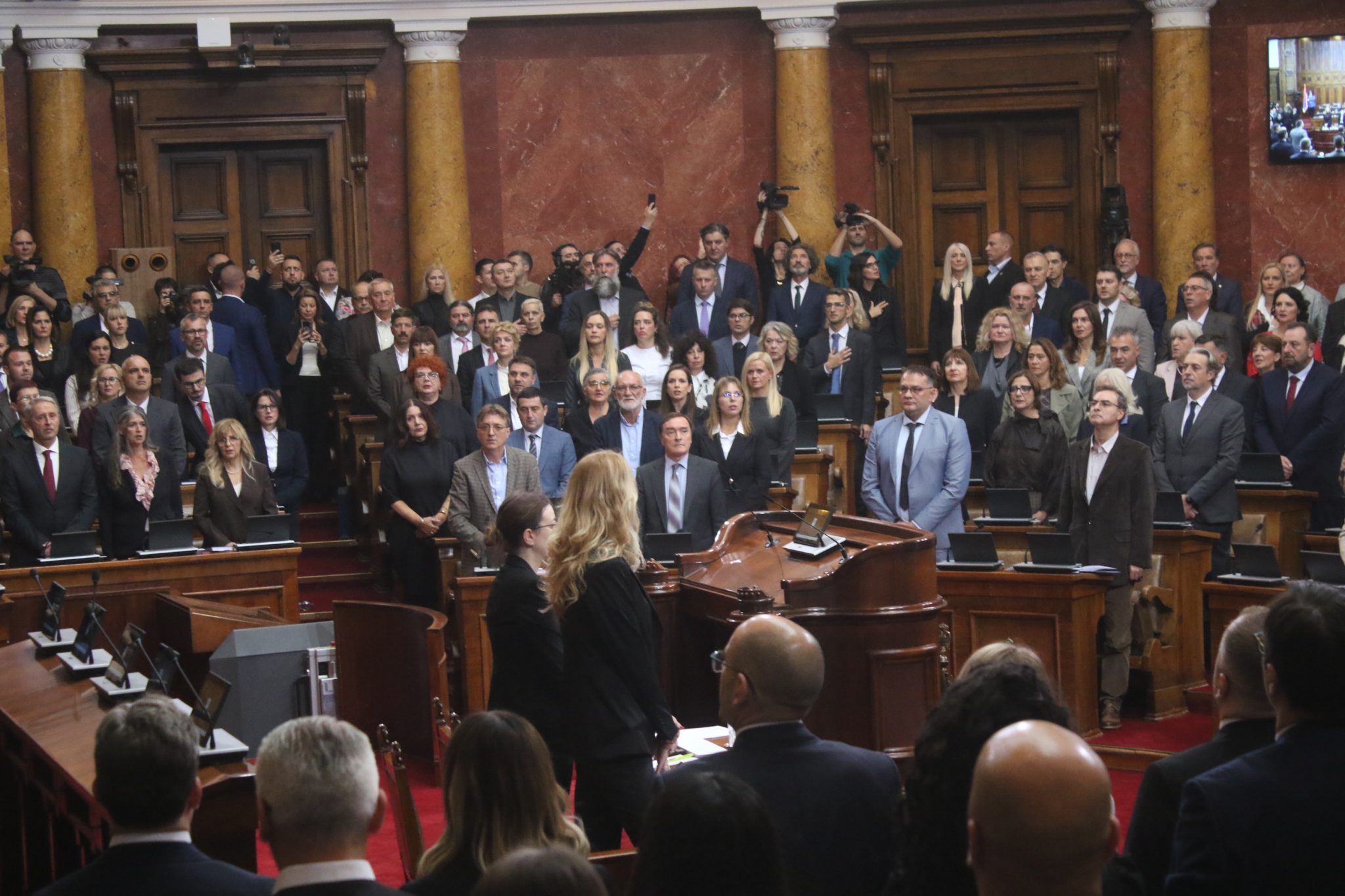
The Student List stated that they disagree with the content of the European Parliament’s draft resolution on the 35th anniversary of the fall and destruction of Vukovar.
“In our view, the document in its current form does not contribute to an objective understanding of historical events, nor to building trust and reconciliation among the peoples of the former Yugoslavia. The draft resolution almost entirely ignores the suffering of the Serbian civilian population in Croatia, including killings, persecution, the destruction of property, and mass displacement”, the press release remarks.
According to the Student List, events such as Operations “Flash” and “Storm”, as well as the crimes committed against Serbian civilians during the war, cannot be left out of a complete account of this historical period.
“It is unacceptable for the complex processes of the break-up of the SFRY, inter-ethnic relations, and armed conflict to be reduced to a simplified picture of the collective responsibility of the Serbian people. Responsibility for war crimes must be individual and established on the basis of evidence and final court judgments, not attributed to entire peoples”, the press release notes.
The Student List argues that the issues of missing persons, opening archives, and prosecuting war crimes must be resolved through sincere regional cooperation, mutual respect, and equal standards for all states.
“Serbia has an obligation to cooperate in clarifying the fate of the missing and establishing responsibility for the crimes committed, but the same approach must also apply to Serbian victims and the crimes committed against them. European institutions, which advocate reconciliation, tolerance, and shared European values, must be consistent in their attitude towards all victims and all historical facts. Remembrance of the past must not become a means of political pressure, nor be used to deepen existing divisions in the region”, the press release reads.
In addition, the Student List stresses that “Serbia and the Serbian people have the right to remember their own victims with dignity, just as all other peoples have the right to preserve the memory of their dead”.
“True reconciliation is not possible by imposing one-sided interpretations of the past, but only by honestly facing all crimes, regardless of who committed them and against whom. For all these reasons, we believe that the draft resolution in its current form does not contribute to a balanced culture of remembrance and to reconciliation. It misses the opportunity to address, in a complete, objective, and non-discriminatory way, the suffering of all peoples during the wars of the 1990s”, the press release concludes.