• Balkanoscope - EWB Newsletter

    EU enlargement advances as demands for accountability shape the Western Balkans

    Fresh steps in EU accession talks dominated the agenda in Brussels, while protests in Albania, Serbia’s election campaign and a dispute over Kosovo’s Specialist Chambers highlighted unresolved questions of accountability. This week’s developments reveal the political tensions accompanying the region’s progress towards EU membership.

    Dear readers,

    EU enlargement featured prominently on the agenda this week, from intergovernmental accession conferences to discussions among EU leaders at the European Council. Montenegro closed three more negotiating chapters, Albania closed another, and Ukraine and Moldova each opened new clusters.

    However, images from Brussels told only part of the story.

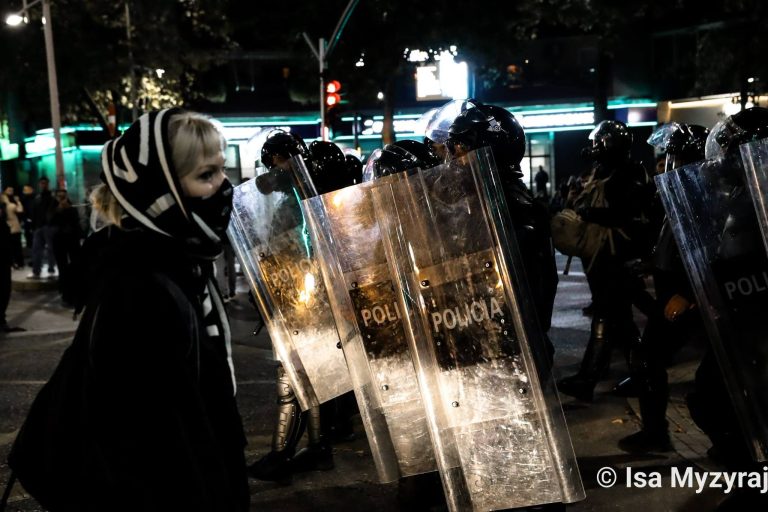
    As Albania took another step towards the EU, students at home were taking to the streets over education costs, poor university conditions and frustration with corruption. The protests escalated into violence, with buildings set alight and police responding with tear gas and water cannon. The escalation should not obscure what preceded it – more than 100 days of peaceful demonstrations met with intimidation and police violence, leaving citizens’ grievances unanswered.

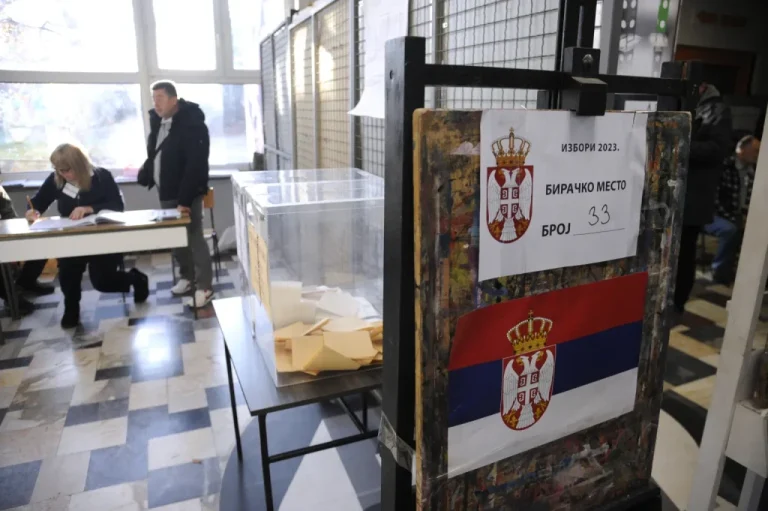
    In Serbia, demands for accountability have moved from the streets into the electoral contest. As the campaign enters its final week before the parliamentary elections on 25 October, the Student List stands as the ruling party’s strongest challenger. The ruling Serbian Progressive Party has continued its negative campaign against the students, while also accusing Croatia and members of the European Parliament of interfering in the elections.

    In Kosovo, the dispute centred on accountability for the past. Enlargement Commissioner Marta Kos renewed her criticism of amendments to the law governing the Specialist Chambers, warning that their adoption and implementation would represent a serious step backwards on Kosovo’s path towards the EU.

    If you would like to support EWB as your trusted source on EU integration, you can do it now through our “Buy Me a Coffee” page. If you would like to help us improve our work, we would be grateful if you could take a few minutes to complete our reader survey.

    Best regards,

    Sofija Popović
    Newsletter Editor

    In Focus

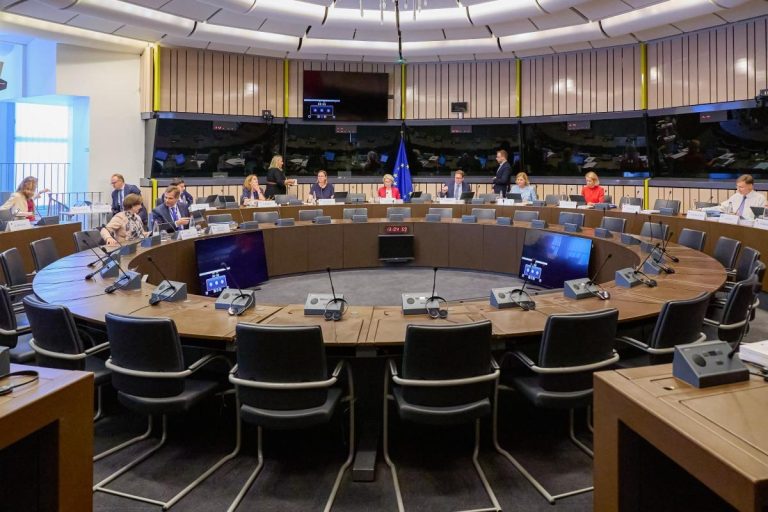
    On Thursday, the European Council held a strategic discussion on the way forward on enlargement and internal reforms.  European Council stresses the continued importance of enlargement as a geostrategic investment in peace, security, stability and prosperity. 

    EU leaders underline that enlargement is a driver for improving the economic and social conditions of European citizens, reducing disparities between countries, and must foster the values on which the Union is founded. 

    In parallel, the EU needs to advance internal work and reforms, set its long-term ambitions and the ways to achieve them, and address key questions related to its priorities and policies as well as its capacity to act. 

    The European Council takes note of the Commission’s communication on “Preparing for a wider Union” and calls on the Council to analyse all strands and, on the basis of this analysis, to take work forward. 

  • Balkanoscope - EWB Newsletter

    EU prepares for enlargement as Balkan politics face fresh tests

    Brussels proposes fewer vetoes and stronger democratic safeguards, Kosovo breaks its institutional deadlock, and Dodik’s allies consolidate power in BiH. Meanwhile, concerns over electoral conditions mount ahead of Serbia’s parliamentary vote.

    Dear readers,

    The European Commission presented its proposals for preparing the EU for its next enlargement this week, combining closer integration before membership with stronger safeguards against democratic backsliding afterwards. A key message is that enlargement can proceed without changing the EU’s founding treaties, avoiding a complex and politically uncertain process. But the proposals still depend on agreement among member states.

    In Kosovo, parliament elected Justina Shiroka Pula as president, ending a prolonged institutional deadlock and narrowly averting another snap election. The crisis had already prompted two snap elections. The breakthrough gives Kosovo an opportunity to restore institutional stability after months in which political disputes repeatedly pushed reforms aside.

    In BiH, Sunday’s general elections reinforced the influence of familiar political forces. Despite being barred from public office, Milorad Dodik emerged as the biggest winner, with his allies winning the races for the RS presidency and the Serb seat in the state presidency, while SNSD strengthened its position.

    Serbia is approaching its own parliamentary elections on 25 October with growing concerns over electoral conditions. The authorities refused to invited the European Parliament to send an observation delegation before its procedural deadline on 8 October. By failing to invite a European Parliament election observation mission,  Serbia has joined Turkey and Georgia as the only countries in the EU enlargement process that do not invite the European Parliament to observe their elections. During the first three weeks of campaign, CRTA recorded 49 incidents and warned of a campaign shaped by fear of violence and chaos. At the same time, on TV channels with national coverage, the authorities received two-thirds of the airtime devoted to political actors, while 88% of coverage of the Students’ List was negative.

    If you would like to support EWB as your trusted source on EU integration you can do it now through our “Buy Me a Coffee” page. Also, if you would like to help us improve our work, we would be grateful if you could take a few minutes to complete our reader survey.

    Best regards,

    Sofija Popović
    Newsletter Editor

    In Focus

    Fewer decisions requiring unanimity, new powers to withhold EU funding and restrict voting rights for new members that breach rule of law commitments – these are among the measures proposed by the European Commission to prepare the bloc for its next enlargement, unveiled by Enlargement Commissioner Marta Kos on Tuesday. 

    The Commission will also present roadmaps with indicative timelines for four frontrunners, Montenegro, Albania, Ukraine and Moldova, later this month. At the same time, Brussels is proposing a more ambitious approach to gradual integrating candidate countries ahead of membership, conditional on reforms and closer strategic alignment with the EU. 

    The Commission wants to expand the use of qualified majority voting wherever existing treaties allow, reducing the number of areas in which a single member state can block decisions supported by the others. 

    Enlargement Commission Marta Kos cited sanctions, measures against tax fraud and intermediate steps in accession negotiations as examples where unanimity could be reduced. 

    The proposals also envisage greater use of “enhanced cooperation”, allowing groups of member states to move ahead in specific policy areas while leaving the door open for others to join later. 

    Across the Balkans

    Justina Shiroka-Pula elected President of Kosovo by Parliament

    BiH risks losing 379.9 million euros from the Growth Plan

    Budapest-Belgrade high speed passenger trains expected to launch in December

    Judiciary in North Macedonia and the risk of state capture

    Why is Milorad Dodik the biggest winner of the general elections in BiH?

    “Amendments to the Law on Specialist Chambers go against Kosovo’s international obligations to the EU”

    “Nova” staff accuse the new owner of imposing a chief editor just ahead of the election

    What are the results of BiH’s general elections?  

    Protests escalate in Pristina over amendments to Specialist Chambers law

  • Balkanoscope - EWB Newsletter

    Von der Leyen backs EU ambitions as elections dominate Serbia and Bosnia

    Montenegro and Albania receive fresh encouragement for their EU membership ambitions, while North Macedonia is urged to regain momentum. With election campaigns underway, Serbia and Bosnia and Herzegovina remain outside the Commission President’s regional itinerary.

    Dear readers,

    European Commission President Ursula von der Leyen was back in the Western Balkans this week. You could follow her messages from across the region on our website. Two stops on her tour in particular showed where EU enlargement policy currently stands. In Tirana, she said Albania’s EU accession goals are “on the horizon”, while in Podgorica she backed Montenegro’s ambition to become the 28th member by 2028.  At the time of sending this newsletter, Von der Leyen is in Skopje, where she said that North Macedonia need to regain momentum on its path towards EU membership.

    At the same time, the European Commission is preparing new roadmaps for the most advanced candidate countries, including Montenegro and Albania, which should provide a clearer picture of what remains to be done and within what timeframe.

    This time, the Commission President skipped Bosnia and Herzegovina and Serbia because of the ongoing election campaigns in both countries.  

    Citizens of Bosnia will vote in general elections this Sunday. The campaign has once again highlighted the country’s deep political and ethnic divisions, with national issues and accusations between political rivals overshadowing the concerns citizens identify as their most pressing – from the cost of living and wages to the departure of young people and a lacks of jobs.

    Serbia will vote later on 25 October, with the election campaign continuing. Aleksandar Vučić resigned as President for Serbia in order to run for prime minister, while Parliament Speaker Ana Brnabić took over as Acting President.

    If you would like to support EWB as your trusted source on EU integration you can do it now through our “Buy Me a Coffee” page. Also, if you would like to help us improve our work, we would be grateful if you could take a few minutes to complete our reader survey.

    Best regards,

    Sofija Popović
    Newsletter Editor

    In focus

    The European Commission is expected on 6 October to propose significant changes to the way the EU takes decisions – without reopening the treaties – alongside an entirely new set of safeguards against democratic and rule of law backsliding in future member states.  

  • Balkanoscope - EWB Newsletter

    Elections, political deadlock and EU hopes shape the Western Balkans’ autumn

    Serbia and Bosnia and Herzegovina are heading to the polls, Kosovo remains in institutional limbo, and Montenegro hopes to accelerate its EU accession. As the region enters a politically intense autumn, EWB relaunches Serbia Elects to track one of its most consequential contests.

    Dear readers,

    The Western Balkans is heading into a politically intense autumn, with elections, the continuation of institutional crises and renewed hopes of progress towards the EU all unfolding at the same time.

    In Serbia, it is now clear that early parliamentary elections will be held in late October. Bosnia and Herzegovina is also heading to the polls, while in Kosovo there is still no clear end in sight to the political and institutional crisis. Meanwhile, Montenegro is hoping for a very different kind of political autumn. The government expects the EU accession process to accelerate further. At the same time, Prime Minister Spajić has warned in recent days that Montenegro is facing hybrid interference from two WB countries.

    Since Serbia is entering what could prove to be a historic election, we have also brought back something for our readers. European Western Balkans has relaunched Serbia Elects, our dedicated section for coverage of Serbian elections. In the weeks ahead, this is where you will be able to follow the campaign, polls, and everything you need to know ahead of elections day. You can also follow Serbia Elects on X, where we will regularly share the latest updates and development throughout the campaign.

    Sofija Popović
    Newsletter Editor

    In Focus

    Serbia is entering the autumn of 2026 amid widespread expectations that the country is on the brink of decisive parliamentary elections. While President Vučić has been announcing possible snap elections for some time, he recently mentioned specific dates for the first time: 18 or 25 October. This implies that the elections would have to be called in the first ten days of September.  

Load more