BRUSSELS – The annual report on the implementation of the Common Foreign and Security Policy (CSFP), adopted by the European Parliament on 2 April, states that there is “the continued need for reforms regarding the rule of law, fundamental rights and public administration, and for alignment with the CFSP, including on sanctions and on the EU’s visa policy” in the Western Balkans.
The document, drafted by the EP’s Rapporteur on the CFSP David McAllister, calls on the WB Six “to use all the resources made available to support their alignment with the EU acquis”.
In addition, it underlines the importance of “the local, vibrant civil societies” in the region.
“Civil society is vital in fostering democracy and pluralism and promoting good governance as well as social progress and that the enlargement countries should provide an enabling space and an appropriate framework for cooperation to ensure their meaningful involvement”, the report states.
When it comes to the individual countries in the Western Balkans, the EP, among other things, welcomes Albania’s ambition of closing accession negotiations swiftly, urges the political leaders of BiH to implement a substantial set of reforms, calls on Kosovo to continuously engage in the dialogue with Serbia in good faith, expresses the solidarity with the protestors in Serbia, encourages Montenegro to implement EU-related reforms as soon as possible, and calls on North Macedonia to make the constitutional changes.
“Albania needs to further intensify reforms”
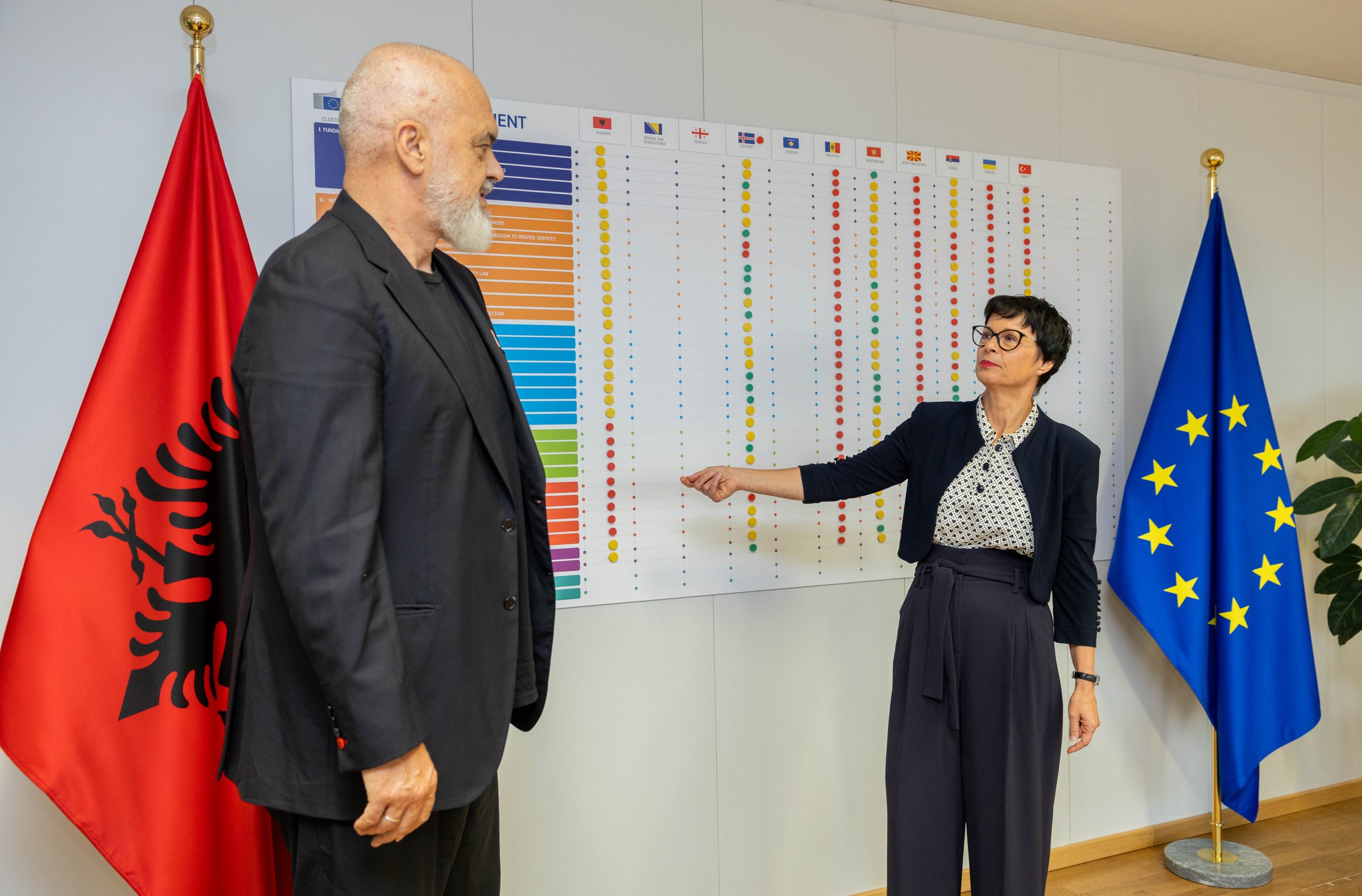
The EP welcomes the successful finalisation of the screening process for Albania at the end of 2023 and the opening of the first cluster of negotiating chapters on fundamentals and on external relations (Cluster 6) in 2024. However, it highlights the need to further intensify reforms “to address deficiencies that persist regarding the ‘fundamentals’, in particular concerning the rule of law, fighting corruption and organised crime”.
It also underscores the importance of a viable political pluralism and a competitive opposition in Albania, and calls for “dialogue and constructive engagement between the majority and the opposition to overcome the strong political polarisation in the country and to foster inclusive democratic processes that respects all parties, including the Greek, Roma and Egyptian minorities in the country”.
The call for “targeted sanctions” against Milorad Dodik is reiterated
The EP encourages the authorities in Bosnia and Herzegovina to take all of the relevant steps set out in the European Commission’s recommendation of 12 October 2022 and denounces “the recurring inflammatory rhetoric and secessionist laws and policies of the leadership of the entity Republika Srpska”.
Furthermore, it takes note of the ruling of the Court of Bosnia and Herzegovina in the case of the President of RS Milorad Dodik on 26 February 2025 and condemns “his unprecedented attacks on the institutions of Bosnia and Herzegovina, together with the RS leadership, and the intimidation of the opposition in RS”.
Finally, the EP reiterates its call for targeted sanctions “against destabilising actors within BiH, notably Milorad Dodik, as well as other high-ranking officials of RS and Serbian officials providing political and material support for secessionist policies”.
Solidarity with the participants of the peaceful protests in Serbia
The European Parliament reiterates its position that the EU accession negotiations with Serbia “should advance only if the country aligns with EU sanctions against Russia and makes significant progress on its EU-related reforms, in particular in the area of the ‘fundamentals’”.
Therefore, it reminds the Serbian authorities that “the proper functioning of democratic institutions is at the core of Serbia’s EU accession process and the EU accession methodology”.
The EP urges Serbia’s political leadership to ensure “constructive, inclusive dialogue across the political spectrum and to deliver on the necessary reforms for Serbia to progress on the path to EU accession”.
It stresses that the EP “has closely followed the large mobilisation of students, joined by other groups of citizens following the tragic incident of the Novi Sad railway station”, recalling that “freedom of assembly is a fundamental right”.
Finally, it calls for “a thorough, impartial and speedy investigation into the allegations of violence against demonstrators and of police misconduct during protests”, and expresses “its solidarity with the participants of the peaceful demonstrations, most notably those at the demonstration of 15 March 2025, the largest mass protest in the modern history of Serbia”.
“The restrictive measures imposed on Kosovo should be lifted immediately”
The EP reiterates its call on the Member States in the European Council to mandate the Commission to present the questionnaire and to submit its opinion on the merits of Kosovo’s application for EU membership.
In addition, it recalls that Kosovo’s bid to be considered a candidate country will be assessed on the basis of its own merits and of its success in meeting the Copenhagen criteria for EU membership, and calls for the immediate lifting of the restrictive measures imposed by the Council against Kosovo.
Montengro is expected to be ready to join the EU within the next couple of years
The EP welcomes the progress made by Montenegro in meeting the interim benchmarks for Chapters 23 and 24 of the EU acquis. Nonetheless, it expresses concerns over “controversial ideas for legislative proposals on citizenship and foreign agents floated in public”.
In addition, it stresses the importance of the new government being able and committed to take forward the EU-related reforms and keep Montenegro firmly on the EU strategic path, and expects the country to start “closing chapters in the accession negotiations and to be ready to join the EU within the next couple of years”.
North Macedonia should make relevant constitutional changes
The EP welcomes the successful finalisation of the screening process for North Macedonia at the end of 2023.
It also urges the government of North Macedonia to achieve tangible results in fulfilling its obligation under the EU negotiating framework and the conclusions of the European Council meeting of 18 July 2022, including relevant constitutional changes in line with the country’s commitments.