BERLIN – The 2025 Transparency International Corruption Perceptions Index (CPI), published today, reveals a troubling picture of systemic corruption across the Western Balkans, with countries struggling to strengthen institutions, enforce transparency, and uphold the rule of law.
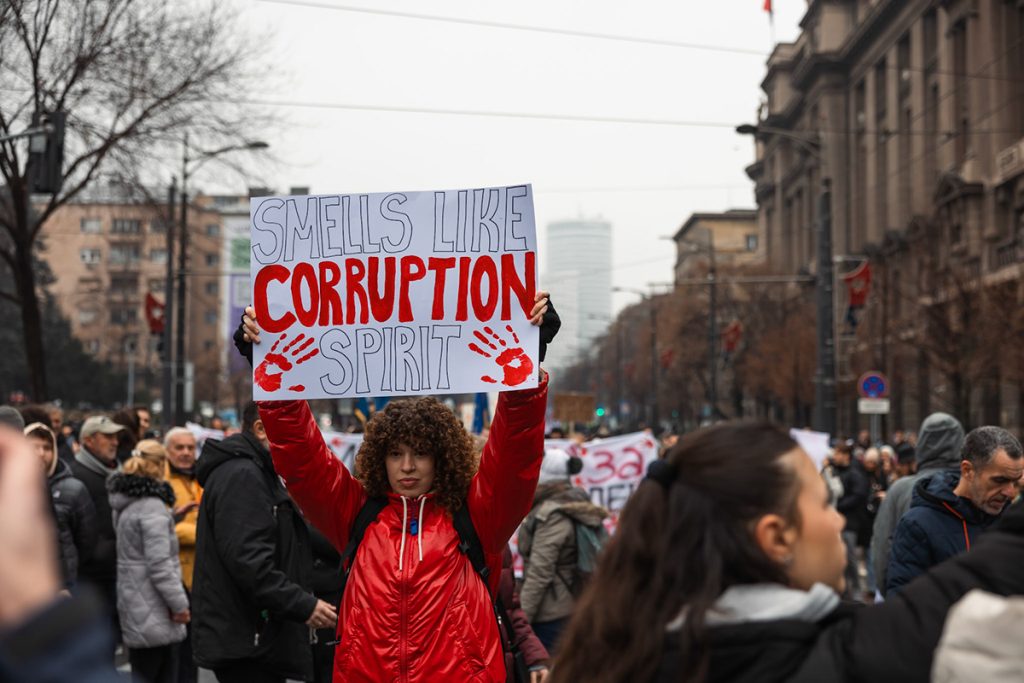
At the bottom of the regional ranking, Serbia is the worst-performing country, with a CPI score of 33, placing it 116th globally. The report highlights widespread abuse of office, political interference, and mounting pressure on independent institutions.
Bosnia and Herzegovina follows closely with a score of 34, ranking 109th globally, reflecting stalled reforms and weak judicial and administrative systems. North Macedonia also faces serious challenges, scoring 40 and occupying 84th place, showing that the country remains plagued by systemic issues.
Albania has seen a deterioration in its global ranking, falling from 42 points in 2024 to 39 points in 2025, dropping 11 places to 91st globally. Transparency International notes that the decline reflects growing concerns over bribery, misuse of public funds, political appointments, and lack of oversight in public sector decision-making.
Countries in the mid-range of the regional list, Croatia and Montenegro, show moderate stability but continue to face governance challenges. Croatia scored 47, ranking 63rd globally, while Montenegro scored 46, placing 65th, indicating that efforts to combat corruption have yet to fully strengthen key institutions.
The CPI measures perceived corruption in the public sector on a scale from 0 (highly corrupt) to 100 (very clean).
It evaluates bribery, misuse of public funds, abuse of office, excessive bureaucracy, political appointments, asset disclosure, protection for whistleblowers, state capture, and public access to information. While it does not capture private-sector corruption or citizen experiences, it remains a critical tool to assess the strength of public institutions.
In the report, it is assessed thatthe Western Balkans are struggling with weak institutions, political interference, and opaque decision-making.
Experts warn that without decisive reforms, including judicial independence, transparent public procurement, and robust civic oversight, corruption will continue to undermine governance and public trust across the region.