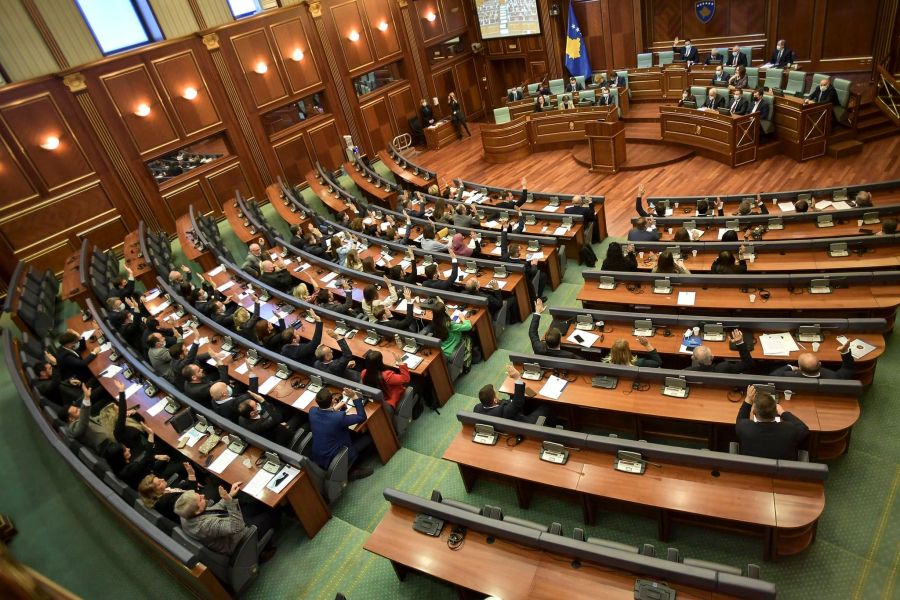
PRISTINA – Kosovo’s parliament failed to elect a new president of Kosovo in its last attempt before the deadline expired, which implies that Kosovo will go to the third general election in just over a year.
Last night’s parliamentary session was attended only by MPs of the Vetëvendosje, and representatives of minority communities, while it was boycotted by MPs of the Democratic Party of Kosovo, Democratic League of Kosovo, Alliance for the Future of Kosovo and Serb List. Therefore, the requirement of a two-thirds majority quorum was not met.
Since the president is not elected within the prescribed deadline, the Assembly is automatically dissolved, and Kosovo will go to new parliamentary elections within 45 days. On 28 April, the Central Election Commission asked for the launch of amendments that would allow the extension of the deadline for the organisation of early elections from 45 to 60 days.
Kosovo Assembly Speaker Albulena Haxhiu and Prime Minister Albin Kurti had repeatedly called on opposition MPs to participate in the parliamentary session, stressing that it was their constitutional obligation.
Kurti accused the opposition parties of boycotting the sessions for the election of the president to intentionally block the work of institutions, describing such actions as “unethical and anti-institutional”.
“They are aware that elections are not the solution. They do not want responsibility, they do not want power, but they want us not to have it either. However, this is not decided by them, but by the people of Kosovo, who have increasingly supported us in accord with the implementation of our promises and the improvement of the circumstances, both in the socio-economic and security aspects”, Kurti noted.
On the other hand, representatives of the opposition parties throughout the process claimed that the election of the president of Kosovo was carried out in “a unilateral way and in flagrant violation of the Constitution of Kosovo”.
Civil society organisations also warned that voting for the President without a quorum posed a danger to the democratic order, assessing that the situation was a serious violation of the constitutional order and parliamentary rules.