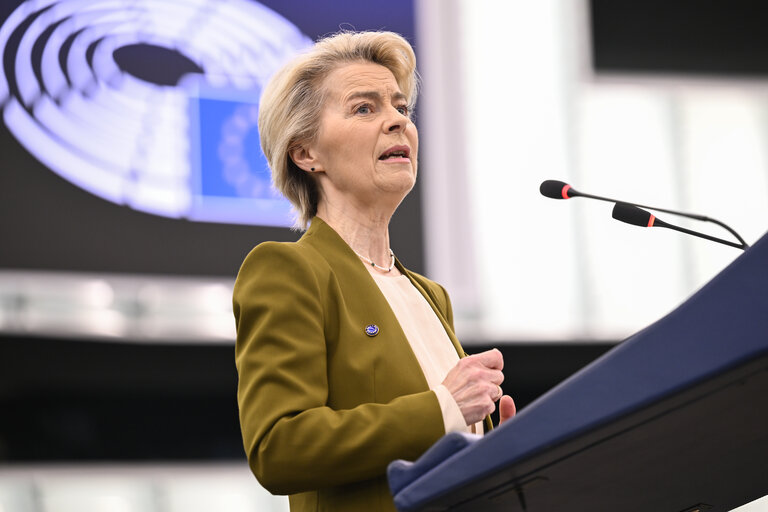
BELGRADE / BRUSSELS – While Serbian officials emphasise that no formal decision has been made to freeze funds from the European Union’s Growth Plan, they simultaneously confirm that the European Commission is awaiting the implementation of the Venice Commission’s recommendations related to the controversial judicial laws. According to the European Commissioner Marta Kos, until the situation in the judiciary is “repaired”, there will be no further disbursement of funds to Serbia.
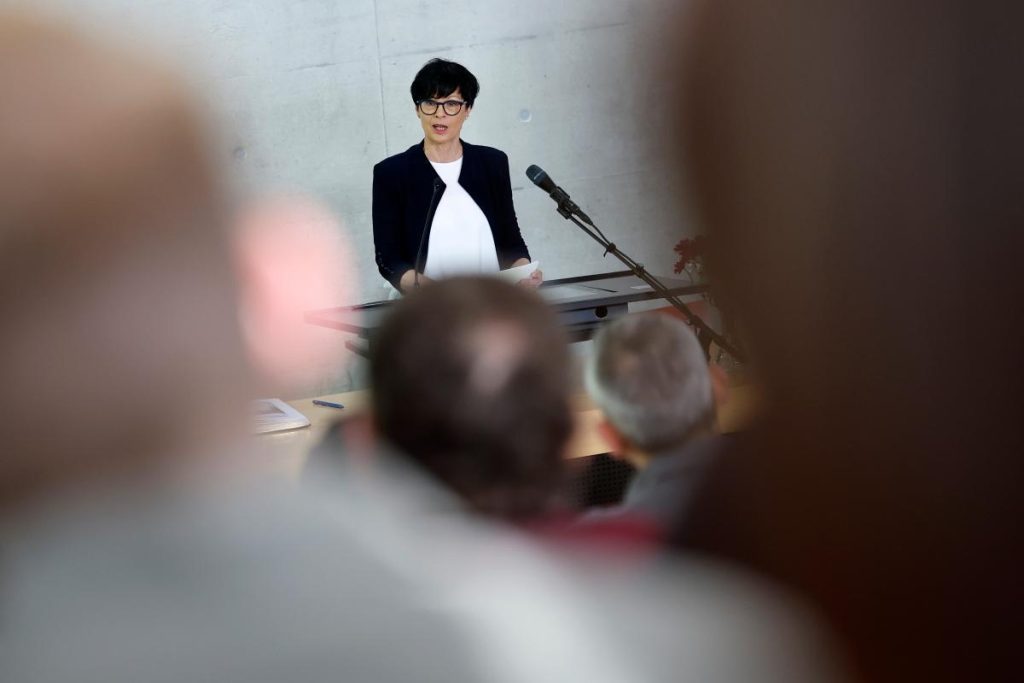
Late last week, Commissioner Kos drew attention with her remarks at the University of Fribourg in Switzerland that, for now, all payments from the Growth Plan for Serbia have been halted.
“For the time being, we have stopped all the payments from the Growth Plan because (Serbia) was backsliding in the judiciary, and as long as they do not repair this, they will not be able to receive EU financial support,” Kos stated.
In January 2026, the ruling coalition in Serbia adopted revisions of the laws on the judiciary, widely described as limiting its independence. This has led to sharp criticism from Brussels.
In an opinion published at the end of April, the Venice Commission largely confirmed the critics’ arguments and outlined a series of recommendations for amending these laws, while the European Commission stated that it expects Serbia to implement these recommendations as soon as possible.
The Growth Plan is a financial instrument of the European Union for the Western Balkans, consisting of grants and favorable loans. For Serbia, just over €1.5 billion has been allocated under the plan for the period from 2024 to 2027.
Twice a year, Serbia submits a request to the European Commission for the disbursement of funds from the Growth Plan. The Commission makes decisions on payments based on the fulfillment of steps outlined in the Reform Agenda, which Serbia adopted in 2024.
However, there are also general preconditions for the disbursement of funds from the Growth Plan. Among them is respect for the EU’s fundamental values, including the rule of law.
As confirmed during his appearance on Radio Television of Serbia on 2 May by Minister for European Integration Nemanja Starović, Serbia submitted a request in July 2025 for the payment of the second tranche from the Growth Plan, but a decision on that request is still pending in the European Commission. According to the minister, the reason is precisely the judicial laws.
“There is an expectation from the European Commission that we fully implement the recommendations of the Venice Commission. And I can say that our colleagues from the European Commission are knocking on an open door, because we have accepted this,” Starović said.
A nearly identical message was sent on Monday, also from the RTS studio, by Serbia’s Ambassador to the EU, Danijel Apostolović. He stated that “there is no formal decision to freeze, suspend, or terminate funds for Serbia.”
“We have submitted a request for the payment of the second tranche of funds. Once we meet all these conditions, the funds will be transferred to our account,” Apostolović said, while it was clear from his earlier remarks that “all conditions” include the recommendations of the Venice Commission.
In this regard, Apostolović confirmed that public hearings on new judicial laws – which, as announced, are intended to fulfill the Venice Commission’s recommendations – will be held on 6 and 7 May in the National Assembly, after which, on 8 May, the draft laws will be sent to the Venice Commission for an opinion.
Both Starović and Apostolović stated that they expect the amended set of judicial laws to be adopted by the end of May.