During the summer of 2026 the political scene in Bosnia and Herzegovina was extremely tense ahead of the election campaign, which officially starts today. In the last two months statements by key politicians and parties in both entities – the Federation of BiH and Republika Srpska, reflected deep constitutional disputes and a struggle for control over key state and entity functions.
A total of 518 officials will be elected in the general election, scheduled for 4 October 2026. Based on the date published in August a total of 3,408,517 voters were registered in the electoral register.
The election was called for the Presidency of Bosnia and Herzegovina, The House of Representatives of the Parliamentary Assembly of Bosnia and Herzegovina, The House of Representatives of the Parliament of the Federation of BiH, the National Assembly of Republika Srpska, the President and Vice-presidents of Republika Srpska and ten cantonal assemblies in the Federation of BiH.
The election campaign will last until 3 October 2026 at 7:00 a.m, when the election silence period begins.
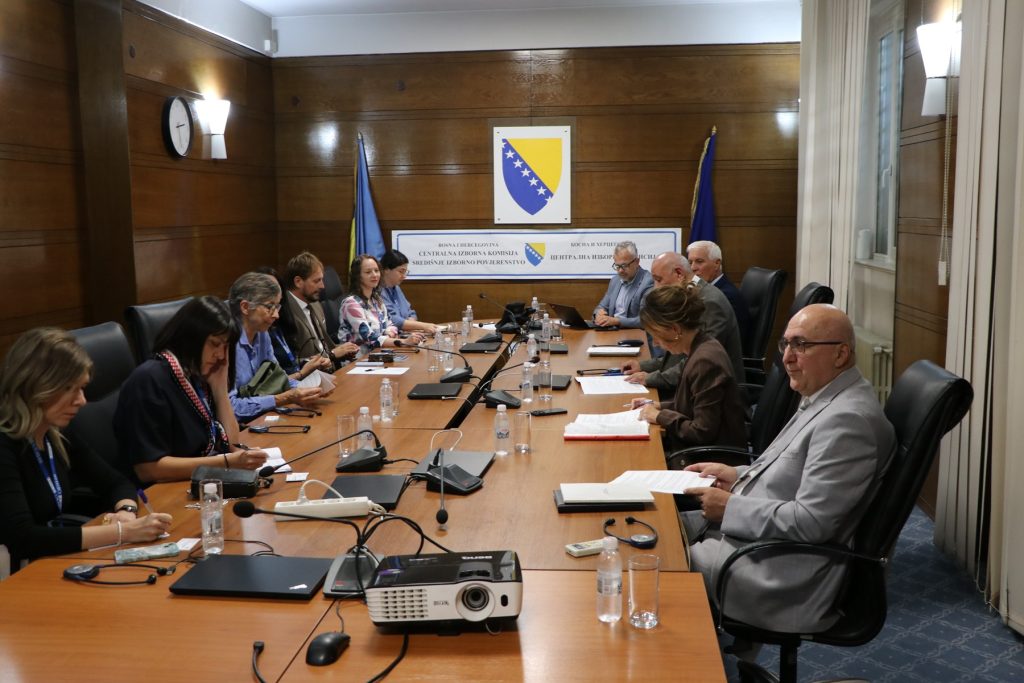
The Central Election Commission of Bosnia and Herzegovina called on all political subjects, candidates, their supporters and the media to strictly comply with the Election Law of Bosnia and Herzegovina, with particular emphasis on the prohibition of hate speech in the public sphere.
SNSD focuses on “defending RS jurisdiction”, while SDS bloc stresses economic problems
In July 2026, the ruling coalition in Republika Srpska, led by the Alliance of Independent Social Democrats (SNSD), announced that their candidate for a member of Presidency of BiH from the ranks of the Serb people is Željka Cvijanović, while Savo Minić is nominated for President of RS. Milorad Dodik, a former President of Republika Srpska, remains the leader of SNSD, but he cannot run for office due a final ruling by the Court of BiH that banned him from holding a public office for six years.
Despite the ban, the election list called “SNSD – Milorad Dodik“ was registered. The opposition sees this move as an attempt to circumvent the court ban and continue de facto political activity of Dodik.
SNSD rhetoric remained focused on defending RS jurisdiction, opposing international community interference and preserving “the patriotic bloc”.
In late August 2026, Milorad Dodik claimed that “the purpose of introducing new technologies into the upcoming electoral process in BiH is to enable electoral fraud to be carried out by international representatives, noting that they nevertheless cannot defeat the Serb people”. He referred to the biometric scanners that will be deployed for upcoming election, in an attempt to cut down on illegal voting practices.
It was announced that scanners are to be tested and delivered in phases, with the total deployment including 6,000 biometric voter identification devices and 6,000 ballot scanners installed at polling stations nationwide. The equipment is intended to prevent instances of multiple voting, casting votes using the identity of deceased voters, and other types of voter fraud.
Commenting on the claims by Dodik, Tanja Topić, analyst and Head of Friedrich Ebert Foundation Office in Banja Luka, states for EWB that “the old recipe” according to which the ruling parties produced “the enemies of the society”, so that to portray themselves as the “exclusive protectors” of their own ethnic group group, has now taken on a new dimension”.
“Nowadays, the biggest enemies are the scanners and new technologies, which are presented as the product of the West, aimed at destroying RS and its defenders”, Topić notes.
Meanwhile, opposition parties in RS criticized the ruling coallition for undermining the rule of law and using party infrastructure to relativize court decisions. They focused on economic problems, accusing SNSD of political recycling and vote buying, while trying to consolidate a common front against Željka Cvijanović.
According to an agreement reached in July 2026, the main opposition forces agreed to run together and back the leader of the Serb Democratic Party (SDS), Branko Blanuša, as a candidate for President of RS, whereas Marinko Božović is nominated for the Serb member of BiH Presidency.
In addition, ahead of the general election, doctor Vlado Đajić founded political party “The Will of the People of Srpska”. Once a powerful high-ranking official within the ruling SNSD, Đajić shifted his political path drastically following his ouster from power, positioning him as a critical wildcard in the upcoming voting in RS.
In July and August, both Milorad Dodik and main opposition figures attended numerous public events in RS, including concerts and local festivals.
“The campaign is largely ongoing, even before it has officially started. It is quite uninventive and almost all political actors, especially in RS have applied the same model and format. Citizens are offered songs and games, tents, food and drink. We have not seen the programs so far, but according to the logic of both politicians and citizens, nobody reads them. We look at recycling of promises, and when we look at pictures from places where promises were made 4, 8 or 12 years ago, we see neglected and overgrown empty areas”, Tanja Topić remarks.
Deep polarization between “Troika” and SDA continues in the Federation of BiH
Ahead of the general election, the political landscape in the Federation of BiH was marked by great fragmentation, with the two main candidates for the Bosniak member of BiH Presidency being Denis Bećirović and Bakir Izetbegović. Bećirović is the incumbent member of the Presidency, representing a wide bloc gathered around so-called “Troika” coalition, while Izetbegović is the leader of the Party of Democratic Action (SDA) and former two-term Presidency member.
As the sitting Chairman of the Presidency, Bećirović focused his summer activities on high-level international diplomacy and projecting a statesmanlike image, declaring that he would focus on “serious work” rather than early campaigning.
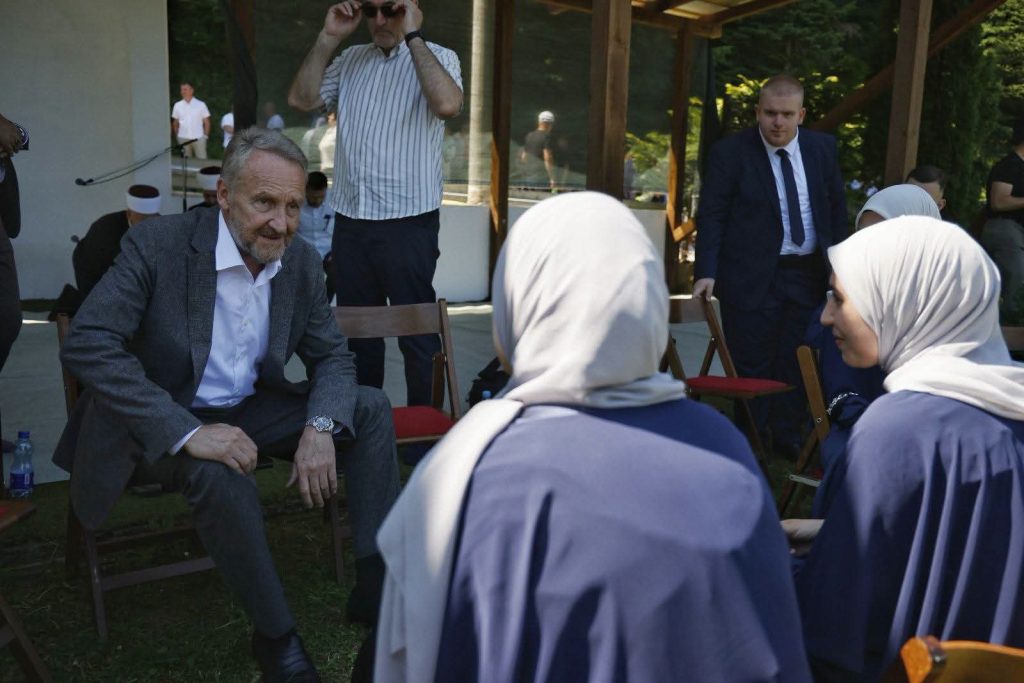
Throughout July and August, Izetbegović used party conventions, such as the 36th anniversary of the SDA in Zenica and regional boards in Tuzla, to slam the current government. He argued that the current leadership was “clueless” in handling foreign policy, public finances, and the economy, claiming the public had grown tired of their rule.
He also focused heavily on national security messaging, warning that separatist threats from Republika Srpska’s leadership must be met with decisive pushback, and strongly cautioned against any attempts to form a “third entity” (Croat self-rule initiatives), stating that such political maneuvers were “playing with fire”.
When it comes to a Croat member of BiH Presidency, main candidates include Darijana Filipović (HDZ BiH) and Zdenko Lučić (joint candidate of “Five-party” Bloc).
According to Denis Džidić, Director of BIRN BiH, “so far, we have heard very little about how political parties plan to improve the lives of citizens, about the economy, education, health or the European path of the country”.
“Much more space has been taken up by attempts to mobilize voters through emotions, divisions and conflicts. Therefore, we can expect a campaign in which the facts and concrete plans again be repressed by lies and manipulation about the past, attacks on individuals. This is particularly troubling because voters are deprived of the real election campaign offers – the ability to compare the policies and decide who offers a more convincing plan for the future”, Džidić states for EWB.
Ethnic divisions deepened by death of convicted war criminal Ratko Mladić
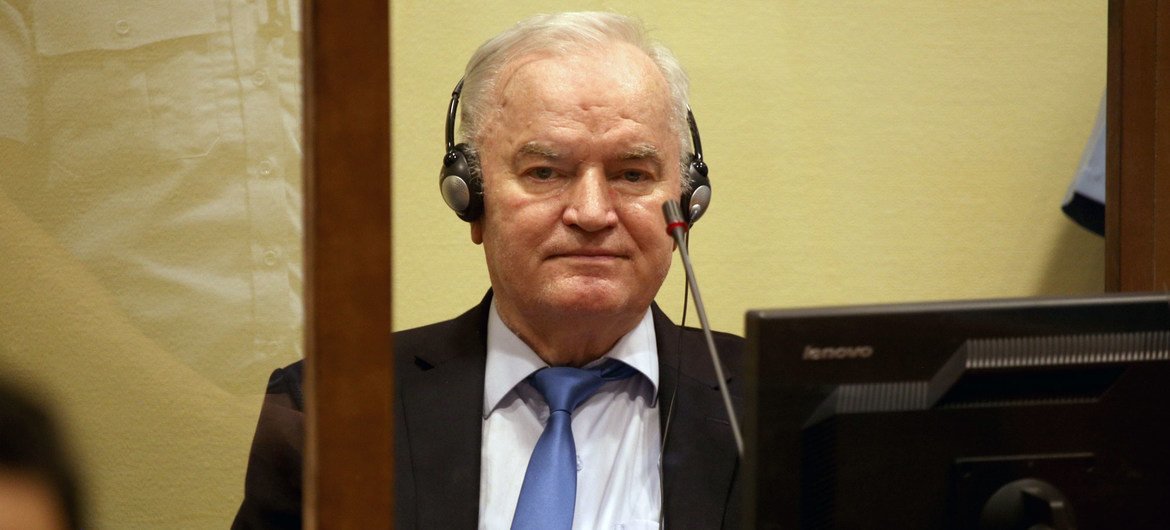
In the summer of 2026, the burning political issue was the death of convicted war criminal Ratko Mladić, who died on 27 August, in a Special UN detention unit in the Hague. The majority of politicians in Republika Srpska expressed their condolences to the family of Ratko Mladić. For instance, Milorad Dodik claimed that Mladić was highly respected by the Serbian people, arguing that the Hague tribunal’s refusal to grant him medical release was an “organized approach” intended to cause a fatal outcome.
For his part, Branko Blanuša stated that “the name of general Mladić will forever remain inscribed in the history of Republika Srpska and in the memory of our people”.
On the other hand, Denis Bećirović and other leaders of the Federation consistently maintained that international court rulings must be respected. In The Federation Mladić is viewed strictly as the “Butcher of Bosnia” and a legally recognized orchestrator of genocide and crimes against humanity.
Along with the wider Bosniak political landscape, Bakir Izetbegović’s camp pointed to Mladić’s death in a prison hospital as a final confirmation that he was held fully accountable by global justice. They expressed profound condemnation over the fact that authorities in RS and neighboring Serbia continue to institutionalize his denial and promote him as a hero.
“The death of Ratko Mladić deepened heated ethno-national passions and confirmed that, in fact, the democratic and critical culture of thought and memory is at an extremely low level. Political actors use this death to sharpen nationalist rhetoric, to relativize crimes, side with criminals as if they were heroes, and citizens to dangerous outbursts of hatred on social networks. It is quite certain that political parties, especially those with ethno-national overtones, will use this event to mobilize voters on the national matrix”, Tanja Topić claims.
Similarly, Denis Džidić notes that the death of Mladić “almost completely dominates the beginning of the election campaign and once again showed how much the political struggle in BiH relies on the past, instead of talking about the future”.
“Instead of concrete programs and answers to questions about what they will do if they gain the trust of citizens, the parties spent the first days of the campaign mainly on mutual attacks, discrediting individuals and competing in interpretations of the war past”, Džidić stresses.
Speaking on the same topic, Nedim Hogić, a Research Fellow at the University of Oslo’s Faculty of Law, notes for EWB that “the death of Ratko Mladić, i.e. the reception of this death in the public will have a certain, but not decisive impact on the parties that gather voters from the ranks of Bosniak and Serb people, while it will not have a great impact on the parties that gather Croatian voters”.
“In spite of the fact that it does not have the capacity to become the main topic in the early campaign, which has been so far more peaceful and boring than expected, Mladić’s death, i.e. its reception in the public of Serbia, where the media under the control of Aleksandar Vučić decided to amplify and glorify it as martyrdom, will somewhat negatively reflect on the position of the Troika coalition (SDP, NS, NiP) which, together with HDZ BiH, is in power in the Federation of BiH. This coalition carries the mortgage of cooperation with the SNSD and the SDA, as the main opposition Bosniak party seeks to link its bellicose stance towards protecting the sovereignty of BiH with the leniency shown by the Troika towards the initial coalition with the SNSD, in the period 2022/2023”, Hogić underlines.
He stresses that in order to prevent such a scenario, SDP, “as the largest party of the Troika, responded by mass filing of criminal charges against those who glorified he life and death of Ratko Mladić on social networks”.
“However, the campaign will also focus on the Troika’s economic failures, while the calls for greater vigilance in defending BiH’s sovereignty will not play a decisive role since it has been under threat since 1992. Among the Serb parties in BiH, Mladić’s death galvanized political positions, which is why there is little difference in reactions, and therefore it is not surprising that many against whom criminal charges were filed are actually high political officials”, Hogić assesses.
According to Nedim Hogić, “such a development of events can somehow strengthen the position of the SNSD, which is also significantly supported by the radical right politicians in the United States and Europe”.
“Nevertheless, SNSD has many answers to provide to the citizens of Republika Srpska, regarding its corruption affairs”, he concluded.