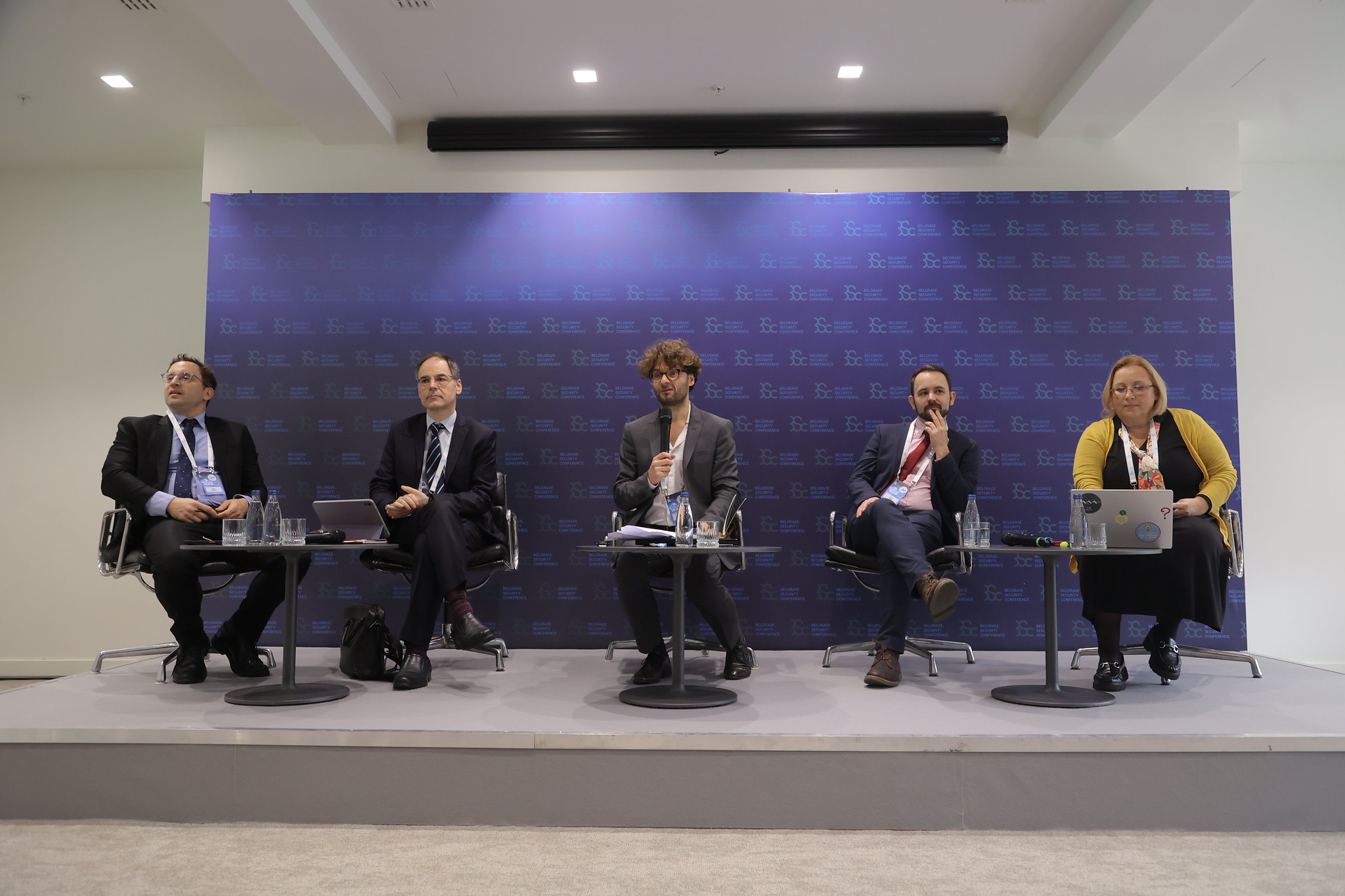
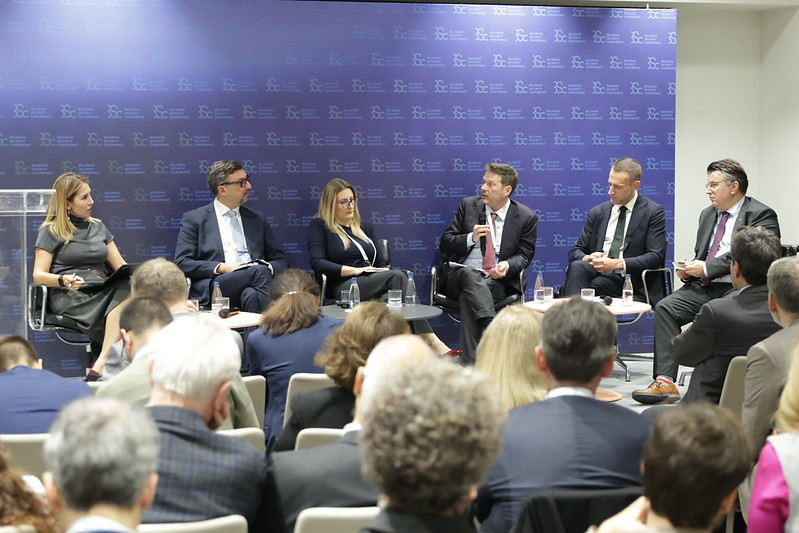
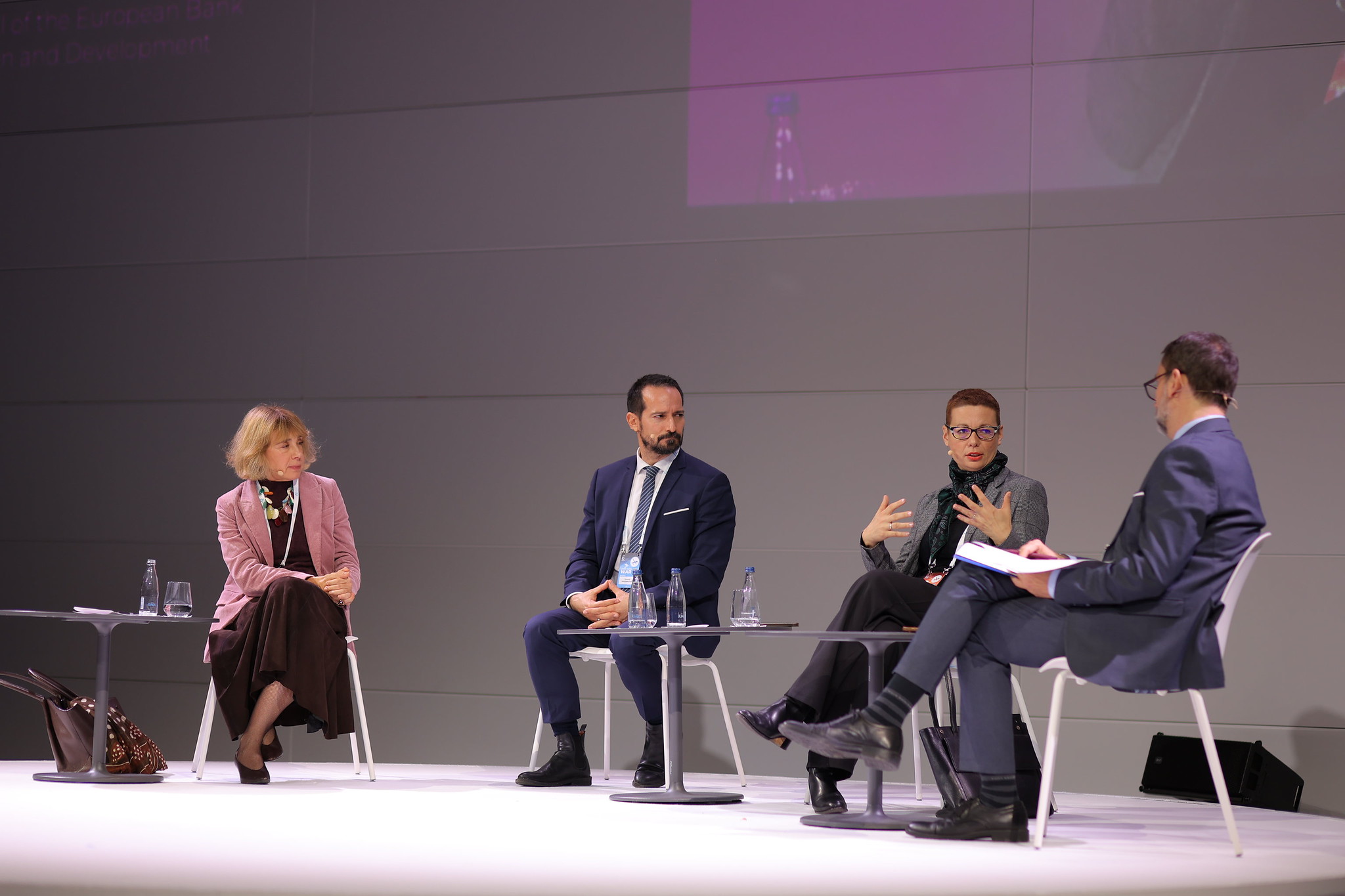
BELGRADE – Hungary’s new government is expected to move away from the ideologically driven, leader-to-leader relationships that characterised Viktor Orbán’s approach to the Western Balkans, while maintaining economic and technical cooperation with the region. This was the central takeaway from the panel titled “New Partner, Same Csárdás? – Hungary and the Western Balkans after Orbán”, held at the Belgrade Security Conference.
Ferenc Németh, Senior Research Fellow at the Hungarian Institute of International Affairs, argued that the Western Balkans had long been a priority for Budapest, stressing that this focus “didn’t start with Orbán, and it definitely didn’t end with Orbán’s departure”.
According to Németh, the shift will be qualitative rather than quantitative.
“The change will be considered a change in quality, the approach will be different, and the quantity will remain the same. I expect Hungary’s strategic partnership with Serbia to remain intact, while Budapest moves towards “a more traditional bilateral approach rather than focusing on leader-to-leader cooperation”, he remarked.
Németh clarified that this would mean an end to public funding for local strongmen and interference in election campaigns, adding that “Hungary now has an opportunity to become a different kind of role model for the region”.
Srđan Cvijić, President of the International Advisory Committee of the Belgrade Centre for Security Policy, Hungary’s democratic victory was “a giant inspiration for the student movement in Serbia.”
He expects Budapest’s support for EU enlargement to continue, including support for opening Cluster 3 “as soon as the new government is formed.”
Elaborating on relations under Orbán and Vučić, Cvijić depicted the rapprochement between the two countries as little more than a “salon reconciliation” among politicians, while Serbs and Hungarians in Vojvodina “remained living as two separate islands”.
The future relationship, he underlined, should be based on “economic interdependence minus political patronage”.
Anastasia Mgaloblishvili, Researcher at the Free University of Berlin, noted that Hungary’s engagement in Georgia, unlike in the Western Balkans, was driven purely by political considerations and intensified in 2022, when the EU adopted a more critical stance towards Tbilisi.
According to Mgaloblishvili, Budapest helped Georgian Dream deflect EU pressure by blocking sanctions and joint EU statements, undermining the Union’s messages and promoting illiberal ideology.
“With Orbán’s departure, the EU now has greater room to manoeuvre in addressing Georgia’s autocratisation”, she stated.
Dane Taleski, Distinguished Fellow at the Prespa Institute and former Ambassador of North Macedonia to NATO, described the past relations between his home country and Hungary as “deeply personalistic” and “a very heated romance”
In his opinion, Hungarian loan to North Macedonia is “still a black box”.
“Bilateral relations had since shifted from a very heated romance” to a cool-off”, Taleski concluded.