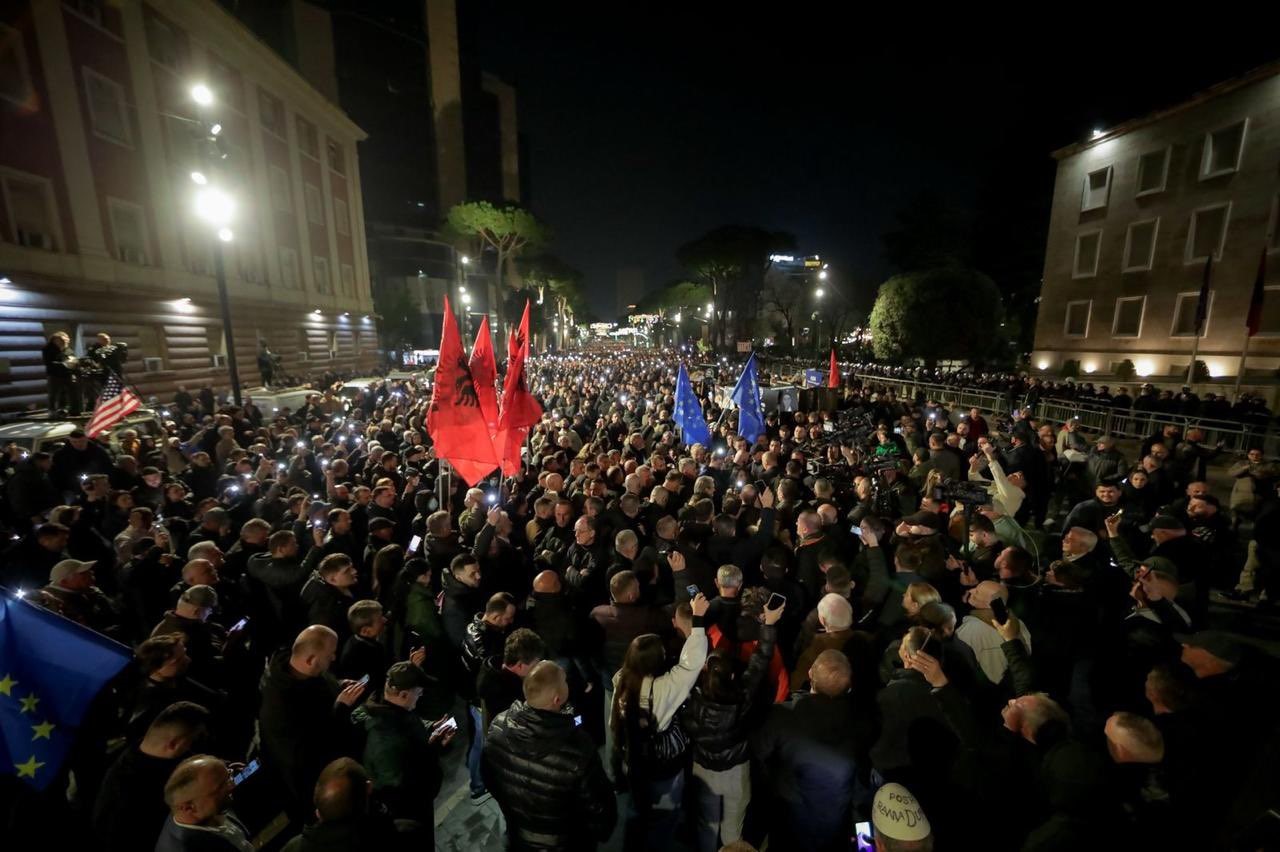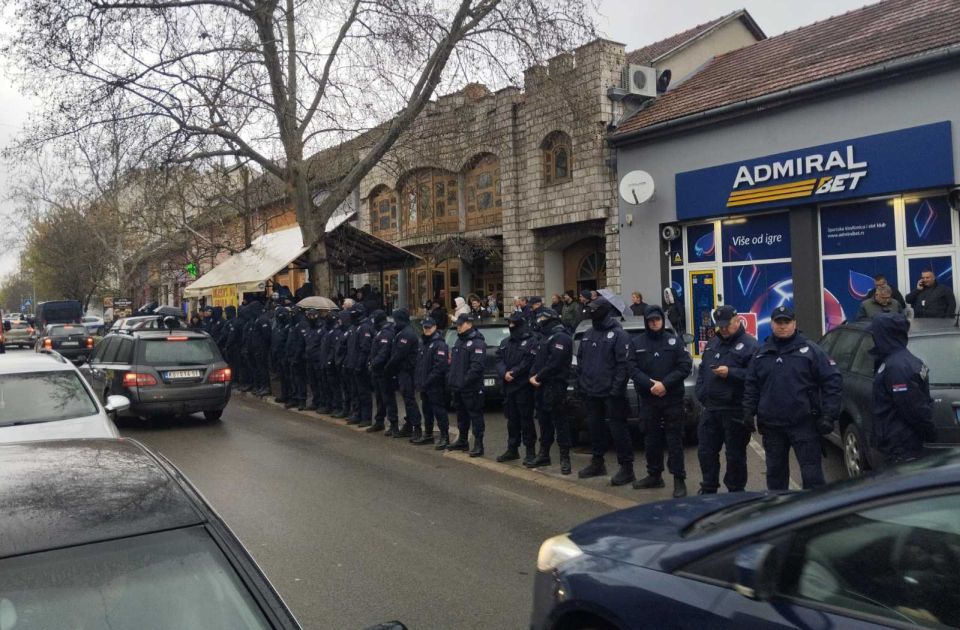
For over eight months now, Serbia has witnessed mass protests against corruption. Students and citizens are demanding accountability for the deaths of 16 people after the collapse of the newly renovated canopy at the Novi Sad Railway station.
Three investigations have been launched, yet no one has been convicted, and not a single indictment has been confirmed by a final court decision. This maens that more than eight months after the tragedy, the judiciary has failed to complete even the first step – indetifying suspects for the criminal offenses that directly or indirectly led to the collapse of the canopy.
On the same day the canopy collapsed, 1 november 2024, the Higher Public Prosecutor’s Office in Novi Sad launched an investigation into the causes of the incident. By 30 December, indictments had been filed against 13 individuals for a serious offence against public safety, specifically related to the crime of causing general danger.
This process is not related to the investigation into the misuse of financial resources or possible corruption. In April, the Higher Court in Novi Sad returned the indictment for further clarification and additional evidence. To this day, this indictment has not been confirmed.
Among those indicted were high-ranking officials, including former Minister of Infrastructure Goran Vesić, his assistant Anita Dimoski, and former directors of the Railway Infrastructure Company, Jelena Tanasković and Nebojša Šurlan. Engineers and representatives of companies involved in the reconstruction project were also among the accused.
Several engineers were detained from the start of proceedings, while former Minister Vesić spent only several days in custody after the accident, after which he was released. The same decision was made for other arrested state officials, while only five engineers are currently under house arrest.
Protests call for corruption investigation
The collapse of the canopy marked the start of the largest wave of civic and student protests against corruption in recent history. On 12 February, Chief Public Prosecutor, Zagorka Dolovac, decided that Belgrade-based Prosecutor’s Office for Organized Crime (TOK) would take over part of the investigation, specifically into possible corruption and money laundering.
As it was stated in February, to ensure the investigation is conducted efficiently, a special task force was formed, which, in addition to prosecutors and police officers, also includes inspectors from the Tax Police. This case is still in the pre-investigation phase.
On 4 March, the Special Department for Combating Corruption of the Higher Public Prosecutor’s Office in Belgrade filed an indictment against the investment development manager at the company Infrastructure of Serbian Railways, the president of the Technical Inspection Commission for the Novi Sad Railway Station, and a member of that commission, in connection with corruption-related criminal offenses that resulted in the collapse of the station canopy.
As Chief Public Prosecutor Nenad Stefanović explained at the time, the corrupt element in this case lies in the failure to exercise supervisory duties and the neglect of official responsibilities. The charges include Negligent Service and Abuse of Official Position. This is the most advanced case so far, as the Higher Court in Belgrade has confirmed the indictment. However, that decision is subject to appeal, which falls under the jurisdiction of the Court of Appeals. As the Court told Insajder, no session has yet been held to deliberate on the appeal.
In the rule of law report on Serbia published on 8 July, European Commission stated that parallel investigations into related corruption crimes caused risks of uncoordinated proceedings at the outset, due to the divided competences between the four specialised Anti-Corruption Departments and the Public Prosecutor’s Office for Organised Crime.
Sluggish judicial response suggests that decision are being made somewhere else
Coordinator of the prEUgovor coalition and researcher at the Belgrade Centre for Security Policy (BCSP), Jelena Pejić Nikić, assesses for European Western Balkans that from the beginning the authorities have relied on a well-tested strategy – denying responsibility and buying time.
“The sluggishness of the judiciary in this case indicates that the key decisions have already been made elsewhere—namely, who will be blamed, who within the system can be sacrificed, and who must be protected”, said Pejić Nikić.
She recalls that every move made by the prosecution was accompanied by, and often preceded by, a coordinated media campaign.
Government officials regularly commented on the case, suggesting the direction the investigation should take. From the outset, they insisted this was not a case of corruption, but merely a professional oversight. The investigation was launched accordingly”, she assess.
According to her, in such an environment—where institutions are captured and placed under direct political control, where laws are blatantly ignored, deliberately circumvented, or selectively interpreted—it is dangerous to be a brave and independent prosecutor or judge.
Asked whether the process related to the collapse of the canopy is proof that the constitutional amendments concerning judicial independence – adopted in 2021 as part of EU accession process – are not delivering results, Pejić Nikić said that they improved formal position of the judiciary only on paper.
“Constitutional amendments, introduced at the EU’s insistence, have improved the formal position of the judiciary on paper, but in practice, they have achieved little. The restructured bodies tasked with protecting judges and prosecutors from pressure and undue influence remain visibly passive. This has been noted not only by domestic legal experts, but also by the European Commission in its latest rule of law report on Serbia”, she said.
Numerous signs pointing to corruption
Public suspicion that state officials will be treated with leniency and not properly prosecuted grew after former minister Goran Vesić was released from custody just days after his arrest in November. This triggered mass anti-corruption protests led by students.
Among the students’ demands was the publication of all documentation related to the reconstruction of the Novi Sad Railway Station.
In response, Serbian authorities released portions of the documentation on the government’s website on several occasions. However, construction experts have consistently maintained that the key documents have not been made public—particularly those related to the financing and contracting of the railway station reconstruction project.
As Transparency Serbia also pointed out, a crucial contract is conspicuously missing from the published materials: the agreement signed on 28 May 2018, between the Government of Serbia, Serbian Railway Infrastructure, and the consortium “Joint Venture of China Railway International Co. Ltd & China Communications Construction Company Ltd,” covering the full scope of works from Novi Sad to Kelebija.
To this day, the complete documentation has yet to be released.
Filip Rudić, journalist at Nova ekonomija, told EWB that the government decided to release part of the documentation only after investigative media began publishing documents they had obtained independently, shedding light on the circumstances surrounding the collapse of the railway station canopy.
“The Ministry of Construction, Transport and Infrastructure published numerous documents on its website that have nothing to do with the Novi Sad Railway Station, but instead relate to facilities in other locations, such as Kisač or Subotica,” said Rudić.
He added that some additional documents were published by the company Serbian Railway Infrastructure and the Higher Public Prosecutor’s Office in Novi Sad.
“All of them concern potential criminal offenses related to public safety and irregularities in construction works, but not directly to possible corruption. Any indications of corruption can only be vaguely inferred from these documents and require further investigation”, said Rudić.
According to him, there are numerous signs pointing to possible corruption or economic crime in the reconstruction of the railway station.
“Among the subcontractors are companies previously linked to the ruling Serbian Progressive Party. There is also the issue of cost inflation. In October 2023, the estimated cost of all work on the Novi Sad Railway Station was around four million euros. Yet, in July the following year, Minister Goran Vesić stated that 65 million euros had been spent on the entire station. We still have no explanation for that. These issues relate to another ‘level’ of documentation — documents that have not been made public,” Rudić explained.
He added that the irregularities reach the highest levels of government, noting that Nova ekonomija uncovered that a close associate of President Aleksandar Vučić played a key but secretive role in the project, helping to “finalize” the railway line.
For example, according to emails published by the Higher Public Prosecutor’s Office in Novi Sad, Ivica Kojić, Chief of Staff to Serbian President Aleksandar Vučić, promised the contractor that he would help expedite work on the project.
In addition, one of President Vučić’s associates, Nataša Vukšić, convened and chaired meetings between institutions regarding the railway works. Neither the President’s Office nor President Vučić himself has been questioned in connection with this matter, and it remains unclear under what authority they were involved in the project.
The companies involved in the reconstruction of the Novi Sad Railway Station are also participating in other major state-led projects, such as Expo 2027 and the Belgrade Metro.
Rudić pointed out that all of these projects are marked by a high level of opacity, especially since some of them are being implemented under interstate agreements — often used as a justification for withholding documentation.
“But this isn’t just about corruption — it’s also about the quality of the work,” he said. “During the railway reconstruction project, contractors were repeatedly warned about poor construction quality in other sections of the line, such as in Subotica. Egis, the French company that supervised work at the Novi Sad station, is also supposed to oversee the construction of the Belgrade Metro. The way these projects are managed, as we’ve seen on the railway to Hungary, not only increases the risk of corruption — it also endangers public safety,” Rudić concluded.
This article was published as part of the project “Civil society for good governance and anti-corruption in southeast Europe: Capacity building for monitoring, advocacy and awareness-raising (SELDI)” funded by the European Union.