The Constitutional Court of Kosovo is expected to issue a judgment by 9 August, a step which is considered to be crucial for resolving the political crisis which persisted since the parliamentary elections held on 9 February. Following the elections, there has been a deadlock in forming a new government since no party secured a majority of seats in the Assembly. Vetëvendosje (VV) party, led by the acting Prime Minister Albin Kurti, secured a comfortable first-place finish, but fell short of winning the 61 seats required to govern alone, leading to an ongoing struggle to elect a Speaker of the Assembly and to form a coalition government.
After as many as 54 attempts, the members of the parliament have not been able to elect a Speaker of the Assembly. VV had nominated Albulena Haxhiu for the position, but her candidacy was met with strong opposition. As a result, the Constitutional Court ruled on June 26 that the deadlock must be resolved within 30 days. However, there was no progress in this process.
On 27 July, the Constitutional Court issued a temporary measure which prohibited MPs from taking any actions towards the formation of the Assembly until 8 August. In addition, in late July, Kosovo’s President Vjosa Osmani asked the Constitutional Court to clarify the legal consequences of the non-constitution of the Assembly within the constitutional deadline of 30 days.
Nevertheless, Osmani withdrew the request on 5 August, citing concerns over the appointment of a Serb, Radomir Laban, as the rapporteur judge in this case. She claimed that security institutions had provided information indicating Laban posed a risk to Kosovo’s national security.
On the other hand, the Constitutional Court clarified that it was still able to issue a decision even if a party withdrew his/her request. The court also defended Laban’s appointment, stating that he had been employed since 2011 and became a judge in 2018, after undergoing all constitutional and legal procedures.
Two opposition parties – the Democratic Party of Kosovo (PDK) and the Democratic League of Kosovo -(LDK) have also submitted requests to the Constitutional Court regarding the constitution of the Assembly.
What should the Constitutional Court clarify?
The Court is expected to clarify how the constitutive session of the Assembly should be administered, particularly regarding the insistence on forming a secret ballot. This issue is central to the ongoing parliamentary deadlock, as Vetëvendosje advocates for secret ballots, while opposition parties demand open voting, citing constitutional requirements.
Also, the Court should decide whether the 30-day deadline for the constitution of the Assembly has been exhausted or if there is room to restore an additional deadline. Finally, it is expected to clarify whether the right to propose the Speaker of the Assembly is an absolute, unlimited right, even if the largest parliamentary group fails to create a parliamentary majority.
Adelina Hasani: The Constitution and the law can offer a framework, but it is up to political parties to reach a compromise
Commenting on the long-standing political deadlock in Kosovo, Adelina Hasani, a researcher at the Kosovar Centre for Security Studies, says for EWB that “for now, the responsibility for unlocking the impasse appears to rest with the Constitutional Court”.
“While many hope the Constitutional Court will provide a legal resolution to the crisis, the core of the problem remains political. The Constitution and the law can offer a framework, but it is ultimately up to the political parties to reach a compromise and determine the way forward”, Adelina Hasani stresses.
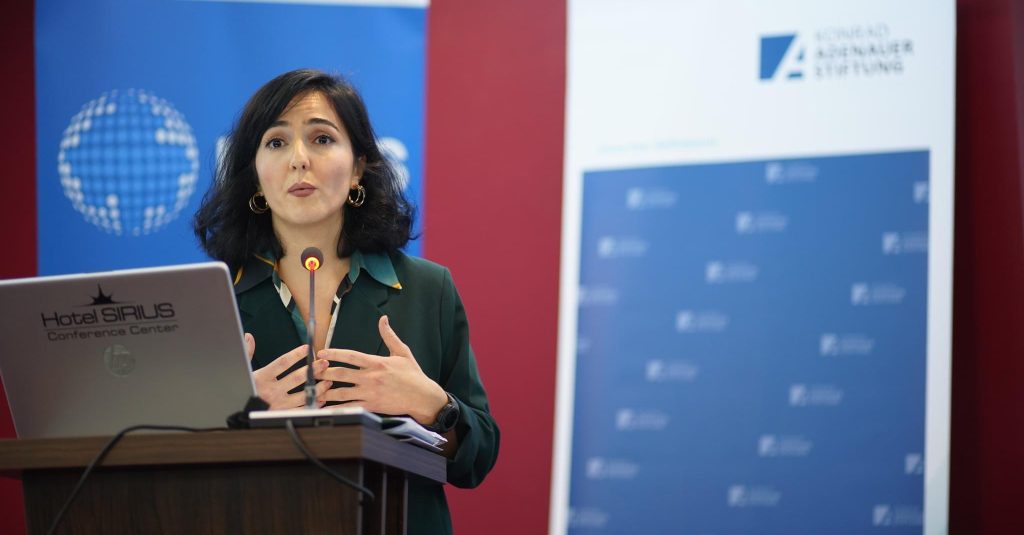
According to Hasani, if no compromise is reached between the leading political actors, the Assembly may remain blocked.
“This would stall key reforms and delay critical budget decisions, including the approval of funds currently awaiting parliamentary endorsement. Moreover, the Government will continue to operate with limited powers. More significantly, the ongoing deadlock is likely to fuel public frustration and deepen mistrust in institutions and political processes, reinforcing the perception that political leaders are prioritising personal or party interests over the public good”, she remarks.
Adelina Hasani concludes that “Kosovo urgently needs fully functioning institutions, particularly amid growing regional and international insecurity”.
Aleksandar Šljuka: It is key to set precise deadlines for the completion of the constitution of the Assembly
According to Aleksandar Šljuka, a researcher at the Mitrovica-based “New Social Initiative”, Kosovo’s institutions “have proved to be unequal to the current political crisis”.
“The Constitutional Court set a 30-day deadline for the completion of the constitutive session of the Assembly, but failed to specify what the consequences would be if this deadline was not met. Therefore, there is no legal basis for resolving not only this specific situation, but also similar institutional deadlocks in the future”, Aleksandar Šljuka states for European Western Balkans.
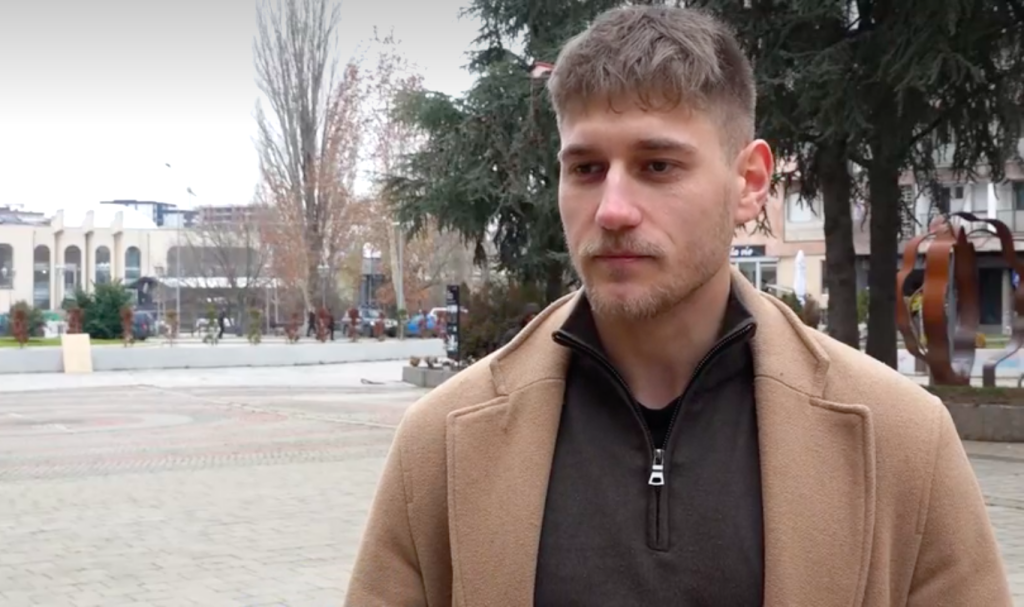
Šljuka claims that it is essential that the Constitutional Court takes “a clear and unequivocal position – that the proposal for the formation of a secret ballot committee is legally null and void and that it cannot be an obstacle to the continuation of the process of constituting the Assembly”.
“The MPs must immediately return to their primary function – the election of the Speaker and the Deputy Speaker. Only then would it be possible to accurately set the constitutional deadlines and, in the case of the non-compliance, consider the concrete consequences”, he clarifies.
In Šljuka’s opinion, “it is necessary for the Constitutional Court to extend the current interpretation of the Constitution”.
“It is possible to consider models which imply that the right to nominate the Speaker could pass to the opposition parties after a certain number of failed attempts to do so, or the possibility of replacing a candidate from the same party by someone else”, he says
However, what is key is to establish the precise deadlines for the completion of the entire process of the constitution of the Assembly, as well as to clearly define the consequences if the deadlines are not met.
“The logical institutional outcome in such a case would be the early parliamentary elections. A similar constitutional mechanism already exists regarding the formation of a government”, Šljuka remarks.