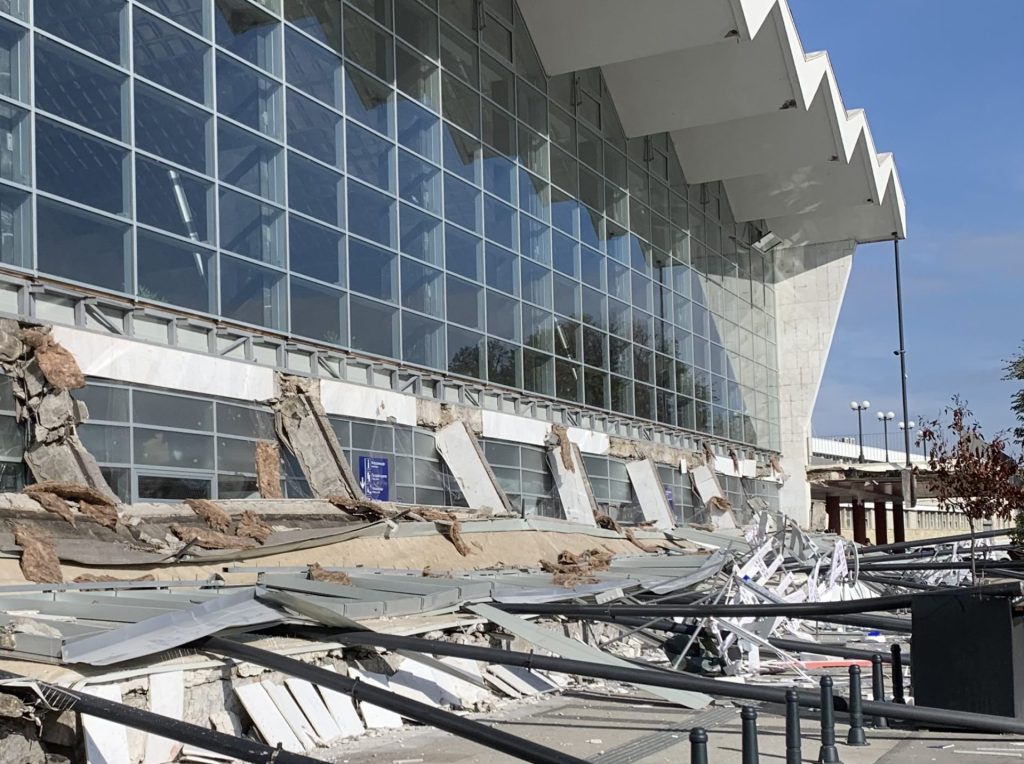
BELGRADE – More than nine months after the canopy at Novi Sad railway station collapsed, Serbian ruling party is once again pushing the narrative that the incident was caused by sabotage or terrorism, without providing any evidence.
This time, the claims are not limited to pro-government commentators and media – top state officials have joined in promoting this theory.
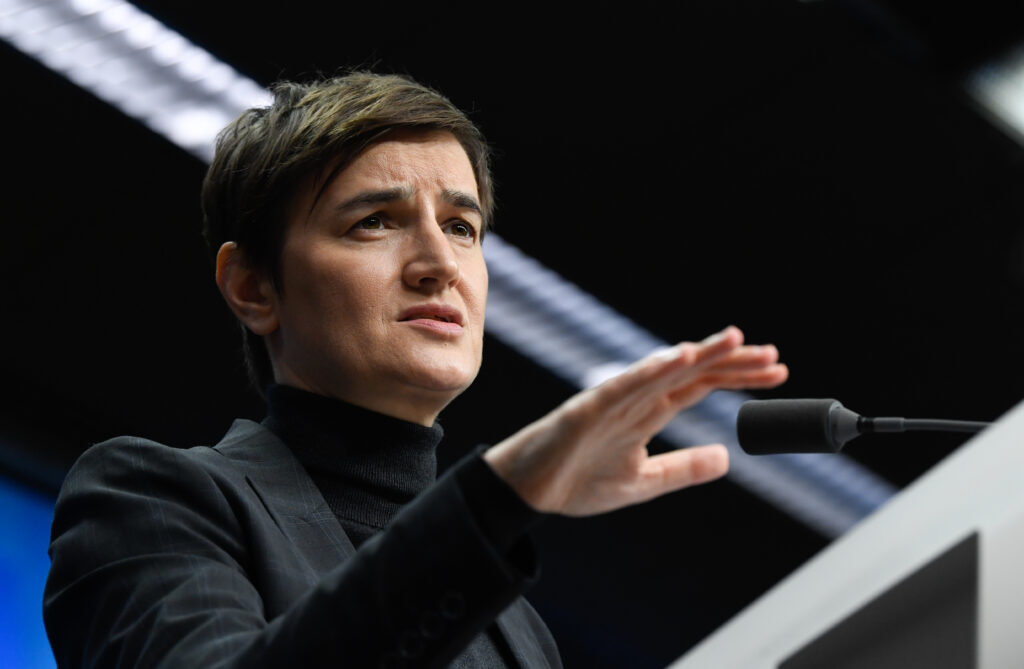
National Assembly Speaker Ana Brnabić told TV Pink earlier this week that she is convinced the canopy “did not collapse by accident” and described it as a “planned act of sabotage”.
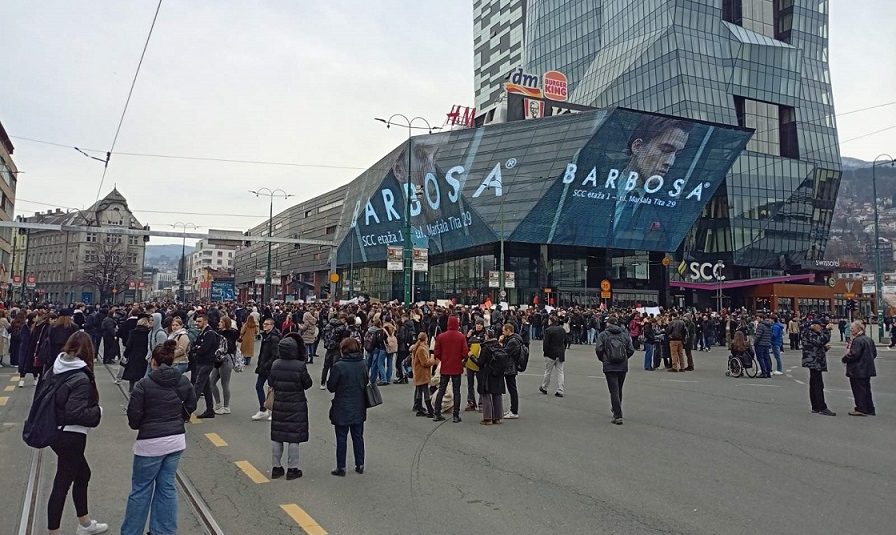
Brnabić further suggested that the collapse was “the beginning of a colour revolution”, the term the government uses to describe anti-government protests led by students.
“I do not believe the canopy fell on its own, nor that it was a mere accident or tragedy, or the result of negligence. I believe it was a planned act of sabotage”, Brnabić said, offering no evidence to substantiate her claims.
Baseless claims that the canopy collapse was caused by sabotage or diversion have been circulating for months in the pro-government tabloids, as well as by the leader of the far-right Serbian Radical Party, Vojislav Šešelj.
Theories about an alleged “sabotage” or “terrorist attack” are undermined by the fact that the prosecution charged more than 10 people with unsafe construction, though without progress in recent months. Criminal proceedings for corruption are underway as well.
Police had already ruled out terrorism as a cause in the first hours following the tragedy.
Several opposition parties have called on the competent prosecution to investigate Parliament Speaker Ana Brnabić over her claims that the canopy collapse in Novi Sad was the result of sabotage.
The Serbian prosecution has not yet commented on Brnabić’s allegations.
As Predrag Petrović, Research Director at the Belgrade Centre for Security Policy (BCSP), already explained for the European Western Balkans, the possibility of sabotage or diversion was dismissed from the start.
According to him, one reason is the technical nature, as it would have been very difficult to bring down the structure in such a way.
“That would be extremely difficult to carry out, given the complexity of the structure. A serious amount of preparation would be required to achieve something like that”, Petrović believes.
He explains that if it were an act of sabotage, it would be implied that someone had either weakened the supports using explosives or deliberately made an error during the reconstruction to cause the collapse.
Petrović adds that both sabotage and diversions are usually carried out in wartime or in situations of extremely heightened tensions between states.
“That’s not the case with Serbia. Many Western countries still support the regime, as well as Russia and China. Therefore, there is no political motive that would make sabotage or diversion a likely scenario”, Petrović says.
When asked what purpose such narratives serve if police have already ruled out terrorism, Petrović assess that the ruling party uses them to deflect attention from the core issue.
“The core issue is that the canopy collapsed due to negligence and corruption. Moreover, the narratives about terrorism fit into broader claims about ‘color revolution’ – that foreign actors are trying to destabilize Serbia”, he says.