The interview was originally published in Serbian by Savremena politika.
As Serbia recently marked 25 years since the 5 October 2000 democratic revolution, which toppled Slobodan Milošević, parallels are increasingly drawn between Milošević’s regime and the incumbent regime of President Aleksandar Vučić, as well as between the 5 October revolution and the ongoing students’ and citizens’ protests. We spoke about these parallels and the perspective of democratic changes in Serbia today with Florian Bieber, professor at the University of Graz and member of the Balkans in Europe Policy Advisory Group (BiEPAG).
Savremena politika: We are now 25 years from democratic changes in Serbia in 2000, and we seem to be facing similar issues again. Looking back at these 25 years, do you think that we are really where we were back then, or some of the progress achieved cannot be undone?
Florian Bieber: I don’t think that Serbia is in the same place it was 25 years ago, that’s for sure. The society has changed in the last 25 years.
The isolation which Serbia had in the 1990s in terms of travel and communication with the rest of the world has not been a problem. People have the exposure which was not possible in the 1990s when most citizens felt isolated. That’s a major difference, as ideas and global trends are much more easily flowing into Serbia.
Of course, the authoritarian regimes have lots of similarities, but the 1990s were a decade of wars, hyper nationalism and poverty. This is not the case in Serbia now, which to some degree makes it harder to challenge the autocrat. But on the other side, this makes the situation for people, while not good, certainly not as bad as in the late 1990s.
SP: But what does it tell us about the possibility for change? You mentioned that it’s maybe harder to tackle this authoritarian regime. Do you think that the government is successfully managing to strengthen authoritiarianism on the one hand, but at the same time be soft enough to prevent an overthrow like in 2000? Or maybe it was successful, but not anymore, having in mind the ongoing protests?
FB: It became very clear, especially when one saw the first protests in Serbia against Vučić, which were against dictatorship, that it’s very hard to mobilise people on just the authoritarian issue alone.
If people are doing okay economically, it’s very hard to motivate them to go to the streets and protest against an autocrat, especially one who has been very good, as nowadays autocrats are, at hiding that they’re autocrats, as they don’t have an outright dictatorship, but it’s much softer. That’s not just in Serbia, everywhere we see people being reluctant to protest against autocrats if they are personally doing okay.
But that doesn’t work indefinitely. That’s what we see in Serbia now, that at some point, people feel that the consequences of autocratic rule, which means corruption and state capture, and with it endangering the lives of citizens, become an issue people don’t want to ignore anymore.
And of course, unlike Milošević, Vučić did not seek confrontation with the West, and did not provoke isolation, on the contrary. That helped him to build and keep international legitimacy, which Milošević was never either interested in or able to do. But all of this doesn’t mean it’s a guarantee to rule and dominate forever.
SP: And how do you see the current students and citizens’ protests in comparison to 2000 with Otpor and the Democratic Opposition of Serbia? Can any parallels be made, or they’re entirely different scenarios?
FB: There are lots of parallels, of course. It’s interesting that Serbia has been mobilising in demonstrations for the last eight years now, as the current protest wave is building on multiple waves of protests we’ve seen since 2016. So it’s nearly 10 years of protests every year in Serbia.
This is similar to the Milošević era, there were protests nearly every year with very few exceptions, maybe the darkest war years. There were protests in 1991 and 1992, and then again from 1996 to 2000. There’s a kind of a continuous dissatisfaction.
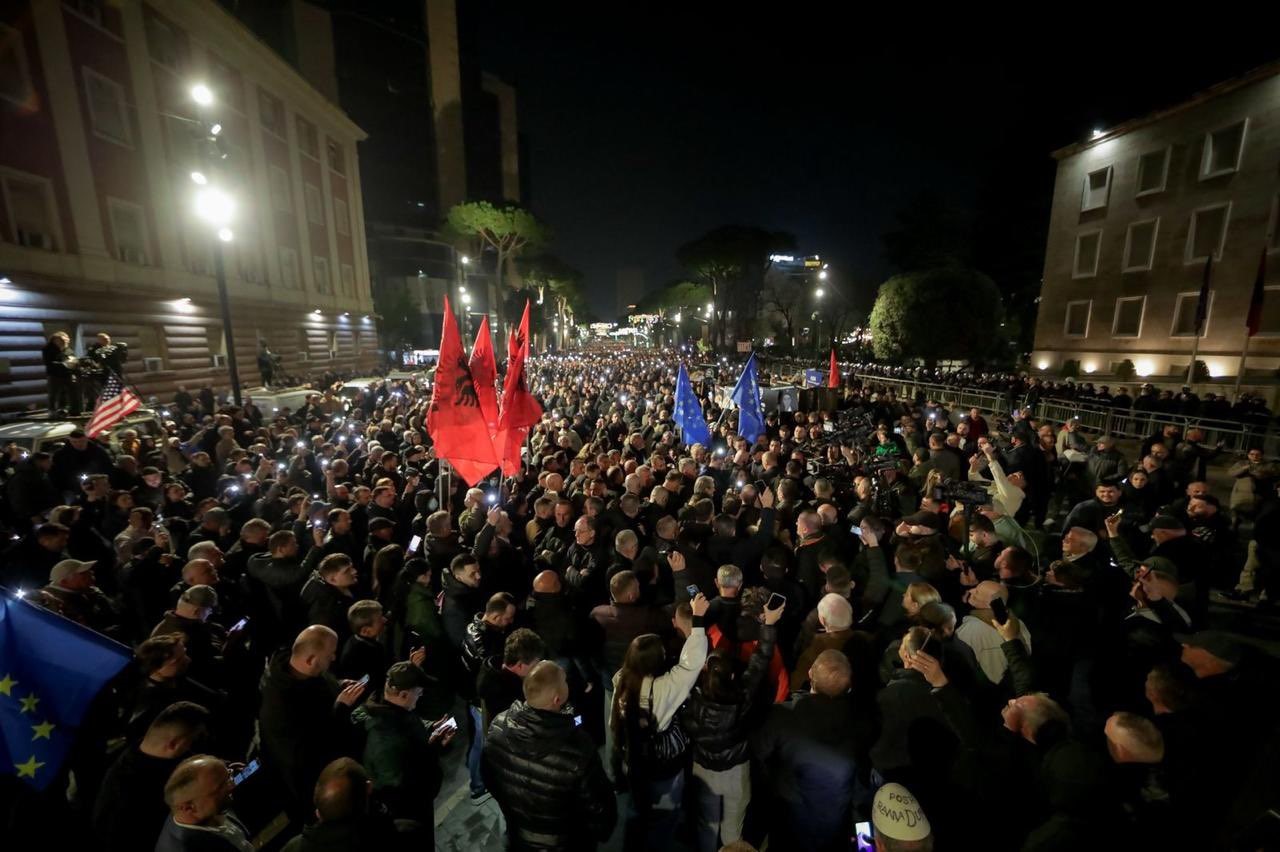
Ironically, the protests in the 1990s – including the 5 October 2000 – never had the numbers of participants as we’ve had in some of the protests in the last year. Whether it’s the 15 March or 28 June protest in Belgrade or some other ones, they have exceeded the numbers of people who went on the street on 5 October 2000, on 9 March 1991 or some of the other legendary big protests of the 1990s.
One big difference is that they are much more peaceful nowadays. In the 1990s, the protests were often more violent. The police were more violent, but the protesters were more willing to seek confrontation. Now they are more restrained in many ways. That’s one substantial difference.
They’re able to maintain people on the street. This is something which in the 1990s was never possible. Even the students’ and citizens’ protests in 1996-97 lasted four months. Now we have protests for 11 months. That’s nearly three times as long. That’s an impressive difference.
Back then, the protests were really focused on Belgrade. There weren’t big protests throughout the country. The only time when people outside of Belgrade mobilised in large numbers was really in 2000, when Otpor did something similar to what the students have been doing this year – to go into the smaller towns to mobilise citizens, where it really threatens the regime because this is where the core electorate of Milošević’s party and today Vučić’s party is based.
SP: There are commentators who believe that the students, because of their lack of organisation and leadership, don’t really represent a political alternative. On the other hand, we will have a student-nominated list, which will present a kind of political articulation of the protests. How do you see this? Can the student movement, in its current shape, with this list, represent a political alternative?
FB: It cannot offer a comprehensive political alternative, but it doesn’t need to. It doesn’t offer a complete programme, but I don’t think it needs to because it’s a nearly pre-political struggle in the sense that it seeks to establish the basic conditions for politics.
Maybe this is a misunderstanding. It’s not saying “we offer a different policy solution for certain issues”. This is not what it’s about. It’s offering the conditions for having a discussion about politics.
The government has really destroyed any ability to have a discussion about politics because every alternative to what the government did was deemed to be treacherous and otherwise unacceptable. No space for political debate was possible. What they’re offering is basically creating the conditions for the return of politics.
This will, of course, be very temporary, because the student list, if it were to win elections, would not be able to govern for very long, as it is going to be composed of people with different ideological orientations and different priorities. Its main task will be to create the environment where regular political competition can take place again.
I would expect that if they were to win, they would just have the mandate and time to create some basic preconditions for free and fair elections, get the electoral system in order, help to open the media space, and create a better rule of law system. All of this will not be completed, but started, so that there can be free and fair elections in which political parties will compete, will then offer alternative political choices.
SP: But do you think the student list can win in these elections? What does comparative practice say? Was there any kind of similar movement somewhere in Europe, winning against any government, let alone an authoritarian government? Is there any comparison we can make?
FB: There isn’t an obvious comparison. You could say it is an extraordinary experiment in democracy. But what we do have are these referendum-style elections when we have autocratic leaders in power. We had this in 1998 against Vladimir Mečijar, we had this in 2000 in Serbia, and also in Croatia. So we have these elections where an incumbent who is autocratic is challenged by a broad coalition.
Now, the fact that this will not be carried by political parties, but rather by a student movement, is innovative, it’s different, but it doesn’t mean it’s fundamentally a different situation, because people in referendum-style elections vote somebody out. They don’t vote for a specific candidate.
In fact, we’ve seen people in Serbia indicating support for the student list in opinion polls, not knowing who will be on it, because that’s not the point. It’s about breaking the current system. I do think that they indeed have very good chances.
The people on the list will matter to a minimum if there is a referendum setting where people feel this is the moment we need to choose. If this mass mobilisation, which we’ve seen on the streets, translates to the ballot box, I think they can win.
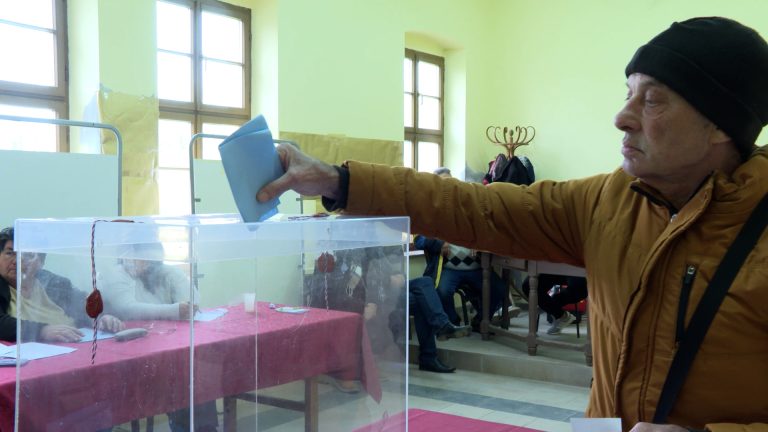
There will probably be attempts to falsify the elections or to interfere in the process. We’ve seen this in recent elections in Serbia. But of course, this gets harder the more people go to vote, because if the whole country mobilises, even the resourceful SNS will not have the money to pay for enough people to mobilise them. The more people who go to vote across the country, the harder it is to manipulate the election results.
Even if they try to, and if there’s clear evidence of that, this will be disastrous for the regime, because we know that it’s exactly election manipulation which is what mobilises citizens the most. The 5 October would not have happened had Milošević not tried to steal the elections on 24 September. It’s the stealing of elections which brings people on the streets, like we saw with the Orange Revolution in Ukraine. This is really what angers people when their rights are curtailed in such an obvious way.
I think the regime will be, if the elections are held and if it has this referendum-style dynamics, put in a very difficult position where either it falsifies to stay in power with the risk of having an even greater anger of citizens, or it lets them take place with the risk of losing being quite great.
SP: Many criticise the European Union for staying silent or not doing enough to pressure Vučić’s government or support the students. Do you agree with this stance? Or do you perhaps find these expectations unrealistic, having in mind the complexity of the situation in Serbia?
FB: I think the EU has been too silent, there’s no doubt about it. And I’ve been very critical of it. It took nearly five months for the Commissioner for enlargement to make a clear public statement on the protests. And Ursula von der Leyen, as Commission President, has not made any statement so far of a meaningful nature regarding the protests 11 months on.
That is shockingly little and shockingly weak, especially considering that in the past, when we look at North Macedonia, the EU has been engaged in something not that fundamentally different from what we’re seeing now. And the EU has the resources, tools and legitimacy in terms of the process to say something.
I think support for the EU has probably dropped, at least among those who’ve been going to the streets in the last 11 months, because of the silence of the European Union. Although, of course, they are the best allies the EU could have in Serbia. Undoing that disappointment will take a lot of effort by the EU and the problem is that there will be a time after Vučić, as there is always in any country a time after an autocrat.
The EU will find itself weakened in Serbia because of hedging its bets and investing so much in Vučić for different reasons, fear, convenience, laziness, benefits, which then basically undermines its ability to be a credible player in a post-Vučić era. And that’s something which is not quite understood in the EU, that there is a price the EU will have to pay in relations with Serbia when that day comes. The question is just when.
SP: This change of communication since this spring, that we now have more critical comments from the Enlargement Commissioner and different statements from the European Parliament – do you think that it actually signals a more substantial shift in the long term, that some red lines were crossed, or that the EU has stayed with the same policy with just individual voices being different?
FB: I would say the MEPs are just a reflection of the fact that there have been critical voices in the European Parliament well before the beginning of the protests. They’ve become more vocal and they’ve certainly convinced others of that as well.
I do think that there has been a change in the sense that it’s harder to believe that Vučić is really an ally nowadays. That kind of mirage is no longer convincing. I think the reasons why people are supporting Vučić or not daring to speak out against him have shifted a little bit.
Some of it is this argument, which you hear that, “if we are too critical of Vucic, then we’re going to lose him to the East”. It’s this geopolitical logic. It’s not about believing that he is a staunch ally or that he is a reliable partner, but it’s about the risks of alienating him. This is one motivation which has become more important in the last year.
The other motivation is just purely economic, to say “we have our deals”. We know Serbia is not going to join the EU in the foreseeable future anyhow, so why rock the boat in that relationship?
And then I think the third one is – and this is in a certain way the paradox – the leaderless way in which the student movement has been organised. It helped to keep it clear from attacks, but at the same time, it makes it harder for a conventional international actor like the EU to basically find an interlocutor.
This is the problem from an international perspective: who do they talk to? Who is their partner? This is what they will always say: “Well, if it’s not Vučić, who else?” This idea that maybe you don’t need the other person as a clearly identifiable person, but that it’s about something more complicated, eludes their understanding of politics. For them, it’s like “you have to give me somebody I can talk to”.
And this is, of course, a big difference to, let’s say, North Macedonia in 2015, where you had Zoran Zaev, who was the opposition leader, who was the face of the protests, and who you could talk to, who had also the legitimacy of having been the leader of the largest opposition party. So the EU could interact with somebody who was also eager to deal with them, which made it, in a certain way, easier.
This is, of course, something which the student movement has made more difficult, that there isn’t one person or a group of people that you can meet and can say “these are the people we talk to, and we negotiate with them about how to proceed”.