This week’s regional tour by German Foreign Minister Johannes Wadephul demonstrates that official Berlin actively supports the prospect of the EU membership of the Western Balkans Six, state the analysts for the European Western Balkans. However, they stress that “no shortcuts” will be accepted in the accession process.
According to Adnan Ćerimagić, Senior Analyst at European Stability Initiative (ESI), “Wadephul’s tour did not bring a revolution, but it did bring a message: Germany wants enlargement to remain a live, concrete and achievable agenda – and it intends for Berlin to be one of the central actors in that European debate”.
Similarly, Franz-Lothar Altmann, an independent German academic and professor of international relations at the University of Bucharest, says that during his short regional trip, Wadephul confirmed that “Germany is still promoting the EU accession of the WB Six”.
From 16 to 19 November, Wadephul visited the Western Balkans Six – Bosnia and Herzegovina, Montenegro, Albania, Serbia, Kosovo and North Macedonia.
In Sarajevo, he stated that the protection of the basic principles of the Dayton Agreement, “in particular the sovereignty and territorial integrity of BiH, remain central”. He also endorsed the work of High Representative Christian Schmidt.
During the visit to Montenegro, he assessed that the country “has made remarkable progress with its reforms and rightly stands as a frontrunner in the EU accession process”. Commenting on his talks with the high officials in Tirana, Johann Wadephul stressed that “Albania is firmly determined to pursue the not-always-easy path toward the EU”.
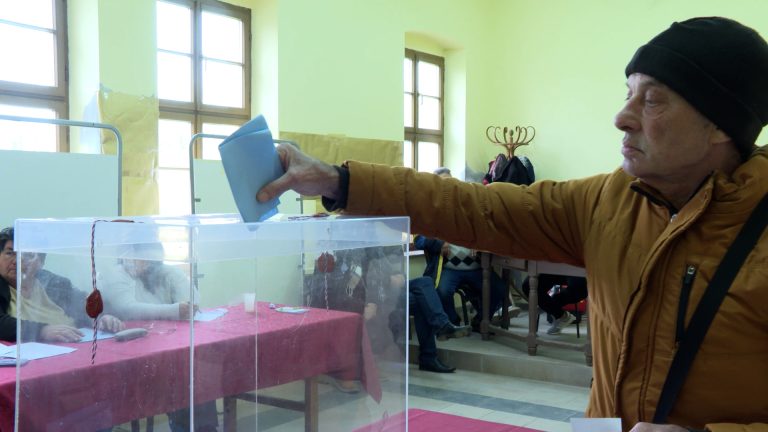
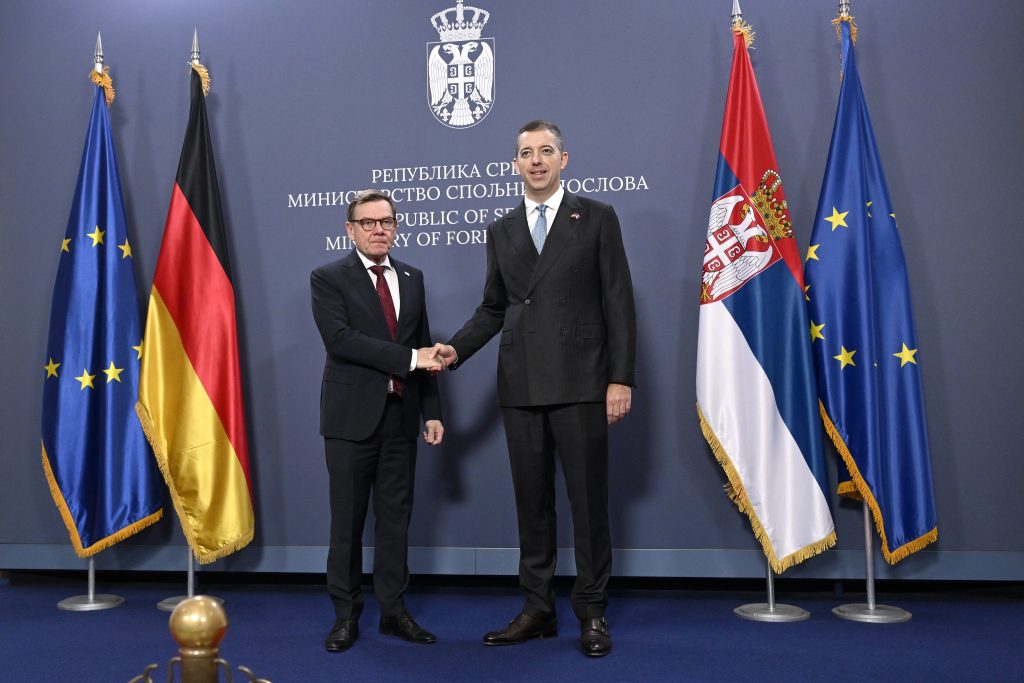
Addressing the media after the meeting with his Serbian counterpart Marko Đurić in Belgrade, German Foreign Minister remarked that “freedom of speech and assembly is non-negotiable”, adding that the same applies to all candidate countries for the EU membership.
“Serbia stands at a decisive moment: moving closer to the EU requires genuine reforms and a clear commitment to our shared values and positions. Germany is ready to support Serbia on this path”, Wadephul stated.
In Kosovo, he also visited KFOR troops, underscoring “the importance Germany attaches to Kosovo’s stability”.
“Progress in the EU-led Dialogue with Serbia is key for lasting normalisation – and Kosovo’s path forward. Germany remains a close partner”, said Wadephul after he met with Vjosa Osmani, President of Kosovo.
In Skopje, the final stop on his regional tour, German Foreign Minister stated that “North Macedonia has come a long way on the path to EU accession”, adding that “Germany remains by your side as we continue on this journey. Now more than ever, Europe needs to stand united”.
“The Western Balkans are among the top priorities”
Elaborating on the messages delivered by Wadephul, Adi Ćerimagić notes that “from the first day of the new federal government’s mandate, the Foreign Minister made one thing clear: the Western Balkans sit among his top priorities”.
“Although his first regional tour came only after almost 200 days in office, Berlin had been actively engaged in developments across the region throughout this period – through the work of Wadephul and his team, as well as through symbolic but not insignificant messages and meetings led by Chancellor Friedrich Merz. Those who expected major shifts or dramatic new announcements during this visit were likely disappointed. Most of Berlin’s positions had already been signalled. Yet the tour made these positions more visible and politically weighty – and several key messages deserve attention”, Ćerimagić explains.
According to Ćerimagić, the most important message was straightforward: “German government sees no problem with welcoming new members into the European Union by the end of its own mandate and that of the European Commission in 2029”.
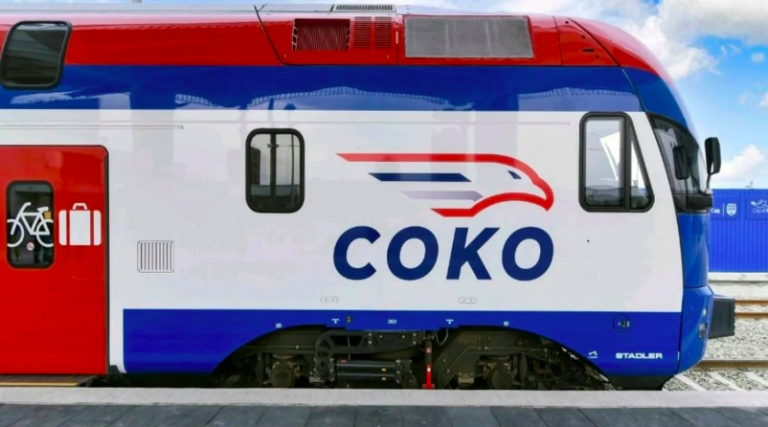
“In Berlin’s assessment, Montenegro and Albania are currently the closest to this goal, but the message to all governments in the region was that a place on the train to Brussels remains open for those who accelerate reforms. Germany is ready to listen to proposals on how to support Montenegro and Albania to reach their goals, and how to assist other states as they tackle bilateral disputes and internal blockages”, he remarks.
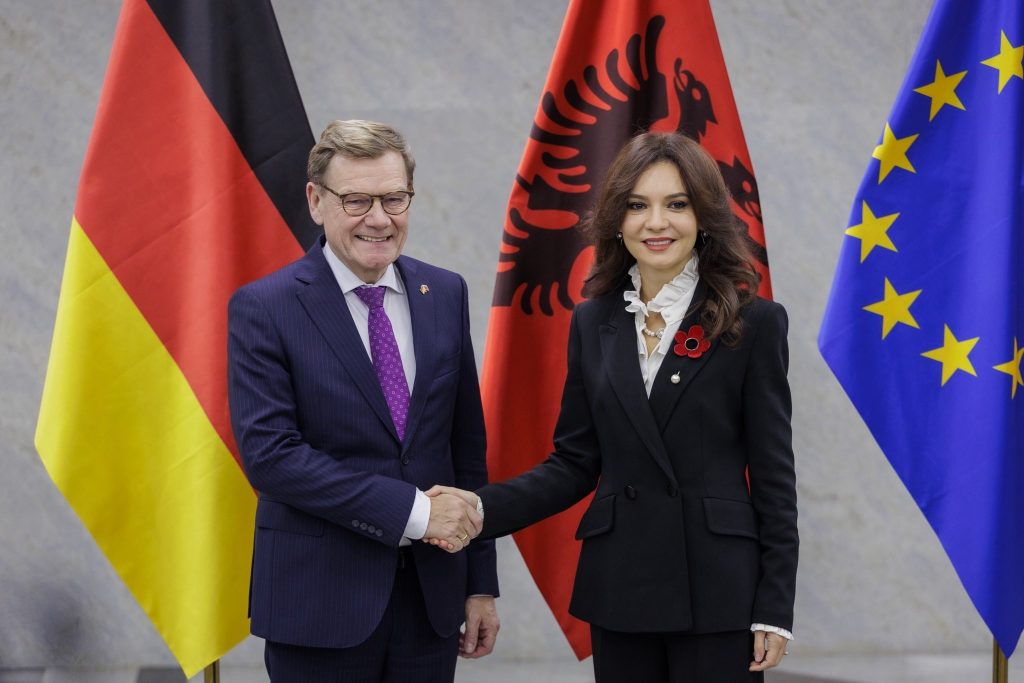
In a similar vein, Franz-Lothar Altmann remarks that “Minister Wadephul in principle is a person of clear words”.
“He underlined that the EU enlargement is in the interest of the EU, considering the intensifying activities of Russia and also of China to increase their influence in the EU´s direct Southeastern European neighbourhood. But he also reiterated, secondly, the necessity that the applicant countries must proceed with their reforms in order to meet the value conditions of the EU… All criteria must be fulfilled, from the rule of law to effective fighting corruption and organised crime and strengthening fundamental civil rights. No shortcuts will be accepted”, Altmann says.
He adds that, when talking about the aspiring states, Wadephul also mentioned “Montenegro and Albania as forerunners in the EU race”.
The symbolism of the schedule
Ćerimagić underlines that the symbolism of the tour’s route was deliberate.
“Wadephul began in Sarajevo, meeting the high representative Christian Schmidt. This signalled support for a German politician and his mandate, albeit without hinting at support for radical interventions through the use of Bonn powers. The visit concluded in Skopje, one day after European Minister Gunther Krichbaum travelled to Sofia. The objective was clear: Germany wants to help overcome the deadlock in North Macedonia’s accession process”, he clarifies.
In Ćerimagić’s opinion, the signals in Belgrade were equally calibrated: “a press conference with foreign minister Marko Đurić rather than president Aleksandar Vučić; direct talks with civil society; and parallel meetings between Bundestag delegates and Serbian parliamentarians”.
“Berlin aimed to demonstrate that it understands where and how its messages need to be delivered”, he says.
Similarly, Franz-Lothar Altmann states that Wadephul in Serbia “rightly stressed the need for free expression and of unhindered assembling for political discussions and also protests”.
“And also for Serbia, he reminded that it must decide where it wants to belong in the future, to Russia´s political hemisphere, or to be part of the EU´s value-based club”, Altmann says.
The general public in Germany is still sceptical about the EU enlargement
Ćerimagić remarks that, nevertheless, the central question remains – “how much time, energy and political capital can Germany realistically invest in achieving the goals it now advocates”.
“Berlin must still convince a sceptical public and an equally cautious Bundestag that enlargement is a strategic German interest. It also must seek agreement with the other 26 EU governments on the conditions under which they would support new members – from possible veto derogations to wider institutional reforms – without undermining confidence in the EU across the region”, he underlines.
According to Ćerimagić, “it also remains uncertain how far the political will and operational capacity stretch when it comes to sustained support for positive steps in Serbia, Kosovo, Bosnia and Herzegovina and North Macedonia”.
Speaking on the same topic, Franz-Lothar Altmann underlines that Wadephul “did not forget to hint at the internal situation in the EU, in particular that the EU must also undertake some essential reforms like overcoming the principle of unanimous voting in most decision-making processes in order to be prepared for an increased number of members”.
“The enlargement shall not weaken but rather strengthen the EU. Thus, in principle, there was nothing substantially new in Wadephul´s messages, but it was in the right moment to send the positive signals of the EU´s standing enlargement commitment, together with highlighting the constraints on both sides. German Realpolitics”, Altmann concludes.