By: Ruslan Stefanov, Martin Vladimirov, Daniela Mineva; Originally published on CSD’s blog
In the shadow of Russian missile strikes that plunge Ukraine into winter blackouts, a bombshell corruption scandal has toppled President Zelensky’s chief of staff, Andriy Yermak, just weeks after exposing embezzlement at the state nuclear giant Energoatom. On 28 November 2025, Zelensky announced Yermak’s resignation hours after anti-corruption agents raided his Kyiv home. Ministers of Justice and Energy have since tendered resignations, NABU probes deepen, uncovering kickbacks in energy procurement deals worth millions, amid procurement fraud that siphoned funds meant for war defenses.
This is EU enlargement done right: clarity of thought and unflinching democratic anti-corruption, even under existential attack. It’s a stark rebuke to the Western Balkans, and Brussels itself, where two decades of accession have devolved into a box-ticking farce: nominal laws approximated on paper, but zero enforcement on the ground, leaving kleptocrats unchallenged and citizens fleeing in despair. The EU itself, has replaced the much sharper (and now forgotten) Anti-Corruption Report with the Rule of Law Report – a wider and clearer text, yet without teeth – no member state leader has lost sleep over it. The report is now rolled out to the Western Balkans and the Eastern Partnership too.
The European Commission continued its annual ritual on 4 November 2025, of assessing the progress of candidate countries for EU accession. While tiny Montenegro offersglimmers by ploughing through enlargement chapters, despite Belgrade and Moscow’s intimidation, Ukraine and Moldova’s breakthroughs, now tested by this very scandal, cannot eclipse the deepening public despair across the Balkans. The 2025 Enlargement Package largely confirms institutional dysfunction in the region where governments have been faking – and failing to tackle – freedom-stifling corruption and state capture for so long that citizens and businesses feel abandoned.
SELDI.net, the largest regional civil society anti-corruption initiative, has engaged governments in genuine anti-corruption action since the turn of the century. Yet, the COVID-19 pandemic led Western Balkan countries to virtually abandon their efforts to improve the governance of democratic institutions including the world’s first Regional Anti-Corruption Initiative.
SELDI’s most recent Regional Anti-Corruption Report reveals how domestic kleptocratic networks have obstructed EU-conditioned reforms, and have instead forged ties with Beijing and Moscow, monopolizing critical chokepoints (like energy infrastructure), capturing media, and denying freedom of expression and open civic protests. CSD has demonstrated that governance fissures across the Western Balkans and the Black Sea region have also enabled illicit financial flows, underpinned by sanctions evasion tactics and the re-export of dual-use goods, which sustain Russia’s war machine in Ukraine.
The security logic of anti-corruption: Kyiv leads, the Balkans stall
The Enlargement report shows that Ukraine and Moldova may have already broken from the virtuous circle of widespread corruption and state capture. Ukraine’s scandal, erupting mid-November with Energoatom’s €200M+ fraud allegations (per NABU), exemplifies that despite war’s chaos, the Ukrainian civil society has demanded and Zelensky’s team has greenlit independent audits, international oversight (e.g., EU and U.S. security teams’ involvement), and public transparency, delivering enlargement milestones like judicial reforms amid blackouts. Even as Yermak’s exit rocks the inner circle, Ukraine has mustered the political will to embark on bold civil, institutional, and anti-corruption action, and hence deliver on its enlargement promises.
Ukraine showed remarkable resilience by maintaining the effective and independent functioning of its specialized anti-corruption institutions (NABU and HACC), leading to an increased track record of high-level corruption indictments and progressing civil confiscation of unjustified assets, while also ratifying the Rome Statute of the International Criminal Court. The country started registering lobbyistsin the new Transparency Register after the Law on lobbying entered into force in September 2025.
Moldova delivered on major political commitments by anchoring EU integration in its Constitution and managing competitive elections despite foreign interference, complemented by good progress in the vetting and appointment of top judges and prosecutors and a significant rise in high-level corruption cases sent to and decided by the courts. It further achieved a major economic step with approval to join the Single Euro Payments Area. In the Western Balkans, only Albania and Montenegro deserved lukewarm praise. They have embarked on buildingindependent justice institutions but have delivered few concrete results (e.g., Montenegro’s pledge to provisionally close further chapters by end-2025).
In contrast, Serbia, North Macedonia, and Bosnia and Herzegovina have struggled with deep internal and external political dysfunction as a result of a pervasive centralization of power in narrow elites.
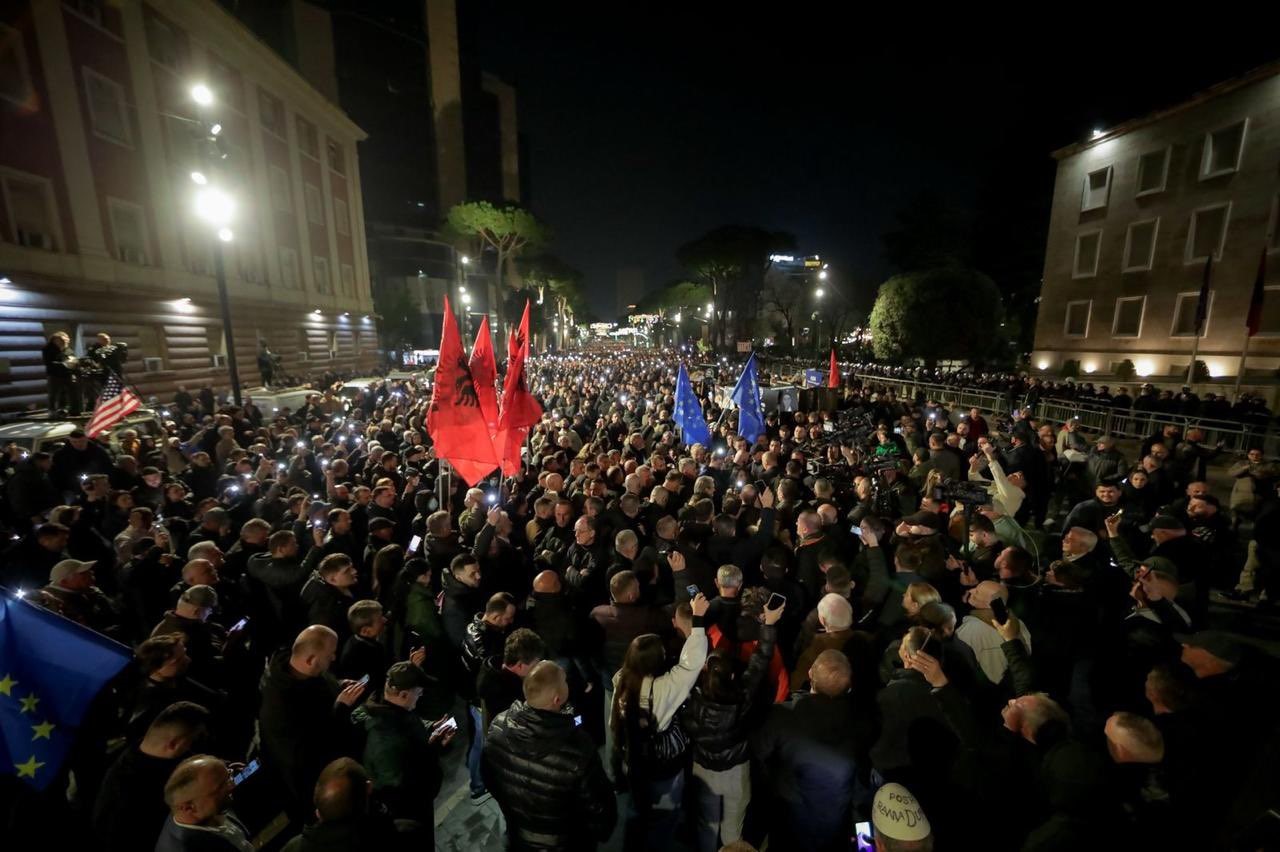
The deterioration of Georgia’s democratic institutions, marked by shrinking civic space and attacks on the freedoms of expression and assembly, highlights the destabilizing impact of malign foreign influence, which relies on captured elites that reverse democratic progress and freedoms.
Despite billions in EU assistance and political pressure through conditionalities, tangible results remain scarce: the prosecution of corruption cases is sparse, convictions are even rarer, and asset recovery almost non-existent.
High-profile investigations do happen such as Albania’s anti-corruption agency, SPAK, probing former Albanian President Ilir Meta and ex-Tirana Mayor Erion Veliaj or the decision of Bosnia and Herzegovina’s SIPA to sentence Republika Srpska’s former President Milorad Dodik (whose jail term was later converted to a fine).
Yet, beyond these isolated cases, enforcement remains inconsistent and anti-corruption efforts are largely directed at the political opponents of the ruling elites. Unlike Ukraine’s wartime purge, where even Zelensky’s confidants face the music, the Balkans treat corruption as a survivable perk, not a disqualifier for EU dreams.
The ultimate message is clear: corruption is survivable, even profitable, for those in power. The result has been the deep erosion of social trust in governance reforms. When justice is a privilege, not a right, cynicism replaces citizenship. People stop voting, stop protesting, and ultimately, they leave. The region’s depopulation crisis is not only an economic but a moral verdict too.
Recalibrating conditionality: From disbursement to delivery
Despite the lack of tangible reforms, the Western Balkans have seen a steep rise in EU funding – from Montenegro’s 26.8 million euros in pre-financing under the Growth Plan (with an additional 10.2 million euros tranche approved), to Serbia’s 51.66 million euros in advance payments. These funds could finally turn rhetoric into resultsif coupled with genuine enforcement, particularly through the increase of confirmed indictments and convictions, and consistent imposition and execution of asset confiscation and recovery orders in high-level corruption and organized crime cases.
Still, democratic accountability in the Western Balkans remains under severe pressure. Civil society groups and investigative journalists face SLAPP lawsuits, smear campaigns, and surveillance.
BIRN was sued for “emotional distress” after reporting that the Mayor of Belgrade failed to declare a EUR 820,000 villa in Trieste, while KRIK reporters faced legal action from a businessman linked to the Serbian President over airline acquisitions in Luxembourg. Amnesty International documented activists and journalists in Serbia being tracked with Pegasus spyware, NoviSpy, and Cellebrite UFED tools. Serbia, Montenegro, and Republika Srpska have all considered “foreign agent” laws targeting CSOs and media.
National anti-corruption strategies, meanwhile, have remained largely symbolic displays of formal compliance rather than as genuine tools for reform. Serbia adopted a new strategy in July 2024 after a six-year gap although the process has excluded independent experts, has dismissed over 200 public objections, as well as has failed to address prosecutorial inertia or entrenched political corruption. In North Macedonia, a new strategy is still in the pipeline although the new government has been in office for more than a year. Albania and Bosnia and Herzegovina adopted their respective anti-corruption governance frameworks in 2024 but past experience suggests these strategic documents are mere declarations that are rarely deployed in practice.
Fortifying Freedom: Rebuilding the credibility of EU conditionality
Moreover, the EU’s conditionality has been undermined by open political disagreements among member states. The repeated threats and vetoes on EU assistance to Ukraine, sanctions, and accession negotiations have emboldened entrenched elites in the region, signalling that defying EU rules carries few consequences (as seen in Hungary’s blocks on Ukraine aid). The €6 billion Growth Plan looks unlikely to change this behavior, given ample examples of conditionality failures and funding alternatives with no governance strings attached from China (e.g., Belt and Road energy deals in BiH).
Today’s hard-fought compromise on the EU’s long-stalled anti-corruption directive, brokered by the Danish presidency after months of member states-led pushback, exposes Brussels’ own feet-dragging on the reforms it preaches. Parliament hailed it as a “victory” for criminalizing “abuse of office” by officials, yet Council members grumbled about reporting to Brussels on their own corruption cases, echoing the very impunity they decry in candidates. This half-measure or moral ambiguity, per CSD’s “Fortifying Freedom” brief, risks perpetuating a “unvirtuous circle” where EU hypocrisy lets kleptocrats thrive, while demanding bold enforcement, not just definitions, to shield enlargement from hybrid threats like Moscow’s playbook.
Brussels can no longer reward “progress reports” that conceal impunity. Conditionalities must be applied consistently to both member states and candidates.
This article was published as part of the project “Civil society for good governance and anti-corruption in southeast Europe: Capacity building for monitoring, advocacy and awareness-raising (SELDI)” funded by the European Union.