Update: The information that Serbia ultimately aligned itself with EU’s decision to designate Iran’s Islamic Revolutionary Guard Corps as a terrorist organisation, alongside other countries in the region, was made public following the publication of this article.
BELGRADE – Reactions of the Western Balkan countries to the current war in the Middle East, which broke out in late February 2026, reflect long-standing geopolitical alliances and internal ethnic tensions in the region.
While Albania, Kosovo, Montenegro and North Macedonia expressed unwavering support for US and Israeli military actions against Iran, Bosnia and Herzegovina did not take a uniform official position and Serbia maintains a policy of neutrality, seeking to preserve relations with all the parties.
Albania firmly backs Trump’s policy, deep divisions in BiH
Following the US airstrikes on multiple sites and cities across Iran, Albanian Prime Minister Edi Rama declared Iran’s Islamic Revolutionary Guard Corps (IRGC) a “terrorist organization” and advocated for global action against the regime in Tehran.
In addition, he firmly backed Donald Trump’s efforts to curb Iran’s nuclear ambitions, labeling Iran a dangerous “theocracy” and a “dangerous exception” to normal state behavior.
“We stand firm with Israel and with the peace-seeking brotherly Arab countries. Not only because we support the United States in militarily supporting Israel today under the leadership of President Donald Trump. Not only because the European Union, through President Ursula von der Leyen, has once again underlined the murderous nature of the Tehran regime”, Rama said.
On the other hand, Bosnia and Herzegovina is deeply divided in its reaction to US intervention in Iran, reflecting its complex internal politics. BiH was among the countries that co-sponsored a UN Security Council Resolution condemning Iran’s attacks on Gulf countries and Jordan, adopted on 11 March. The decision to co-sponsor it was made by Bosnia and Herzegovina’s UN ambassador Zlatko Lagumdžija, without the consent of the BiH Presidency, i.e. it was made on the basis of instructions from the Ministry of Foreign Affairs, which initiated the internal debate.
The Grand Mufti of the Islamic Community in Bosnia and Herzegovina Husein Kavazović criticized the US-Israeli intervention, viewing it as an extension of an Israeli-U.S. strategy and urging a humanitarian resolution, whereas Milorad Dodik, a former President of BiH’s entity Republika Srpska, stated that RS “always stands with Israel” and views the actions against Iran as justified.
Kosovo, Montenegro and North Macedonia condemn Tehran’s actions
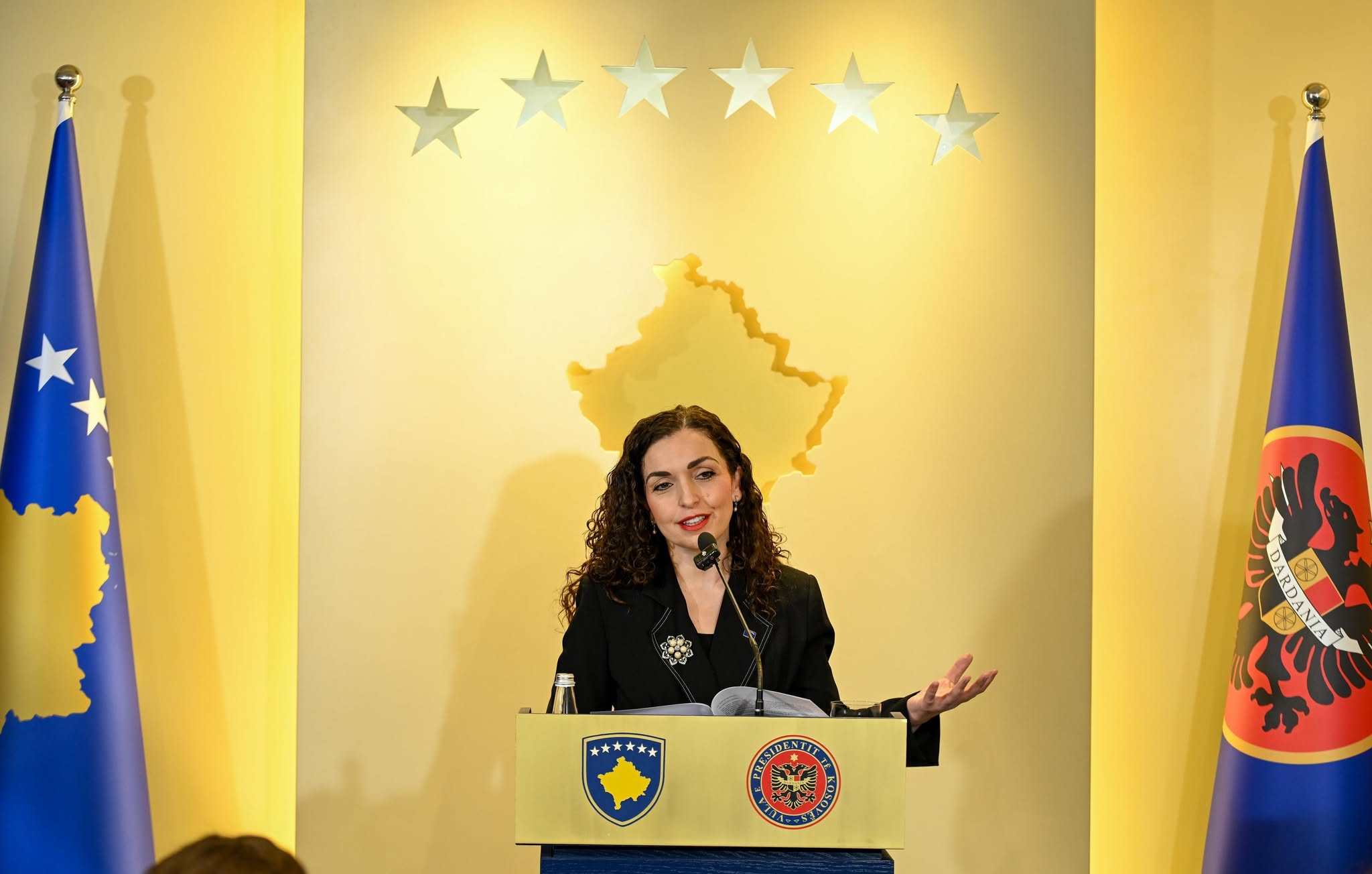
Kosovo authorities immediately sided with the United States, condemning the Iranian regime and supporting US-led military actions. President Vjosa Osmani declared the “time of freedom” for Iranians was arriving thanks to US leadership.
“As always, the Republic of Kosovo unwaveringly stands with the United States and its allies in defending freedom, peace, security, and stability,” Osmani wrote on X, also condemning what she described as attacks by the Iranian regime against allies in the Middle East.
For its part, Kosovo’s Ministry of Foreign Affairs called Iran “a destabilizing force” and backed Trump’s approach.
Montenegro officially condemns Iran’s actions and calls for peaceful diplomatic de-escalation, while adhering to the common position of the EU and NATO.
“Montenegro supports the efforts of its allies and partners aimed at calming tensions in the Middle East. We condemn Iran’s unprovoked attacks on neighboring Gulf countries which only further complicate the situation and threaten the stability of the entire region”, the Ministry of Foreign Affairs stated.
At the same time, Montenegrin Prime Minister Milojko Spajić said that he had spoken with Mohamed Bin Zayed “and other close friends in the UAE to convey Montenegro’s full support following the attacks”.
“Montenegro stands firmly with the UAE in these difficult moments”, Spajić wrote on X.
“We stand with our American allies in confronting destabilizing threats in the Middle East. The United States has made clear that diplomacy is always the first option – but deterrence remains essential when credible risks persist. Security, stability, and accountability go hand in hand”, Timčo Mucunski, North Macedonian Foreign Minister remarked.
In addition, in early March, North Macedonia hosted Mark Rutte, NATO General Secretary, who called Iran “an exporter of chaos”.
Serbia fails to align with the EU decision on Iran’s Revolutionary Guard
By contrast, Serbia failed to align with the recent European Union decision to add Iran’s Revolutionary Guard to its list of individuals, groups, and entities involved in terrorist acts and subject to restrictive measures. The announcement was made by the office of the EU High Representative for Foreign Affairs and Security Policy, Kaja Kallas.
Albania, Bosnia and Herzegovina, Moldova, Montenegro, North Macedonia, and Ukraine have fully aligned their policies with the EU decision, the statement added.
For his part, Serbian President Aleksandar Vučić noted that a war involving the United States, Israel and Iran had been “long prepared” and would not end quickly.
He said Serbia must preserve peace while strengthening its defence and maintaining dialogue with the US.
“We must safeguard our freedom and independence, but also ensure that our citizens are not drawn into wars”, Vučić remarked.
He also stressed that Serbia’s friends “are both Israelis and Arabs”.
“We have a good relationship with Israel. They sell us weapons, we sell them weapons, and that will continue”, Vučić stated.