According to the latest annual “Freedom in the World report” by Freedom House, entitled “The Growing Shadow of Autocracy”, global freedom declined for the 20th consecutive year in 2025. When it comes to the Western Balkans Six, a significant decline in civic rights and liberties was recorded in Serbia, as the country lost 3 points after authorities retaliated against persons who participated in the protests. All these countries are still classified as “partly free”, and corruption is cited as one of the key issues.
“Freedom in the World” includes scores and detailed country reports on political rights and civil liberties for 195 countries and 13 territories around the globe. Each country receives a numerical score from 100 (the freest) to 0 (the least free). Based on the scores, countries are divided into three categories: “free”, “partially free” and “not free”.
Albania ranks best in the region, followed by Montenegro
Albania ranks the best in the region, since it scored 69 index points, and saw a slight improvement compared to the last year, when it received 68 index points.
According to the Freedom House report: “Albania has a record of competitive elections, though political parties are highly polarized and often organized around leading personalities. Religious freedom and freedom of assembly are generally respected”.
However, the document notes that “corruption and bribery remain major problems, though the government is working to address corruption in the judiciary”.
Albania is followed by Montenegro, which scored 68 index points. It lost one index point compared to the last year, as “numerous government-proposed laws were passed through an expedited procedure and without legislative debate”.
The report states that “a new parliamentary majority and government were established following competitive elections in 2023, paving the way toward resolution of recent political instability in Montenegro”.
“Corruption in politics and in the judiciary remains a problem. Montenegro is home to dynamic media and civil society sectors. Civil liberties and political freedoms are generally respected”, it notes.
North Macedonia scored 67 index points, which is the same result as in 2025.
“The country continues to struggle with corruption, and while the media and civil society participate in vigorous public discourse, journalists and activists face pressure and intimidation”, Freedom House states.
Kosovo and BiH improve slightly, Serbia declines
Kosovo scored 61 index points, and saw a slight improvement compared to the last year, when it received 60 index points.
“Kosovo holds credible and relatively well-administered elections. Many public institutions are undermined by entrenched corruption, though there are signs that a new generation of politicians is moving to confront corrupt practices through judicial and administrative reforms”, the report notes.
It adds that in Kosovo, “newly elected legislators were unable to form a government for most of the year, while the caretaker government reportedly exceeded its technical mandate, resulting in snap elections”.
Bosnia and Herzegovina scored 54 index points, and saw a slight improvement compared to the last year, when it received 53 index points.
“Political affairs are characterized by severe partisan gridlock among nationalist leaders from the country’s Bosniak, Serb, and Croat communities. Political participation by citizens from other communities is extremely limited. Corruption remains a serious problem in the government and elsewhere in society”, Freedom House states.
Finally, Serbia is the worst-ranked in the region, with the score declining from 56 to 53 index points, due to the democratic backsliding under President Aleksandar Vučić and the Serbian Progressive Party, Freedom House assessed.
“Serbia is a parliamentary democracy with competitive multiparty elections, but in recent years the ruling Serbian Progressive Party (SNS) has steadily eroded political rights and civil liberties, putting pressure on independent media, the political opposition, and civil society organizations”, the report states.
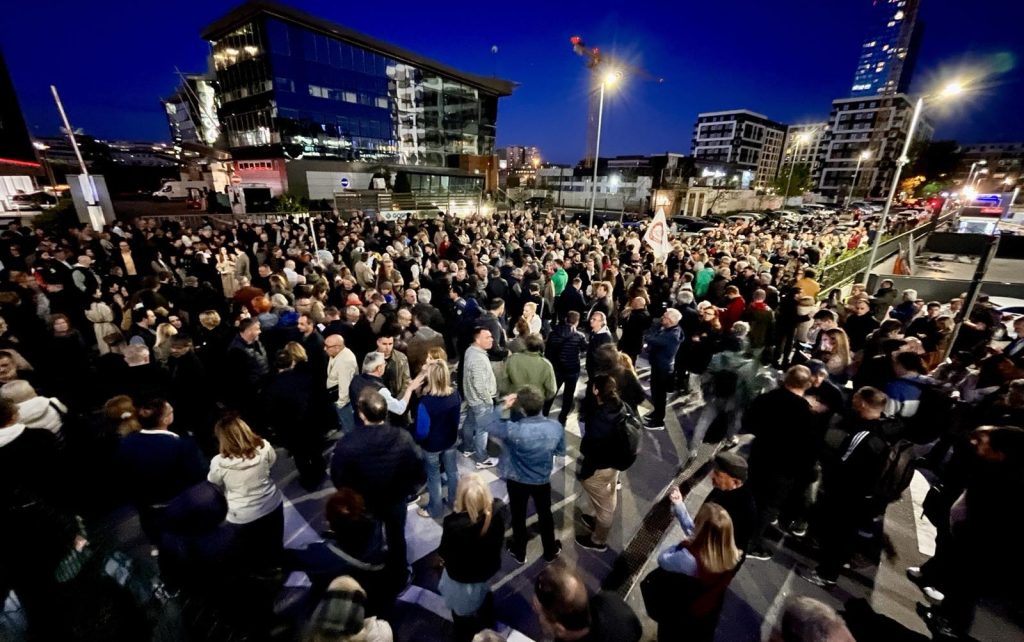
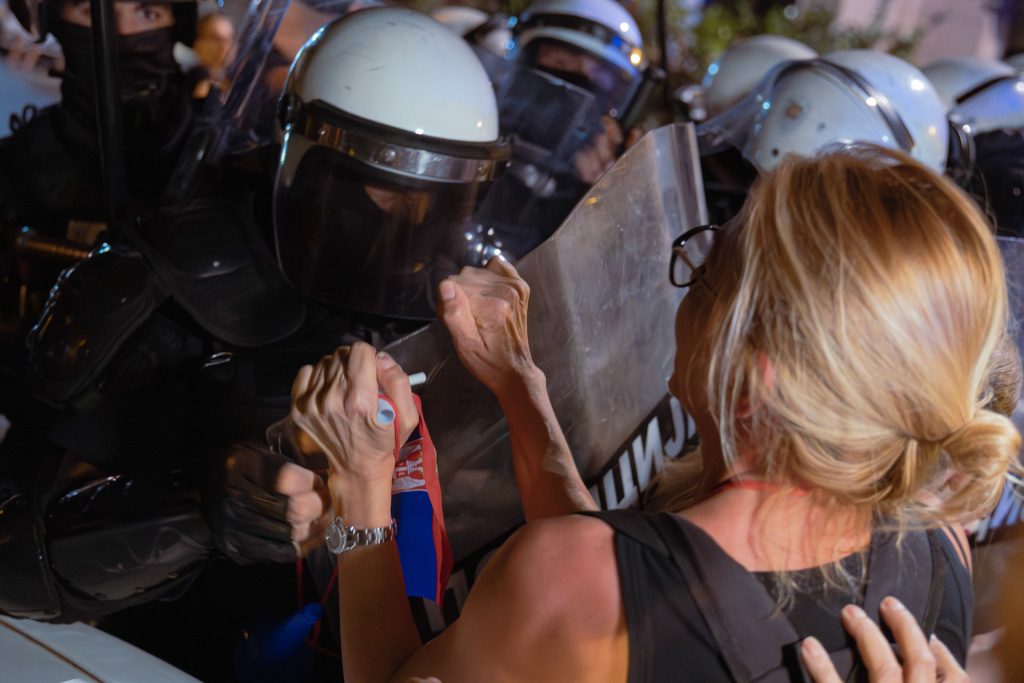
Freedom House clarifies that Serbia lost 3 points after authorities retaliated against teachers and professors who participated in widespread, student-led anticorruption protests by withholding pay and employment contracts.
“At the same time, police used excessive force against protesters and failed to protect them from armed gangs. Police and intelligence services have reportedly deployed a variety of spyware products to surveil journalists, civil society actors, and protest organizers in Serbia. For example, at least dozens and perhaps hundreds of personal devices have been targeted with a unique spyware tool referred to as NoviSpy, but the exact number is unknown given that authorities have installed it secretly during arrests, detentions, and police interviews”, Freedom House remarks.
It concludes that “such actions have contributed to Serbia’s overall score decline in Freedom in the World in recent years, as awareness of unchecked state surveillance motivates self-censorship among ordinary citizens”.