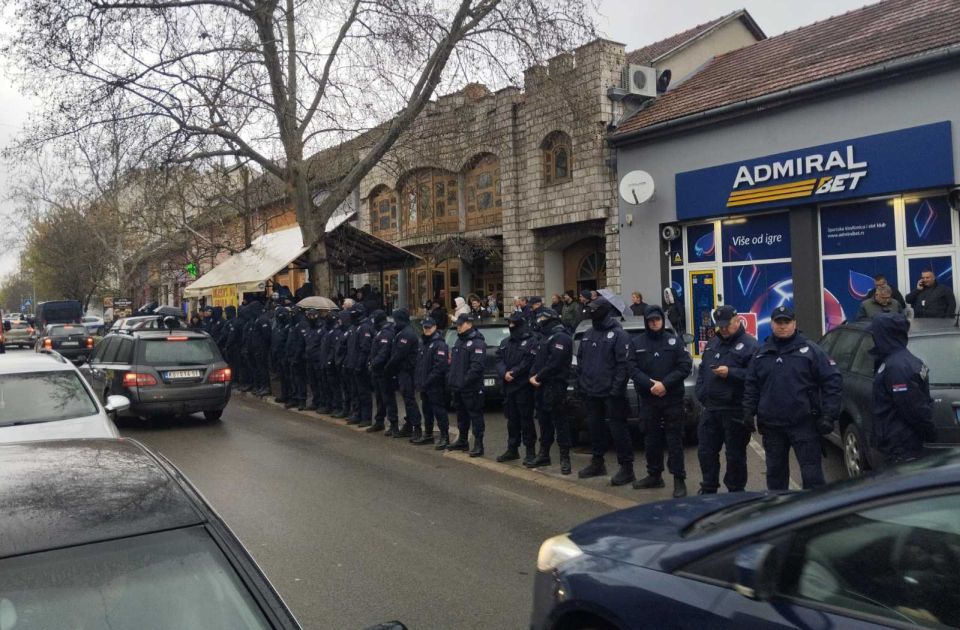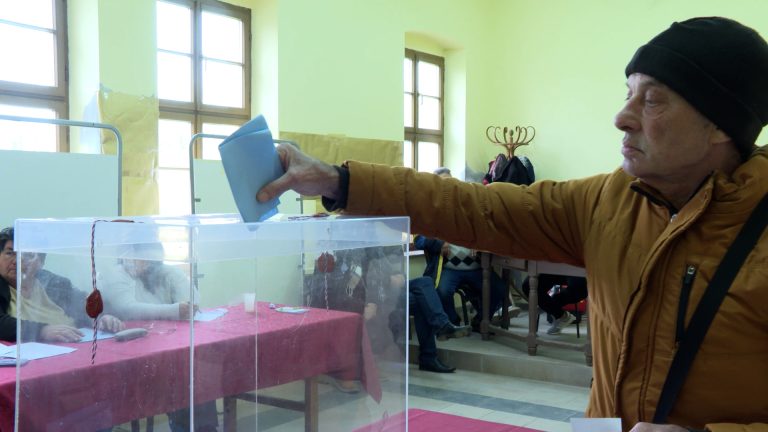
BELGRADE – The observation mission of the Congress of Local and Regional Authorities of the Council of Europe (CoE) assessed that violence and coercion are unacceptable obstacles to the free expression of will of voters, adding that member of its delegation witnessed violence in almost all municipalities they visited on Sunday during local elections in Serbia.
Local elections were held on Sunday in 10 municipalities and cities across Serbia. President Aleksandar Vučić announced that the ruling Serbian Progressive Party and its coalition partners had won in all ten, but the ruling coalition recorded a decline in eight of them compared to the previous elections.
On election day, six Congress teams comprising 13 observers were deployed as mobile teams in seven of the 10 municipalities where elections were held on 29 March, visiting more than 75 polling stations.
The Congress delegation received first-hand reports of attacks on domestic observers, the report said.
CoE observers also expressed concern about witnessing a number of irregularities related to violations of ballot secrecy and the photographing of ballots, while reactions of polling station committee members to such cases were incosistent.
“A number of procedural inconsistencies highlight the need to professionalize the work of polling station committees and municipal election commission”, the observation mission added, calling on Serbian authorities to continue efforts to make training for polling station members mandatory and to establish standardized procedures and their implementation.
The delegation recommended that authorities examine the possibility of a unified electoral cycle for local elections in order to reduce the risks of “electoral tourism”, a state of permanent campaigning, and to allow greater focus on local democracy across the country.
“To strengthen confidence, further integrity safeguards are needed, which could take the form of numbered seals for ballot boxes, proactive voter information, clear procedures – particularly regarding counting, photographing, the use of ink and UV lamps – specific training for implementing such rules”, the Congress added. The delegation expressed concern over a deterioration in the campaign environment compared to 2022 and even less equal conditions for all participants. During preliminary meetings, observers were informed by non-governmental organizations about campaigning by government officials and significant disparities in campaign spending.
“Non-governmental organizations and independent media reported allegations of pressure on employees and voters, vote-buying, and misuse of administrative resources and official positions, which the authorities denied,” the report added.
It was also noted that the “blurring of the line between the state, local authorities and the ruling party has further intensified” since the Congress’ last visit in 2022. As a result, local issues and programmes were largely overshadowed, to the detriment of local democracy.
Media coverage of the campaign was described to observers as “unbalanced,” resulting in limited airtime devoted to opposition voices, while independent media reported threats and attacks against journalists during the period.
The situation of local media, “negatively affected by ownership concentration and self-censorship, requires urgent attention,” the Congress warned. The report also stressed that “all of the above concerns were reinforced by the perception that some law enforcement bodies were not sufficiently swift or proactive in their response,” which may limit individuals’ access to effective and timely legal protection.
“The rule of law should be thoroughly applied during the campaign and on election day, and where citizens and non-governmental organizations raise concerns, authorities should fully investigate them. Where credible evidence exists, there should be fair proceedings and sanctions,” the Congress report suggested.
EU Delegation: State to protect citizens from violence
The European Union closely followed the local elections held on March 29 in ten municipalities in Serbia and regrets the number of reported irregularities and incidents during the vote, as well as unequal conditions for participants. In a statement, the EU Delegation in Serbia also said it noted with concern reports of acts of violence against independent observers, citizens, representatives of political parties and media workers.
“We call on the competent authorities to ensure swift and transparent action and to hold perpetrators accountable. We welcome the high voter turnout and active participation of citizens. We recall that it is the duty of the state to protect citizens from violence, guarantee appropriate conditions for citizen observers to carry out their activities in an environment free of pressure and intimidation, and ensure the safety of journalists in the context of elections,” the statement said.
The EU Delegation welcomed the authorities’ invitation to the Congress of Local and Regional Authorities of the Council of Europe to observe the local elections. “We take note of the findings of the observation delegation, published on March 30.”
It recalled that, building on the first positive steps taken to address shortcomings related to the integrity of the voter register, the electoral process requires further tangible improvements and reforms.
“In this regard, we call for an inclusive process involving all relevant stakeholders in order to advance the full implementation of OSCE/ODIHR and Council of Europe recommendations to improve the electoral framework and its application, well ahead of the next national elections,” the statement said.
It concluded that the EU will continue to closely monitor developments related to electoral reforms, as well as future local and national elections, as the proper functioning of Serbia’s democratic institutions lies at the heart of its European Union accession process.