BELGRADE – The detection of explosive devices near the critical energy infrastructure in the town of Kanjiža, which Serbian and Hungarian officials described as a foiled terrorist attack, is widely interpreted as “a false flag operation” by security experts.
Independent observers state several arguments indicating that the incident on the Balkan Stream pipeline may have been staged, including the fact that it occurred just a week before the crucial parliamentary elections in Hungary, where Prime Minister Viktor Orbán trails opposition leader Péter Magyar, according to polls.
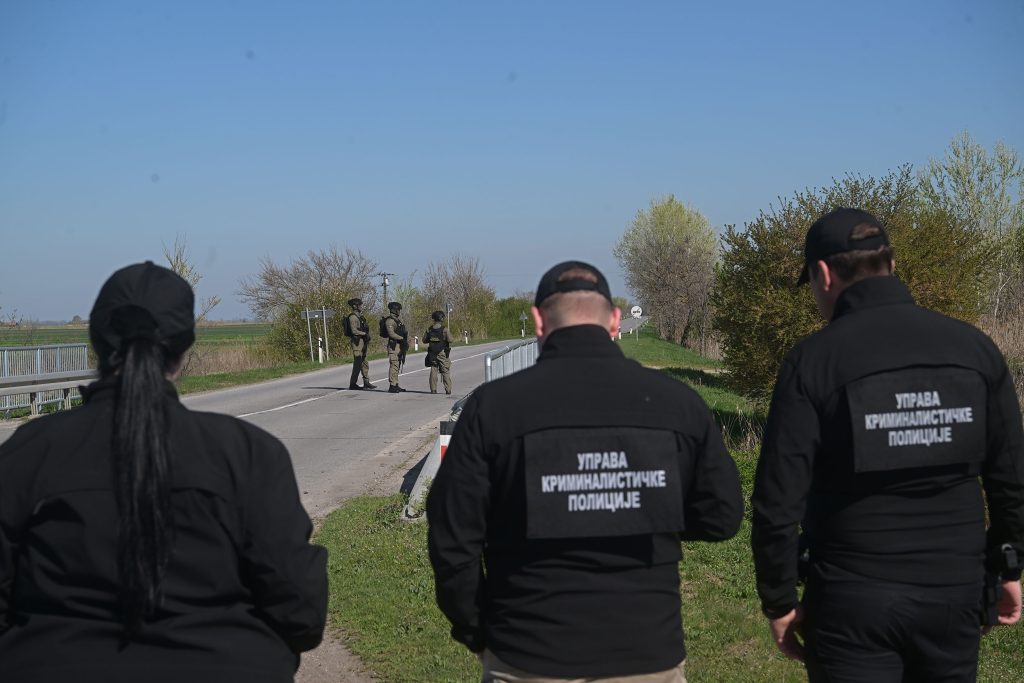
The authorities in both countries suggested that the goal was to cut off gas supplies to Hungary and northern Serbia, thus endangering national security. Hungarian Foreign Minister Péter Szijjártó suggested that Ukraine was behind the sabotage attempt. In addition, the Hungarian part of the pipeline was placed under military protection.
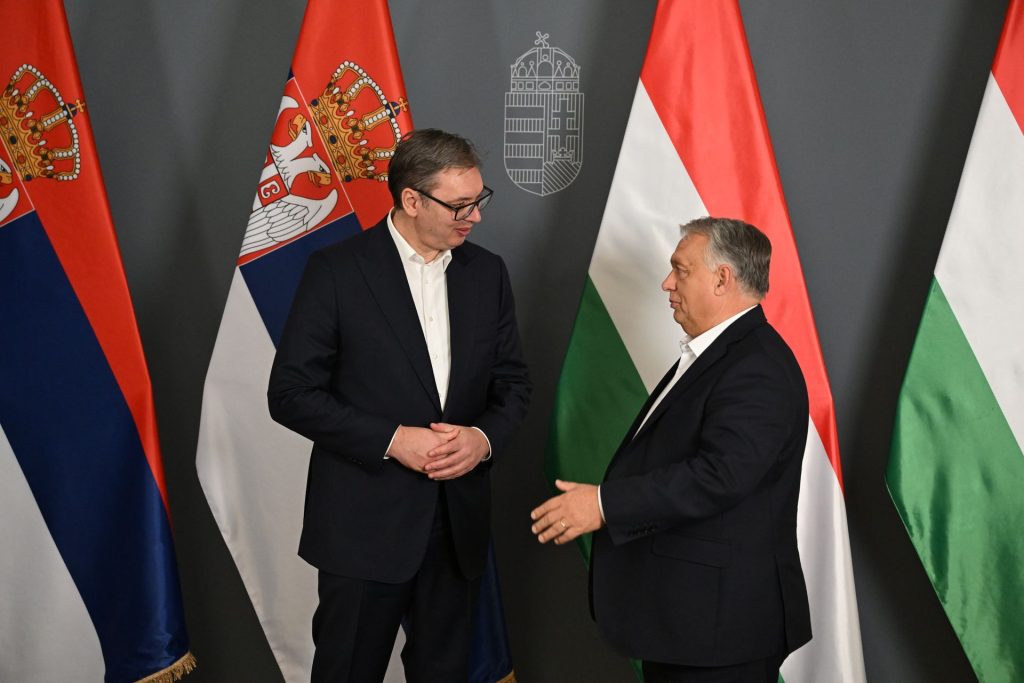
Viktor Orbán called a meeting of the Hungarian Defence Council to discuss the situation and stated that there was an act of sabotage prepared.
For his part, Serbian President Aleksandar Vučić stated that two large packages of explosives with detonators were found in Kanjiža, “a few hundred metres from” the Balkan Stream gas pipeline.
On the other hand, Péter Magyar directly accused Orbán and Vučić of a “show” with which they want to scare voters and create an atmosphere of emergency.
Despite serious accusations against Ukraine, so far no evidence, suspects or details of the investigation have been presented to confirm these claims, and the country has “categorically denied” any connection to the explosives found in Serbia.
“The security structures in Serbia are being used for political agendas by external actors”
In his media address, Director of the Serbian Military Security Agency (VBA) Đuro Jovanić stated that VBA “had information that a person from a group of migrants, who is militarily trained, would attempt to carry out sabotage on gas infrastructure”.
“The only question is whether the search (for the person who tried to do it) will last three days or several months”, Jovanić said.
Commenting on the opposite claims regarding the “Kanjiža case”, Ramadan Ilazi, Head of Research at the Kosovar Centre for Security Studies (KCSS), notes for EWB that “the skepticism is understandable because the timing is simply too convenient, and the incident seems to carry major indicator of a false-flag operation, including the speed with which it was politicised”.
“This incident also suggests that security structures in Serbia are being used for political agendas by external actors, which raises serious questions about democratic and civilian oversight of the sector. The stakes in Hungary’s election are bigger than just for Hungary alone. A political change in Budapest could remove one of the main obstacles inside the EU to stronger and faster support for Ukraine. In that context, Serbia’s vulnerability to Russian influence is no longer just about passive exposure, as now it increasingly looks like a channel through which Russian interests can directly shape security developments and agendas in our region”, Ilazi remarks.
Marko Savković, Senior Advisor at International and Security Affairs Centre (ISAC Fund), says for EWB that many of his colleagues have already labelled this incident as the so-called “false flag operation”.
“I really do not know whether it is a false flag incident or not, but the timing is too suspicious or convenient – depending on from whose perspective one looks at. In any case, it is dangerous, because the credibility of Serbia will suffer further internationally, particularly within the EU. Also, it is a bit frivolous case, as we had two press conferences where Director of VBA spoke, after he had stayed out of the public eye for years. He obviously addressed the public to fix the damage. All in all, it was unnecessary”, Savković states.
He stressed that, at the same time, “somehow, everyone who monitors the situation in Europe has already been prepared that something like this can happen”, including the warnings coming from Tisza (Hungary’s main opposition party).
Commenting on the close relations that Vučić maintains with Orbán, Ramadan Ilazi states that “one should also not exclude a more transactional logic in the current incident, where support offered now may be shaped by calculations from President Vučić about political utility later”.
“The Gruevski case showed that Hungary can play the role of protector for politically exposed leaders in the region, and that precedent inevitably invites the question of whether Vučić also sees value in building that kind of reserve capital”, Ilazi concludes.
Similarly, Marko Savković underlines that “much has been said” about the relations between the authorities in Serbia and Hungary, “from which the authorities in Serbia, but not the country as a whole, have certainly benefited”.
“We will see what is going to happen in the future. The elections, scheduled for 12 April, are approaching, and it is expected that Orbán will lose”, Savković says.