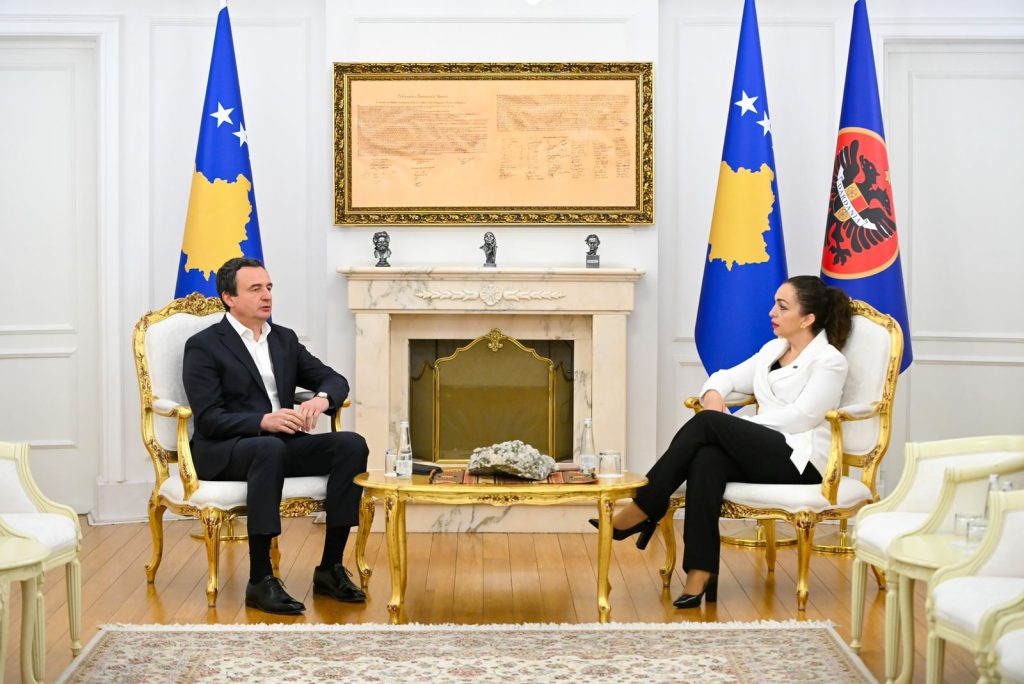
Kosovo is set to hold its third parliamentary election in less than two years, on 7 June 2026, after the parliament failed to elect a successor to President Vjosa Osmani before the legal deadline. Osmani was eligible for another term, but did not receive support from the ruling Self-Determination Movement (LVV), led by Prime Minister Albin Kurti.
The election of the President failed because the opposition parties consistently denied the necessary two-thirds majority quorum to hold the session. On the other hand, Kurti did not make political concessions to enable a quorum, leading to a situation in which the entrenched positions of both sides triggered another snap election, less than six months after the previous one.
While it is widely believed that LVV will remain a dominant force after the fresh election, the opposition Democratic League of Kosovo (LDK), which is seeking to form “a great unification”, could shift the electoral balance against Kurti’s party. Among other things, it was announced that Vjosa Osmani will run in the election on the list of her former party, LDK.
In the December 2025 election, Kurti’s LVV won 51% of the vote. Democratic Party of Kosovo (PDK) won 20%, followed by LDK at 13% and Ramush Haradinaj’s AAK at 5,5%. Belgrade-backed Serb List again won nine out of ten seats for the Serb community.
Donika Emini, a research fellow at the University of Graz, stresses for EWB that “there are different interpretations of who benefits from the snap election, and also different readings of where the key miscalculations lie”.
“In reality, both the governing party and the opposition have made strategic errors, but of different kinds”, Emini notes.
According to Uran Haxha, a journalist at K2.0 web portal, “the chances that Albin Kurti will lose in the new snap election are very small”.
“We are only a few months away from the last election and in such a short period, it is difficult for there to be a major shift in voter sentiment. In Kosovo, electoral movements are usually gradual, not immediate”, Haxha notes for EWB.
Aleksandar Šljuka, a researcher at “New Social Initiative” from North Mitrovica, claims for EWB that Kosovo’s Albanian opposition parties can benefit most from the upcoming election.
“The snap election would be a new opportunity for the opposition to gain more votes than in the previous election, and to try to change the balance of power on the political scene”, Šljuka states.
“Vetëvendosje is also taking a gamble”
Kurti’s party won more than 50% of the vote in the snap parliamentary elections, held on 28 December 2025, which enabled it to rule without a coalition partner, apart from the representatives of the national minority parties. However, after numerous attempts, on 28 April 2026, Kosovo’s MPs failed to elect a new president of Kosovo, in its last attempt before the deadline expired. It implied that Kosovo would go to the third general election in just over a year, and Kurti became the caretaker Prime Minister.
Officially, Kurti justified his lack of support for Vjosa Osmani’s bid for a new mandate by stating that even with his party’s coalition, they could only secure around 66 votes, far short of the 80 votes needed to elect the president in the Assembly.
Commenting on Kurti’s recent moves, Donika Emini notes that “from Vetëvendosje’s perspective, this is in many ways a high-risk strategy”.
“Having secured more than 50% of the vote (in December 2025) in a multiparty system is already a very strong position, and in normal circumstances it provides a comfortable governing majority in parliament. That would allow the party to govern with relative institutional freedom. However, the additional ambition to also secure control or decisive influence over the presidency changed the political calculus. The insistence on electing the president within the same political logic, without a broader, negotiated political coalition, had a detrimental impact on the compromise-building process with the opposition”, she underlines.
In Emini’s opinion, “at times, it appeared less like a search for institutional consensus and more like a pressure-based approach towards the opposition”.
“This inevitably increased tensions and contributed to institutional deadlock. From that perspective, one could argue that LVV is also taking a gamble. On the one hand, it risks overextending its political capital after already achieving a strong electoral mandate. On the other hand, it still retains a significant advantage: it is the only actor that can credibly frame the narrative of responsibility and blame the opposition for institutional blockage, a strategy it has used effectively in previous cycles. If that narrative continues to resonate with voters, repeated elections could further weaken the opposition over time”, she clarifies.

Similarly, Aleksandar Šljuka remarks that “with his maximalist approach in the post-election period, Albin Kurti seems to have practically abandoned what appeared to be a relatively certain new four-year term of the Government”.
“After a prolonged political crisis, Kurti managed to form both the assembly and government, relying on the majority achieved in the election held in December 2025. However, the inability to reach a wider political agreement on the election of the president in the parliament now raises the issue of the snap election again, which gives the opposition additional political space and a new chance to mobilise voters”, he notes.
Uran Haxha remarks that “Kurti is expected to build his campaign also around the presidential candidate Feride Rushiti, a well-known human rights activist, a doctor by profession, and the director of the Kosovo Centre for the Rehabilitation of Torture Survivors, with a strong profile in transitional justice and the protection of victims”.
“This is thought to be part of a strategy to seek a stronger parliamentary majority that would enable not only governance but also the election of the President without blockages. Otherwise, in the absence of consensus among parties, there is a real risk that the country may once again enter a cycle of institutional blockages and successive elections”, he warns.
“A key element is the role of Vjosa Osmani”
On 5 May 2026, LDK leader Lumir Abdixhiku confirmed that Vjosa Osmani will join the party’s list for the upcoming election.
Asked whether Osmani would head the LDK list, Abdixhiku said he has no problem with that, adding that he sees her as the “right” candidate for President of Kosovo.
Osmani was originally a member of LDK and the party’s candidate for Prime Minister in the 2019 election. Ahead of the 2021 snap election, she left LDK and founded her own political organisation, Guxo!, which participated in the election together with Kurti’s LVV. Following the victory of the joint list, Osmani was elected as President of Kosovo.
Elaborating on Osmani’s comeback to her “home” party, Aleksandar Šljuka notes that the possible consolidation and cooperation of the opposition parties, particularly the reunification between the former president and LDK, after her split with Kurti and LVV, which had not supported her bid for a new mandate, “could further consolidate a part of the opposition electorate”.
“In addition, the opposition is probably counting on the possibility that LVV would achieve worse result compared to the previous election, bearing in mind that it is now certain that the diaspora, which was one of the key factors of the election result in December 2026, will not be present in Kosovo to the same extent as it was the case back then”, Šljuka says.
He adds that, to some extent, the Serbian opposition parties in Kosovo can also take advantage of the snap election.
“In the previous election, the Serb List won nine of the ten seats envisaged for the Serb community, while Nenad Rašić’s party won one seat. However, having in mind the possible unification of part of the Serbian opposition parties in Kosovo, there is now a chance of a different distribution of political support within the Serb community in Kosovo”, Šljuka clarifies.
In a similar vein, Uran Haxha claims that “the main dynamic will depend on the opposition”.
“A key element is the role of Vjosa Osmani, who is expected to have her own list of candidates and be incorporated into the list of LDK. This is also seen as the main reason why LDK did not cooperate with LVV on resolving the presidential election, leading the country into new elections. LDK believes that with Vjosa Osmani, it will increase its votes. However, within the party, there are powerful figures who are against this approach, and there have been signs of division within a faction of members aligned with the current mayor of the capital, Përparim Rama”, he clarifies.
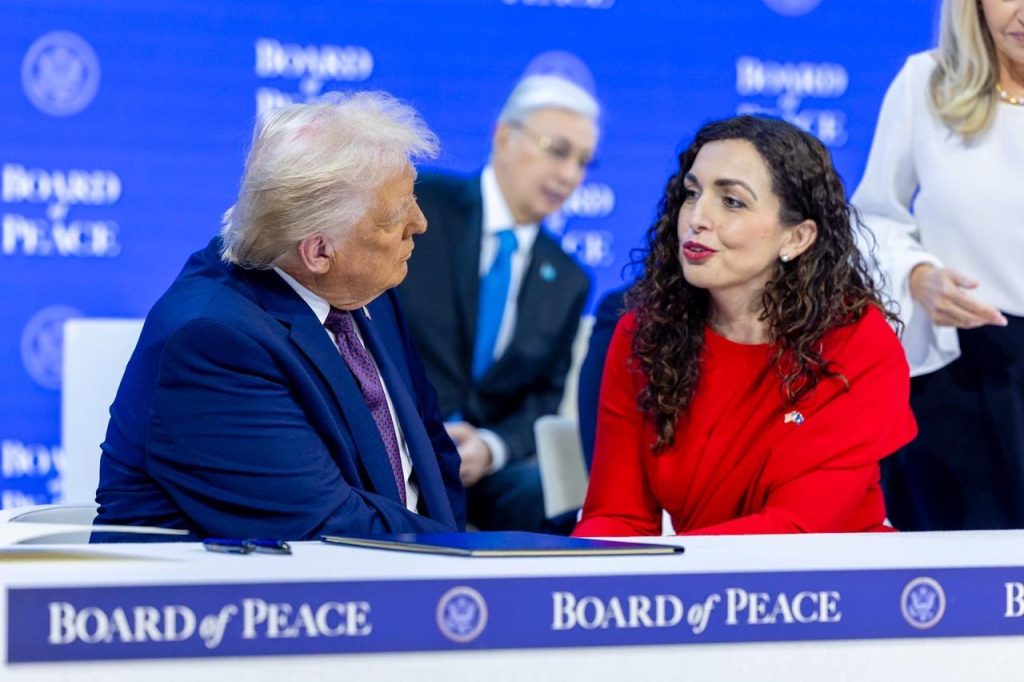
In Haxha’s opinion, “in this situation, no major electoral upset is expected”.
“The parties are likely to remain around their previous percentages, with only small differences. The main loser risks being the citizens, due to the continuation of political instability and the frequent cycle of elections”, Uran Haxha assesses.
Donika Emini agrees that “Vetëvendosje is still in a structurally advantageous position”, while “the opposition is weaker but potentially in a phase of slow re-energisation”.
“The opposition’s own miscalculation has been the lack of a unified and credible political offer. Acting primarily as a blocking bloc has limited their ability to present themselves as an alternative governing force. That said, they are not without potential advantages going forward”, she assesses.
Emini agrees that one of the key variables that could reshape the opposition landscape is the return of Vjosa Osmani into party politics.
“Her political trajectory appears to be moving either back toward LDK or toward some form of pre-election alignment or coalition with it. In either case, her re-entry would likely re-energise the opposition space”, Emini stresses.
She adds that “Osmani is a seasoned political actor with significant domestic legitimacy, strong international networks, and proven mobilisation capacity”.
“In a fragmented opposition environment, she is one of the few figures who could realistically challenge Kurti’s dominance and shift the balance of competition. In that sense, while LVV still enters the election as the strongest single political force, and in many ways still the ‘only game in town’, the opposition may be entering a phase of gradual reconfiguration rather than static decline”, Emini says.
Thus, she adds, the situation remains highly unpredictable.
“LVV’s previous electoral performance demonstrated that voter behaviour can still produce unexpected outcomes, including strong diaspora-driven support. At the same time, whether that level of mobilisation can be replicated remains uncertain”, Emini concludes.