Dear readers,
Welcome to the latest edition of Weekly Campaign Overview, our regular news digest covering the upcoming parliamentary election in Serbia.
This week, the candidate lists were finalised and the final number of registered voters was determined. A total of 18 lists will contest the election, but the main battle will be between just two: the SNS and the Student List. The total number of registered voters stands at around 6,450,000, approximately 50,000 fewer than in the previous election, while the number of registered diaspora voters has more than doubled, exceeding 100,000. However, it remains to be seen how many will actually be able to cast their ballots amid accusations that the government is informally suppressing the diaspora vote.
Election observers issued their interim assessments of the campaign, noting increased polarisation and tensions that are expected to intensify in the final weeks before the election. A number of issues affecting the electoral process, including the accuracy of the voter register and potential pressure on voters, remain unaddressed.
Follow our X account, @serbia_elects, and visit the dedicated section on the European Western Balkans portal for all major developments in the coming weeks.
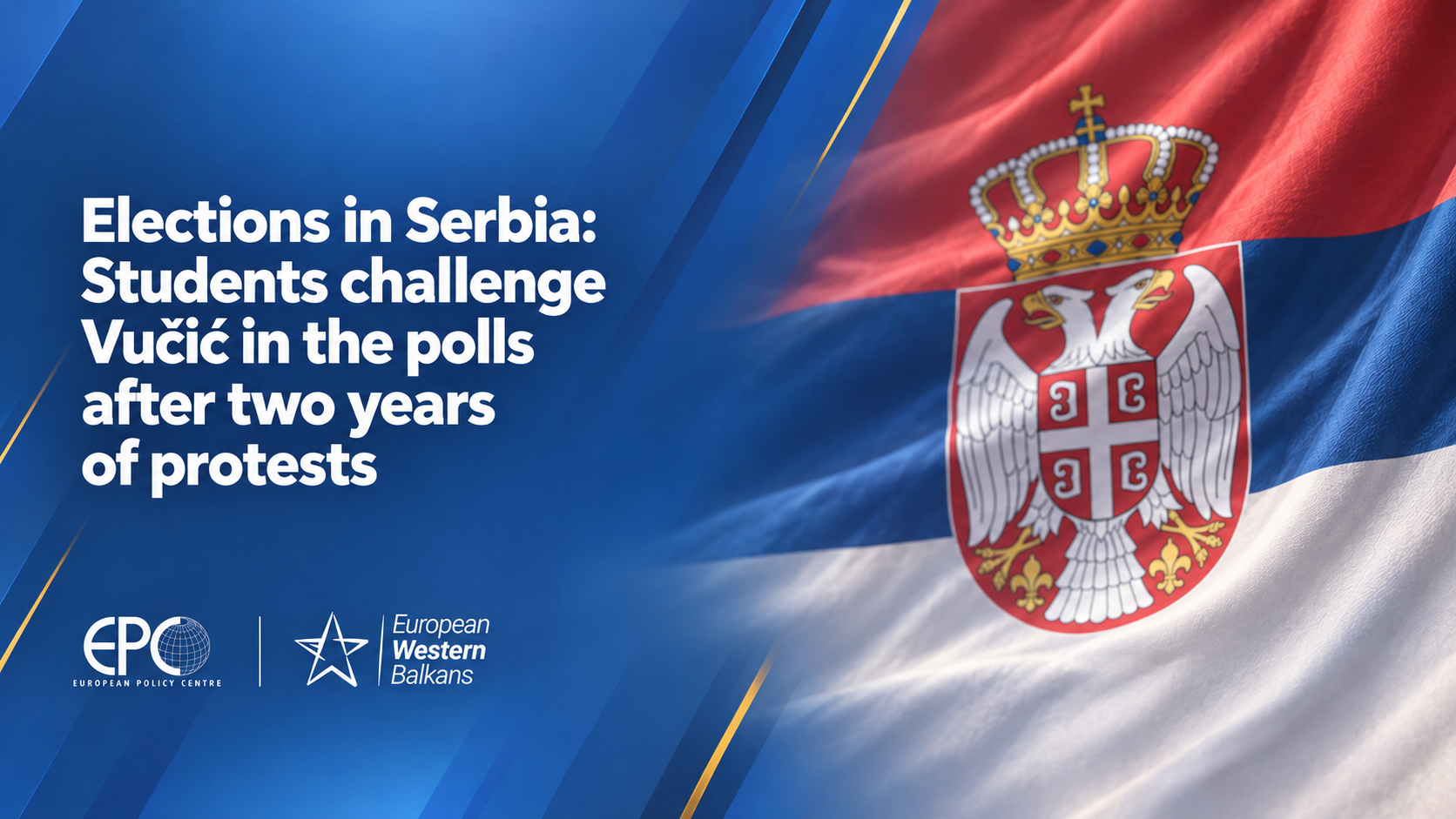
We also invite you to register for an online event we are co-organising with the European Policy Centre: Elections in Serbia: Students challenge Vučić in the polls after two years of protests, which will take place on Wednesday, 14 October. At the event, we will set the scene for the election and discuss what to expect on 25 October.
Best regards,
Aleksandar Ivković
Editor of Serbia Elects
The campaign becomes dirtier and more aggressive as it enters the final phase
Government accused of trying to suppress the diaspora vote. The Republic Electoral Commission (RIK) this week confirmed that 102,000 citizens had successfully registered to vote from abroad. This represents a sharp increase compared with the previous record of 39,000, reflecting increased voter mobilisation ahead of the parliamentary election.
Nevertheless, the number of polling stations for voters residing abroad increased only slightly, from 81 to 93. Student List representatives claimed that many cities in which hundreds of people had registered to vote were left without a polling station, meaning that these voters would have to travel thousands of kilometres in some cases to cast their ballots. In addition, voting hours were, for the first time, aligned with Serbian time, meaning that voters in Australia or the United States would have to vote during the night. The Student List filed a complaint against this decision, with several thousand protesters also taking to the streets, but RIK rejected the complaint.
Student List holds rallies across the country and schedules its final campaign event for 22 October in Belgrade. Rallies organised by the Student List (SL) drew thousands of supporters in cities such as Čačak and Niš, and hundreds in various smaller towns across the country. Each rally featured candidates for parliament on the Student List, who spoke about the need to remove the ruling party, which they describe as corrupt and criminalised, from power, as well as the need to improve conditions in sectors such as education and healthcare. On 10 October, the Student List announced that its final campaign event would take place at Slavija Square in Belgrade, following student marches across the country – both of which are signature elements of the Student Movement.
The ruling Serbian Progressive Party (SNS) has pursued a strategy of holding gatherings in close proximity to those organised by the Student List. This has occasionally led to heightened tensions and minor physical altercations between the two sides. As the campaign enters its final phase, tensions are rising.
Vučić steps up his negative campaigning against the Student List. Aleksandar Vučić, the SNS candidate for prime minister, also continued to hold campaign rallies across Serbia, including a larger gathering in the city of Kragujevac on 9 October. Negative campaigning against the Student List is becoming an increasingly prominent part of Vučić’s messaging. He is seeking to associate some of the list’s candidates, particularly former National Bank of Serbia Governor Dejan Šoškić, with the economic decline and corruption that characterised the final years of the rule of the Democratic Party, which was ousted by the SNS in 2012. Vučić is also increasingly drawing parallels between the Student List and the Democratic Opposition of Serbia (DOS), the coalition that overthrew Slobodan Milošević in 2000, while claiming (without evidence) that the Student List enjoys substantial foreign backing.
Student List sets conditions for participating in future debates on public broadcaster RTS. On 8 October, RTS hosted a debate on economic policy featuring Finance Minister Siniša Mali representing the SNS and former National Bank of Serbia Governor Dejan Šoškić representing the Student List. Mali employed the debate tactics commonly used by the SNS, repeatedly interrupting Šoškić throughout the discussion. While Mali blamed Šoškić for Serbia’s economic downturn during his tenure as governor (2010–2012), Šoškić challenged the SNS government’s claims of economic success and questioned the sustainability of its economic growth model. Following the debate, the Student List announced that it would not send any more candidates to future debates unless RTS ensured that each participant could speak without interruption.
Branko Ružić deals a blow to the Socialist Party of Serbia’s electoral prospects. In an interview with Nova S television on 10 October, Ružić announced that he would launch his own party after the 25 October election and expressed support for the Student List. The SPS expelled Ružić, one of its most prominent members, several weeks ago because of his criticism of the party’s coalition with the SNS, which has been in place since 2012. The SPS, led by Ivica Dačić, won 6.5% of the vote in the previous election and is expected to perform worse this time. In the interview, Ružić assessed that the election would mark either “the end or the beginning of the end” of Vučić’s rule.