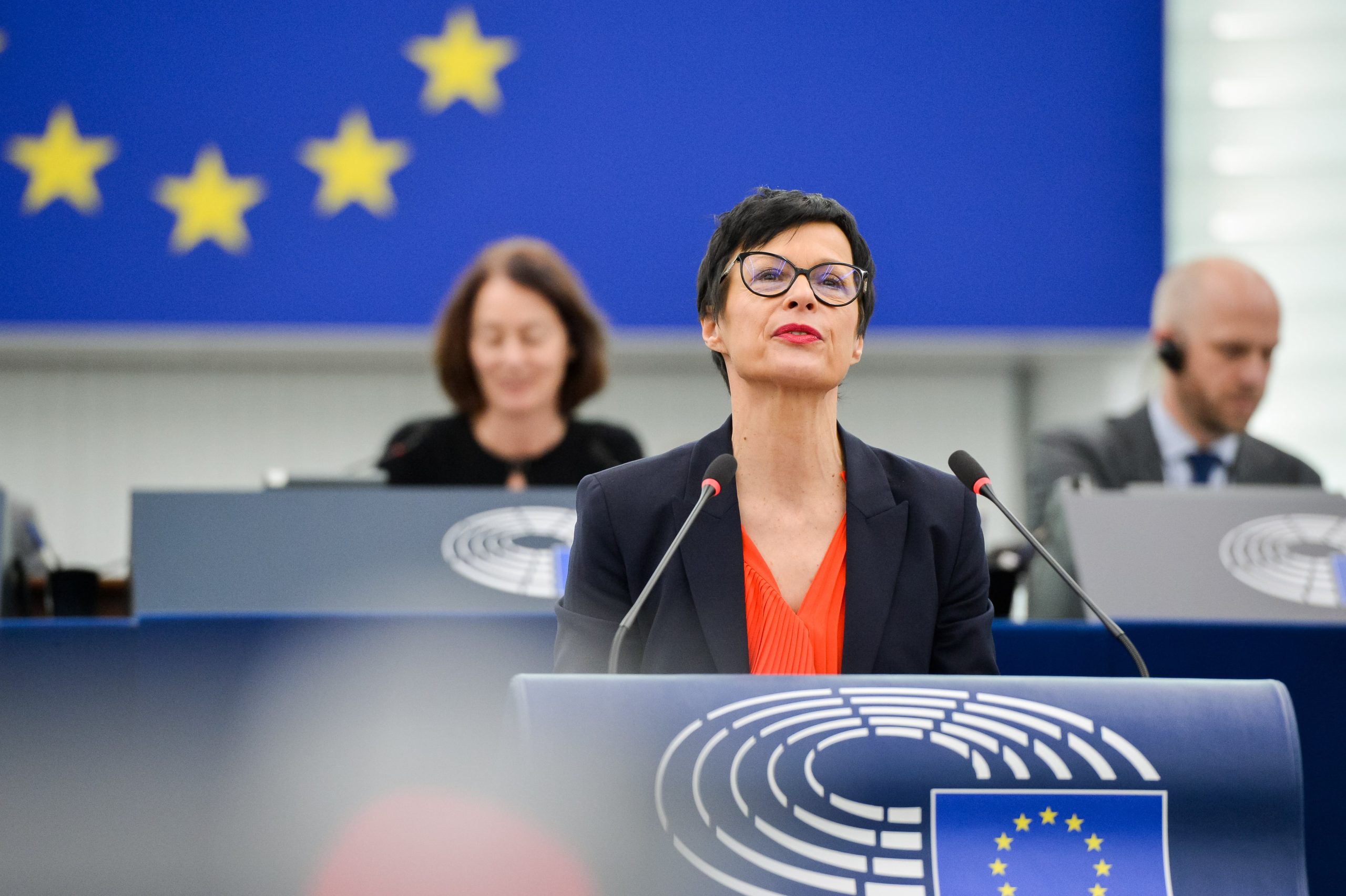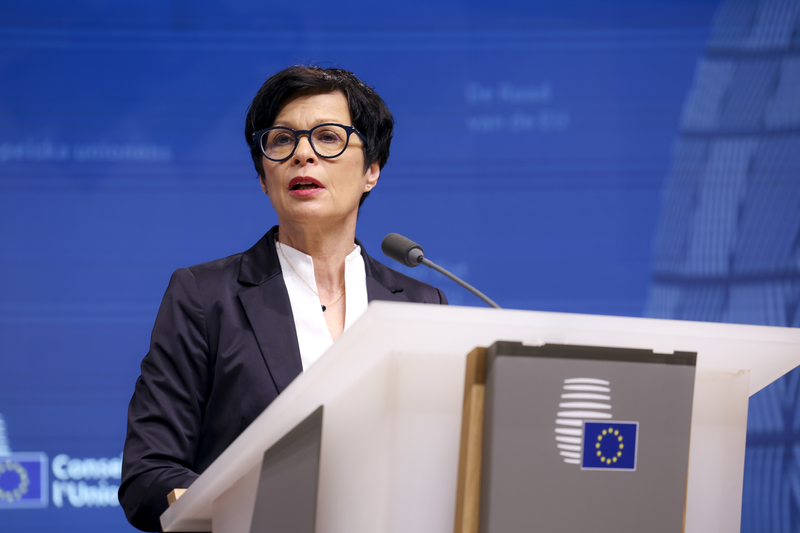
In her State of the Union address, European Commission President Ursula von der Leyen called on us to believe in a Europe that is, at once, stronger than ever and yet perhaps more precarious than ever. It is a difficult proposition. In less than a decade, our continent has witnessed a pandemic, war, the rise of authoritarianism, economic uncertainty and an accelerating climate crisis. Against this backdrop, we are left to ask what gives Europeans a reason to hope when their lived reality feels so perilous?
Yet, not long after hearing this speech, those of us attending the summer school in Cres heard from a vocal activist for the Roma minority rights in Serbia named Maja Simić. Maja, despite being young and facing troubling odds, took initiative to improve the lives of the people in her marginalized community.
Next we heard from Sesili Kurtskhalia – a former Georgian civil servant who quit her job in protest and was one of the first demonstrators on the street when her government decided to freeze its EU accession talks. She demonstrated through the entire night and years later continues to fight despite the odds.
One by one we went around the room and heard story after story of actions taken, organizations founded, initiatives led across the continent. All of them were grounded in ceaseless steering towards a better future for their respective countries. All of them faced strong headwinds. All of them were determined to hold on and move through dark times. It was inspiring.
The juxtaposition of the words of our colleagues and the words of our leaders showed us something. It revealed the tension between the aspirations for a Europe that is institutionally stronger and a Europe that people actually feel hopeful about. President von der Leyen talked about breaking European defense spending records by 80% in the last five years alone. But where could there be hope in secure borders that have come without sufficient regional development?
The Commission repeatedly calls for “strategic autonomy” to decouple from Russian fossil fuels yet now the EU sources two-thirds of its liquefied natural gas imports from the United States. It is disheartening to hear that “Europe must remain in the hands of Europeans” at a time when extremist and populist narratives are increasingly capturing the grievances of those who no longer feel represented by the Union and its governments.
Despite this, the president’s message was not wrong. Her words reminded us all that our leadership is competent, that it is paying attention, and that it has a plan. A cool, calculated plan commands respect, but it takes passion to ignite hope. Building a stronger Europe is not necessarily the same as building a Europe that people believe in.
It can be hard sometimes to envision such a hope. For those of us who have most of our lives ahead of us, the current situation can sometimes feel as if we were born just in time to witness the end. Change can often seem impossible. Optimism sometimes looks foolish. Yet we, the youth of Europe, maintain that although hope may not always appear rational, it is always necessary. In the words of Václav Havel, the communist-era dissident who became Czech president:
“Hope is not prognostication. It is an orientation of the spirit, an orientation of the heart; it transcends the world that is immediately experienced, and is anchored somewhere beyond its horizons.”
Hope on the European continent is not conveyed by technocratic aspirations for global relevance, it is instead inspired by the people among us whose work defines that relevance. Hope is not written in the numbers of abstract metrics or key performance indicators of Europe’s relative influence; it’s written in the words of the people who make Europe influential. Therefore, it must be understood that the hope we need isn’t handed down from the top. Rather, it rises from the bottom. Our leadership shouldn’t try to manufacture vision; they need to recognize the courage already on the ground and elevate it.
Our hope comes from witnessing the unmatched resilience and bravery of other Europeans both inside and outside of the union. We see this hope in Ukrainians defending their country and their right to determine its future. We see it in Georgians who continue to mobilize around their country’s European future despite mounting pressure. We see it in the Hungarians who rallied to defeat and overthrow their illiberal government that had ruled for 16 years and who turned out in record numbers to do it. We see it in Romanians who returned with even higher numbers for a second round of elections after their first was annulled. These struggles remind us that, for millions of Europeans, Europe is not an abstract institutional project. It represents a future for which they are willing to take considerable risks.
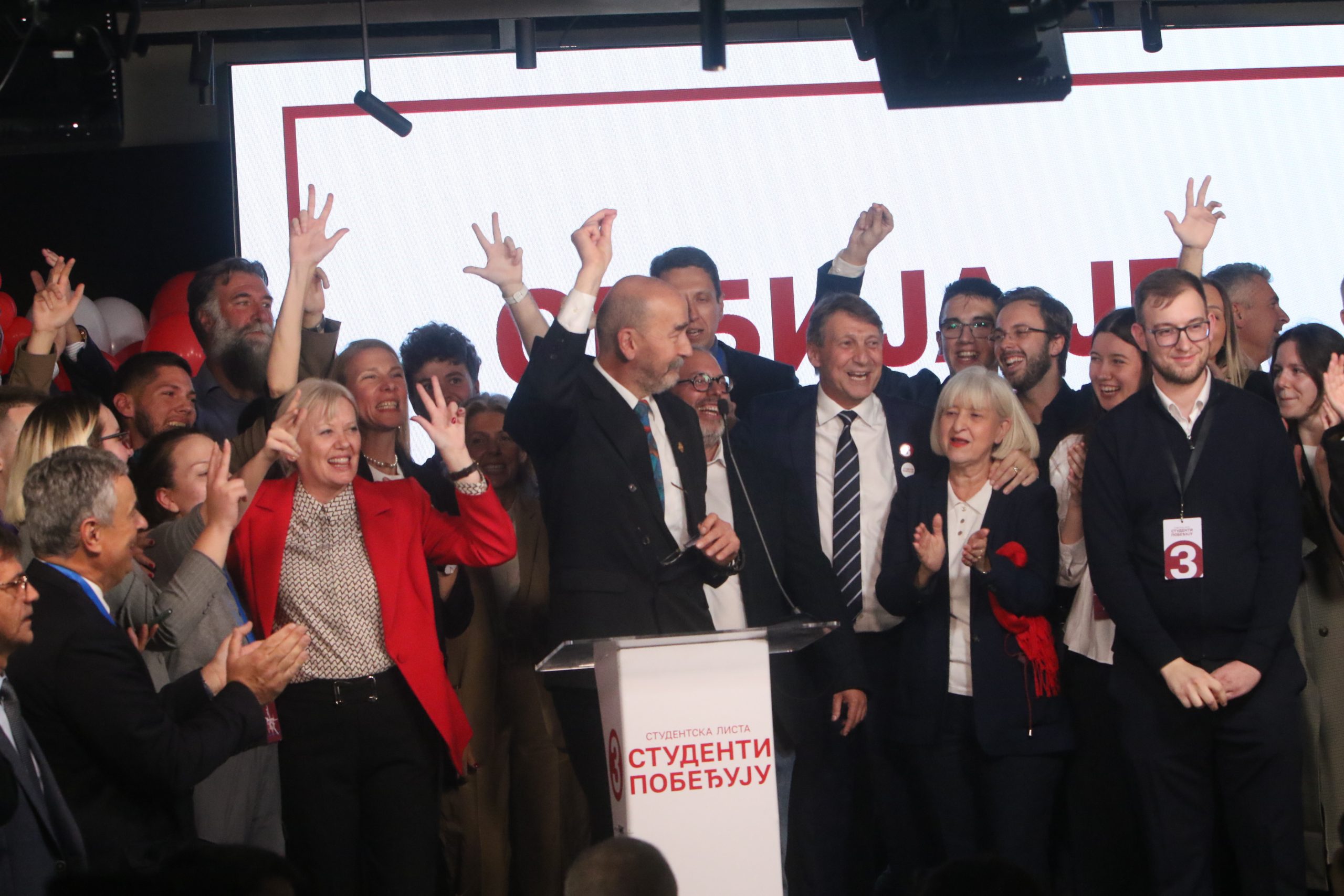
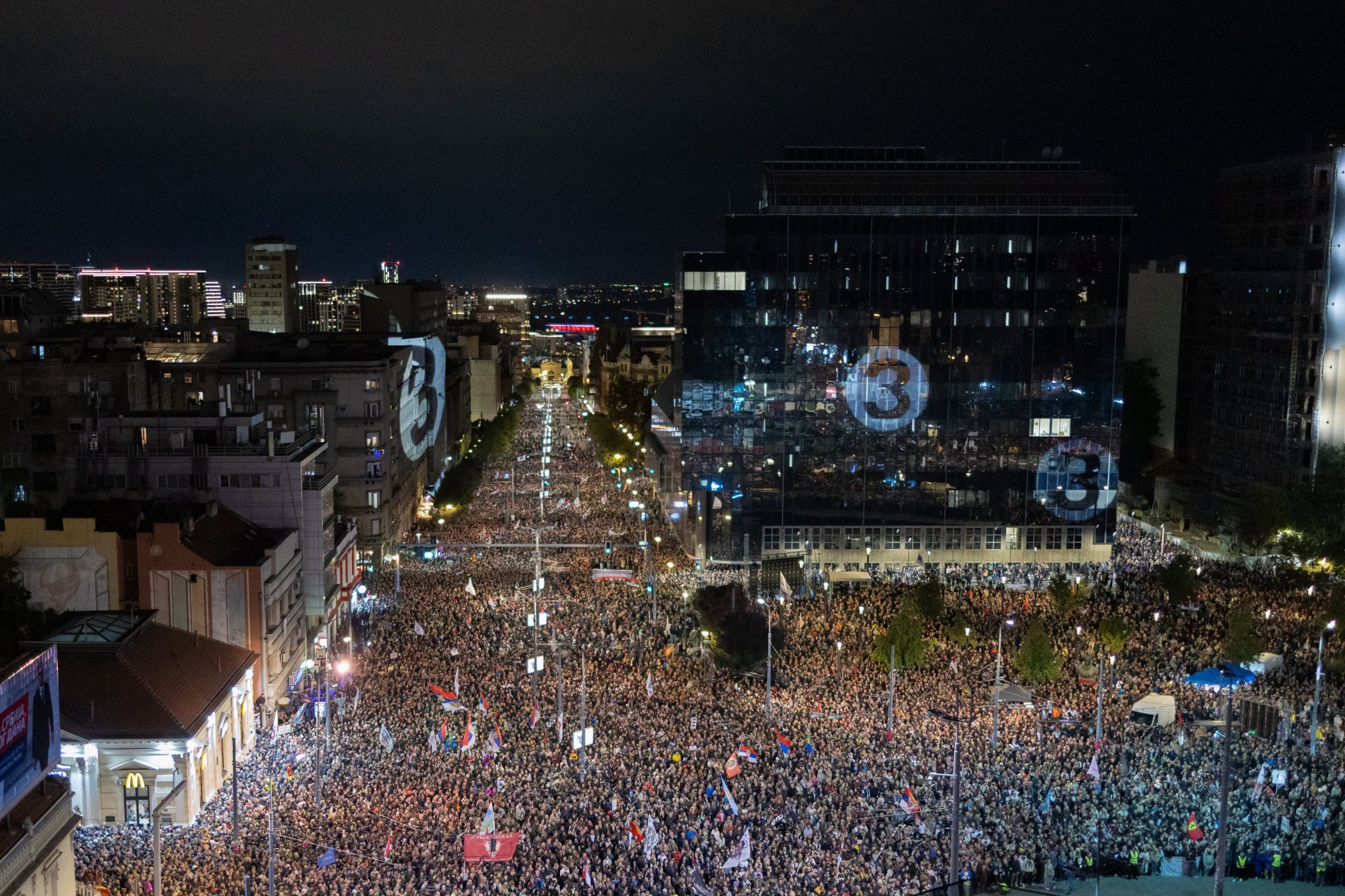
They are not alone. Citizens of candidate countries are still waiting for the promise of European accession to become a reality. Look at the young people taking to the streets in Serbia, or those behind the Flamingo Revolution in Albania. Their hope for democracy, accountability and a better future is no less European simply because their countries remain outside the Union. Enlargement is perhaps one of the clearest tests of Europe’s ability to turn hope into credibility. For societies that have spent years reforming, working and orienting their futures towards the Union, European promises matter only if they are eventually translated into tangible progress. Keeping the promise of enlargement alive therefore means more than keeping a process open; it means demonstrating that commitment to European values can lead somewhere.
These courageous efforts witnessed across the continent have shown for all to see that there are those of us who are not resigned to just wait for promises to be fulfilled. The youth who spearhead these movements across the continent demonstrate that hope is fostered by those who take on tremendous risk in the name of what they believe. It is reified through aspirational action and indomitable volition. To hope for Europe is not to predict its triumph, but to keep steering toward it, even against strong headwinds. That course is already being held by a generation that has stopped asking for permission. Leadership’s task is not to direct it, but to meet it.
The European project is, at its core, a promise. A promise of freedom, a promise of equality, a promise of democracy. We must fulfill that promise. We cannot afford to rust beneath inaction or sink beneath despair. This union is far from perfect, but it is the best that we have. We the youth of Europe call upon our leadership to recognize that we are where hope lives and ask that you join us rather than just expecting us to follow.
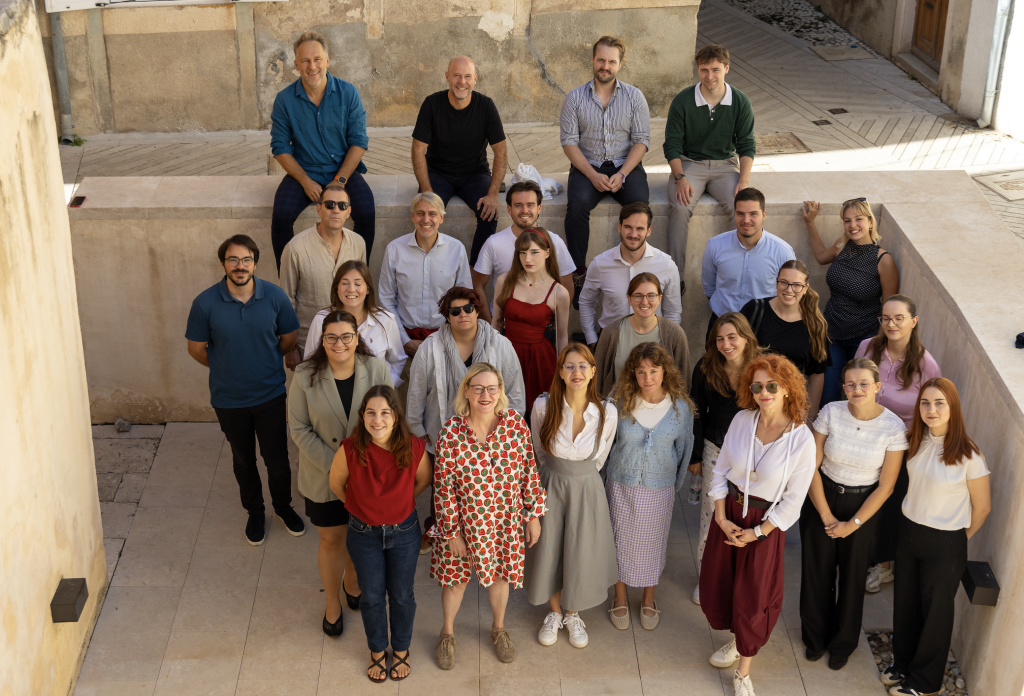
This op-ed was written during the “Cres Summer School” 2026 by 21 young people representing 17 nationalities, nominated by 17 partner organisations from 15 European countries, on the Croatian island of Cres. (https://summerschool.oegfe.at). (Authors: Berina Aličić, Fernando Gijón, Irma Hadžić, Natalia Hidalgo Martínez, Fabian Hribernig, Nikolaos Karamitsos, Lisa Kirmser, Sesili Kurtskhalia, Enxhi Lipa, Olivia Lockey, Lilla Németh, Niya Panteva, Tara Petkov, Rebeka Rasinec, Fatlinda Shabanaj, Maja Simić, Berta Stojkovska, Yann Sydow, Leon Tunev, Jens Wirth Salander, Lenka Živanović)
Views expressed in the Opinion section belong to the authors and do not necessarily reflect the views of European Western Balkans.