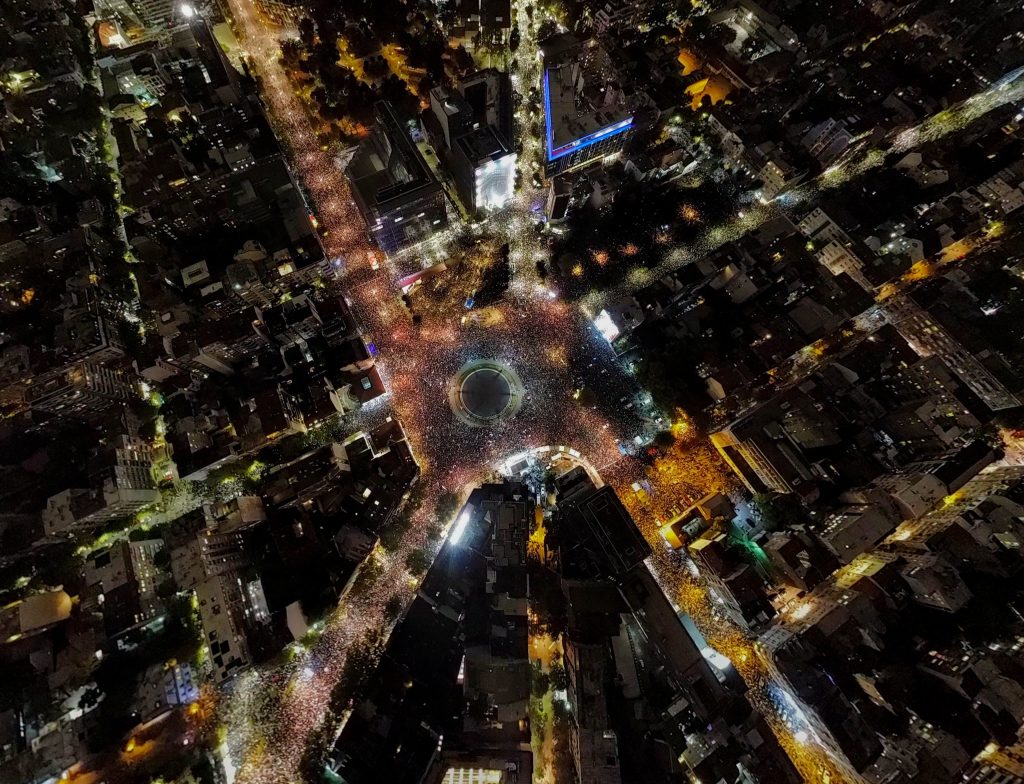
This morning, dozens of Serbian civil society organisations sent Europe a public outcry, heavily backed by an evidence brief documenting, point by point, that Serbia is heading into Sunday’s election without the conditions necessary for a free and fair vote. I signed it. Its authors went to great pains to prove what most of us here have long known. Between the lines, it says something else: suddenly, everybody has realised that the students may just win. European capitals, however, do not seem prepared for it. And neither is Aleksandar Vučić.
Until a few weeks ago, the expected scenario was a “comfortable” one for realpolitik. The students would lose, through theft but also because the regime controls the media, the public payroll and the street; perhaps in four years they would grow into an opposition that established structures can negotiate with.
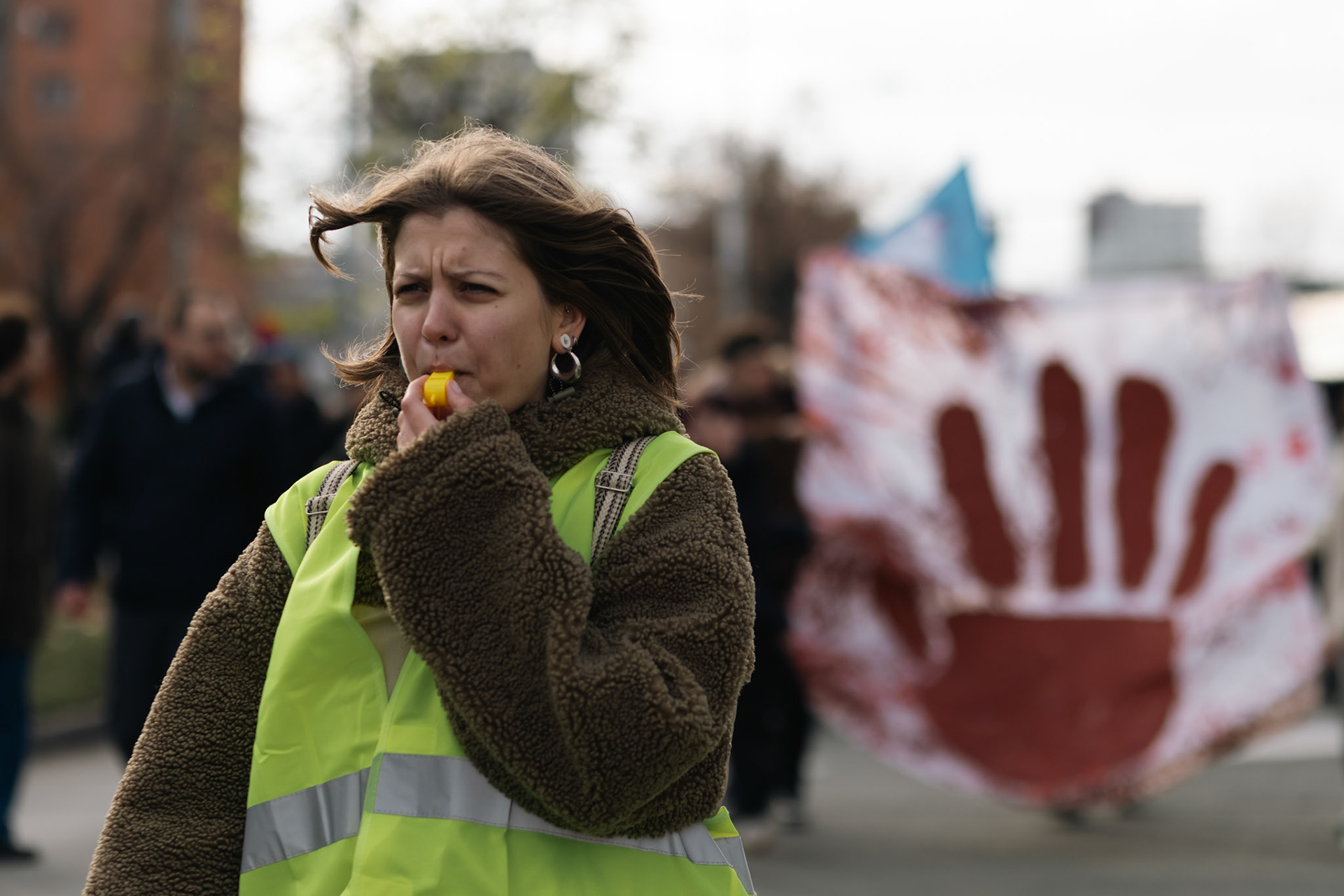
That scenario no longer holds. The movement has proved far better organised than anyone expected.
While in Hungary Péter Magyar built an extremely centralised organisation of experienced political actors, in Serbia a horizontal movement has succeeded in staying leaderless, and yet organised.
That was itself a survival strategy: anyone who looked like a leader has been arrested, smeared or intimidated. An even bigger success is that they have held together despite deep differences in policy outlook and two years of beatings, arrests and smears, because they fervently share the goal of making institutions, at last, do their job: a state ruled by law. They have captured the imagination of the people.
Europe’s euphemisms about the “risk” of an unfair election cannot change the fact that a close count on Sunday will not be a draw. In both Orbán’s Hungary and Vučić’s Serbia, races were tilted long before polling day.
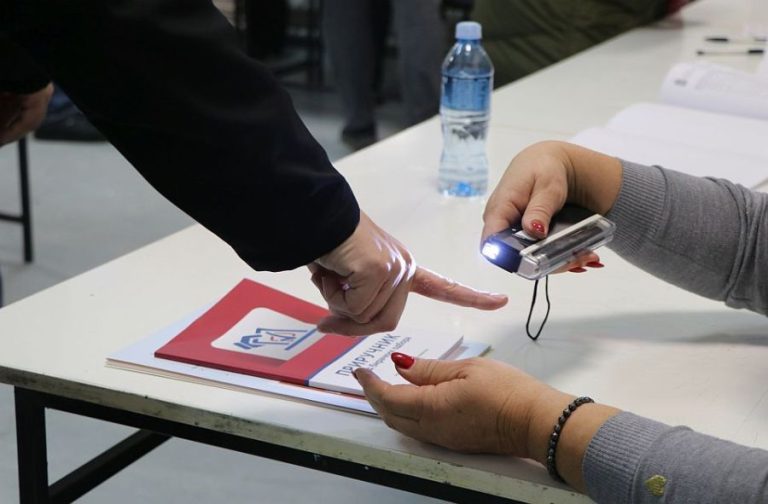
In Serbia the tilt does not stop there. In 2023, ODIHR recorded vote-buying, ballot-box stuffing and breaches of the secrecy of the vote.
This year, registrations to vote abroad, overwhelmingly young emigrants, have nearly tripled; the authorities answered by closing at least ten polling stations used in 2023, from Vancouver to Bratislava and Geneva, while opening about ten new ones in Bosnia. Given these conditions, nobody can doubt that a close result is in fact a major student victory. Yet I fear that, should the badly stolen count come out fifty-fifty, European capitals will wait, splitting hairs.
They should also think hard about what happens if the regime simply continues, even with a clear lead in the count. Over the past two years the regime has become so defensive that it has heavily weakened the state it runs. Serbia has a long history of informal, parallel governance, in which institutions and regulations serve as props on a stage.
This regime has brought it to absurd levels: nothing happens unless institutional actors think the President is at least ok with it, and more and more he has to direct them himself. Orbán captured the state by changing laws; Vučić rarely needed to touch the rules.
Professionals used to stay out of the way of political goals, looking the other way within tacitly accepted limits. Under this regime it became a matter of cowing and weeding them out, so that those who stayed would take orders. Now even loyalty is no longer enough; what counts is readiness to show up when the party calls. The police commander accused of threatening to rape a detained student in the government garage was not suspended; he was promoted to head the criminal police directorate, a post left by a long-serving professional amid a wave of departures, although by media accounts he was selling cars before joining the force.
The government’s expert public policy secretariat lost its long-serving director – and the next day its employees were asked to attend party rallies. How do you keep the expertise of an expert body if you remove the people who feel too degraded to go along?
So there is no orderly, pro-European autocracy waiting on the other side of a stolen vote. Even if Vučić wanted to, he could not steer the country back towards the rule of law: the destruction of governance capacity is nearing a point of no return. He relies instead on a clientelist pyramid increasingly wresting itself from his control, not least because he cannot be in all places at all times. And he does not seem to see a path other than more repression.
His model is Tbilisi, not Budapest. On 11 October he praised the Georgian authorities who, after a disputed election, “swept them off the streets… it lasted seven days”, and promised his opponents: “They won’t succeed here either.”
An autocrat with no exit ramp is the most dangerous kind. Unprepared for losing, blinded by a fury that is frequently on public display, he may simply lose the capacity to keep things, in this case violence, within the limits that are in his interest. And this time the police may have fewer qualms: the professionals who balked have been moved aside, those who did not have been promoted, and in two years of documented beatings not a single officer has been held to account. Last year he pardoned party activists who broke a student’s jaw before they were even tried.
This is why Europe’s reaction on Monday will have long-term consequences. If the result is close, the suffocation of a strong pro-democratic, pro-rule-of-law vote is all too likely to be accompanied by bloodshed. Nor can Europe afford the mass exodus of young people, the resentment and the institutional implosion that will follow if Serbia’s pro-democracy activists are badly let down. Some Serbians have come to accept that the NATO bombs of 1999 were meant to save lives in Kosovo. What explanation will Europe have for letting down people who wanted, so badly, to make Serbia a more functional and democratic country?
Some in Europe object that the student movement has not clearly declared itself pro-European. But building Europe in Serbia seems like a pretty good way to prepare, and sway, Serbia for Europe. A declaration on East–West, or on Kosovo, would break the movement, which is why these topics are conspicuously missing from the students’ programme. Serbia has not resolved them in over two decades. They can wait another two or so.
Hopefully, no European capital will recognise a result before the observers report. But that can take days, and inaction will be damaging if the count is anywhere close. Of the civil society appeal’s calls, three matter most. Europe should:
- publicly acknowledge that the problems already documented mean the conditions for a free and fair election are not met;
- remind the Serbian authorities, publicly and before election day, that the state bears full responsibility for preventing any escalation of violence during and after the vote, including by groups operating with its tolerance;
- ensure the strongest possible international observation and high-level political presence around election day and in the immediate post-election period.
And if the count is too close to call, or, heaven forbid, goes the students’ way, Europe’s own interest, not just its conscience, is to move fast and help build Vučić the exit he has never even considered, before he concludes he has nothing left to lose.
As for the students: reach out to them, as the amorphous body they are, with offers of help rather than conditions. Watch the experiment closely. Gen Z is waking up elsewhere, too.