Following the Student List’s victory in Serbia’s 25 October parliamentary elections, Slovenian Prime Minister Janez Janša said Ljubljana would withhold its support for further progress in Serbia’s EU accession talks until Belgrade handed over the records of the former Yugoslav security services relating to Slovenia. The remarks came as the Student List prepared to form a government and set out its reform priorities.
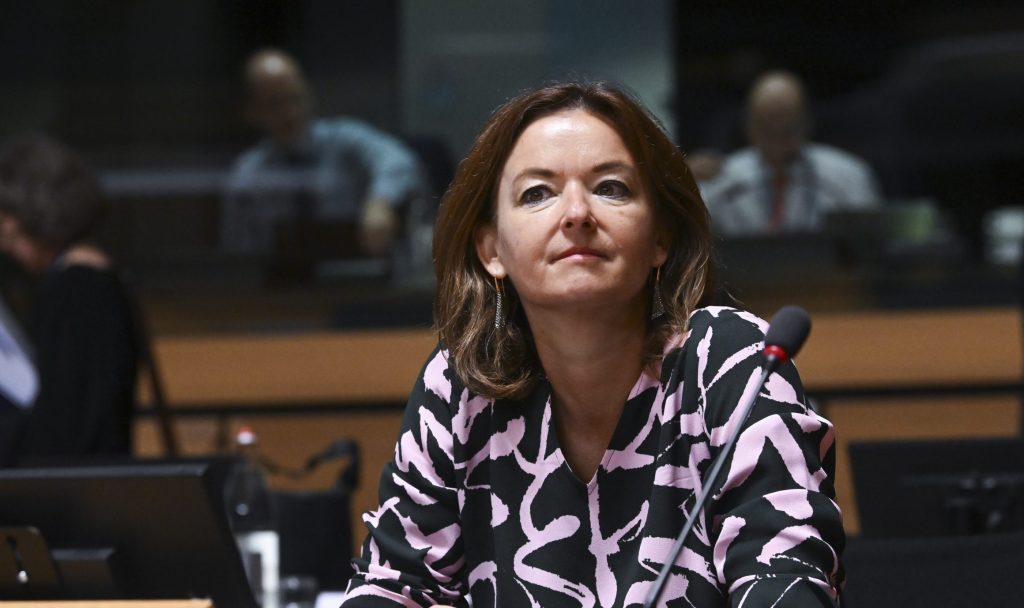
At the Belgrade Security Conference (BSC) we spoke with Former Foreign Minister of Slovenia Tanja Fajon about Slovenia’s views on the political changes in Serbia, what the incoming government can do to rebuild trust with the EU and whether there is room to move forward on opening Cluster 3. We also discussed the use of qualified majority voting in accession talks, the safeguards proposed for Montenegro’s accession treaty and what Montenegro joining the EU in 2028 could mean for the rest of the Western Balkans.
European Western Balkans: More than six years ago, you were part of a European Parliament mission that raised concerns about the state of democracy in Serbia. How do you assess the recent political changes in Serbia? How much attention have they received in Slovenia?
Tanja Fajon: I’ve followed Serbia closely for more than twenty years, including through my work in the European Parliament and later as foreign minister. Few people expected the Student List to win so decisively. I admired the determination with which Serbian students called for greater accountability, and I welcomed the outcome. It opens a new chapter for Serbia and gives the country a real opportunity to strengthen its democracy, uphold the rule of law and rebuild citizens’ trust in public institutions.
When I helped facilitate the European Parliament’s inter-party dialogue in Serbia, we discussed questions that still matter today. Could the opposition do its job in parliament? Could journalists report freely? Could voters hear from all sides before an election? The new majority has a chance to make progress on each of those questions. One measure of success will be whether people who disagree with it have a fair chance to be heard.
The student movement, the election and the opening of the new parliament were all closely followed in Slovenia. I hope that interest continues as the incoming government gets to work. Slovenia’s longstanding relationship with Serbia gives us a good basis for supporting these reforms and helping Serbia move forward on its European path.
EWB: What does Serbia’s incoming government need to do to regain the trust of the EU and its member states?
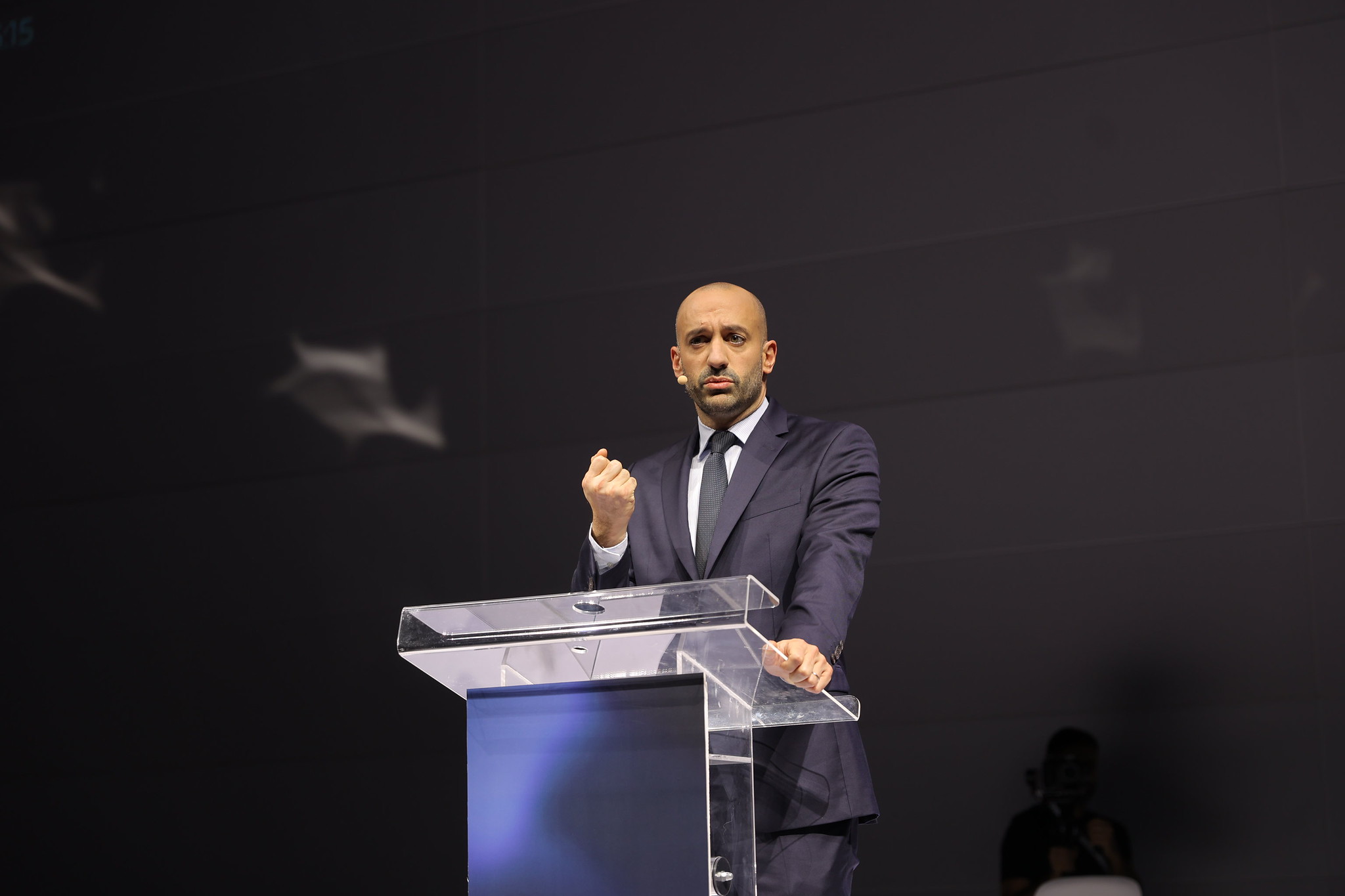
TF: I was encouraged by what Aleksandar Baucal said on behalf of the Student List at the EU Enlargement Forum in Brussels. He made clear that Serbia’s European path and the reforms its citizens have been calling for go hand in hand. That is a good starting point. The incoming government can build trust by showing that journalists can work freely, that prosecutors can pursue corruption cases independently and that citizens can count on fair elections. These are changes that matter first and foremost to people in Serbia.
The EU also has a part to play. When I was foreign minister, Slovenia supported opening Cluster 3, which covers competitiveness and inclusive growth. The Commission has confirmed that Serbia has met the technical benchmarks for opening it, and I would support taking that step. It would show that the EU is ready to respond when Serbia delivers. I would give the incoming government room to set out its foreign policy and begin a serious dialogue with its European partners.
EWB: After the Student List’s election victory, Prime Minister Janez Janša said Slovenia would withhold its consent to any further progress in Serbia’s EU accession talks until Belgrade handed over the archives of former Yugoslav agencies relating to Slovenia. How do you view his position, and do you expect Slovenia to follow through on that threat?
TF: I found the Prime Minister’s statement an unnecessary provocation, especially at that moment. Students and citizens across Serbia were celebrating a historic election result. They had made a clear choice for a different future. Slovenia should have welcomed that democratic opening and said it was ready to work with the incoming government.
Slovenia has a legitimate interest in obtaining the archives that concern it. I raised the issue directly with my Serbian counterpart when I was foreign minister. There are already bodies set up under the Agreement on Succession Issues to deal with questions like this. Ljubljana and Belgrade should give their experts a clear mandate to work through them.
Whether Slovenia follows through will become clear when there is a decision before the Council. I hope the government reconsiders. When Serbia meets the agreed conditions to move forward, Slovenia should support it.
EWB: During your time as foreign minister, Slovenia and Germany proposed using qualified majority voting to open negotiating clusters and chapters, an initiative that gained the support of 15 member states. What future do you see for that proposal? Is there enough political will among member states to prevent bilateral disputes from holding up accession talks?
TF: When I was foreign minister, Slovenia and Germany proposed using qualified majority voting for some of the steps along the way, such as opening negotiating clusters. Fifteen member states backed the initiative, and the Commission has since recommended moving in that direction. Candidates would still have to meet the same conditions, and the final decision on accession would still require unanimity.
I think there is enough support to keep working on it. I would start with opening clusters once the agreed conditions are met. A government needs to be able to tell its citizens what a reform will achieve and what happens next. That becomes difficult when a bilateral dispute can hold up a decision at any stage. Those disputes deserve sustained diplomacy through the channels best suited to resolving them.
EWB: The European Commission has set out ambitious timelines for some candidate countries, and the frontrunners are moving closer to membership. How ready is the EU itself to welcome new members?
TF: As I said at the Belgrade Security Conference, enlargement is a strategic necessity. For the Western Balkans, it is now or never. We have been discussing the region’s accession for more than twenty years, and we need each other. In the discussions I join in Brussels, I hear a growing awareness on both sides of what we stand to gain and how much work we still have to do. There is real momentum now. We should make use of it.
Accession must remain merit-based. Each candidate has to meet the agreed conditions, and the EU has work to do in parallel. As Commissioner Marta Kos set out in October, that includes preparing the next budget, adapting policies such as agriculture and cohesion, and making better use of the current treaties so that a larger Union can still take decisions effectively.
Governments also need to talk to their own citizens about what enlargement will mean. In Slovenia, we know from experience what EU membership can do for a country. We should be just as clear about what a more stable and prosperous Western Balkans would mean for our own security and economy.
EWB: There has been much discussion about including safeguard clauses in Montenegro’s accession treaty. Where would you draw the line between protecting the rule of law and ensuring that new members are treated on an equal footing?
TF: I understand why the Commission wants stronger safeguards. The EU needs to be able to act if a member government seriously undermines the rule of law. But the proposal raises a difficult question. If new members alone could face restrictions on their voting rights under a separate regime for up to fifteen years, would they really be joining on an equal footing? I heard that concern at the Belgrade Security Conference, and I share it. Fifteen years is a long time, and there is a real risk of creating what feels like second-class membership.
I can see a case for a targeted, time-limited safeguard where there is a specific risk. The grounds for using it should be clear, any measure should be proportionate, and Montenegro should have a meaningful say in the discussion. The broader challenge is to enforce the same democratic standards across the Union. When Montenegro joins, it should take its seat as an equal member.
EWB: If Montenegro meets its target of becoming the EU’s next member by 2028, could that speed up accession talks for the rest of the Western Balkans? What would the EU need to do to sustain political support for the other countries in the region?
TF: Yes. Marta Kos said in November that Montenegro was on track to become the EU’s 28th member in 2028. I think that is a credible target, provided the remaining negotiations are concluded and the accession treaty is agreed and ratified. After so many years of waiting, seeing Montenegro join would make a difference across the region. It would give people a concrete example of where sustained reforms can lead. Each country will still advance on its own merits, and the EU should be ready to act promptly when the next candidate meets the conditions.
People should also see some of the benefits while negotiations are under way. I welcome the Commission’s push to open parts of the single market to candidates as they meet the relevant conditions. Better cross-border connections and more opportunities for young people to study and train across Europe can make a difference well before accession. As I have said many times, gradual integration is a step towards full EU membership, not a substitute for it. Full membership must remain the clear goal of the accession process.