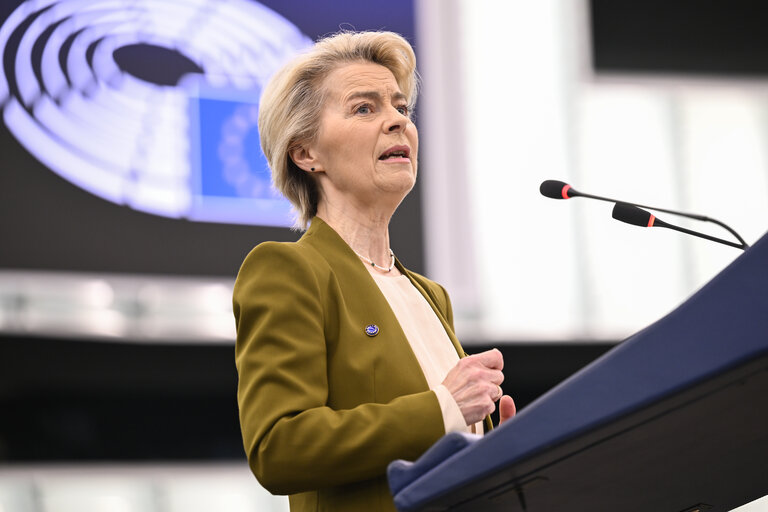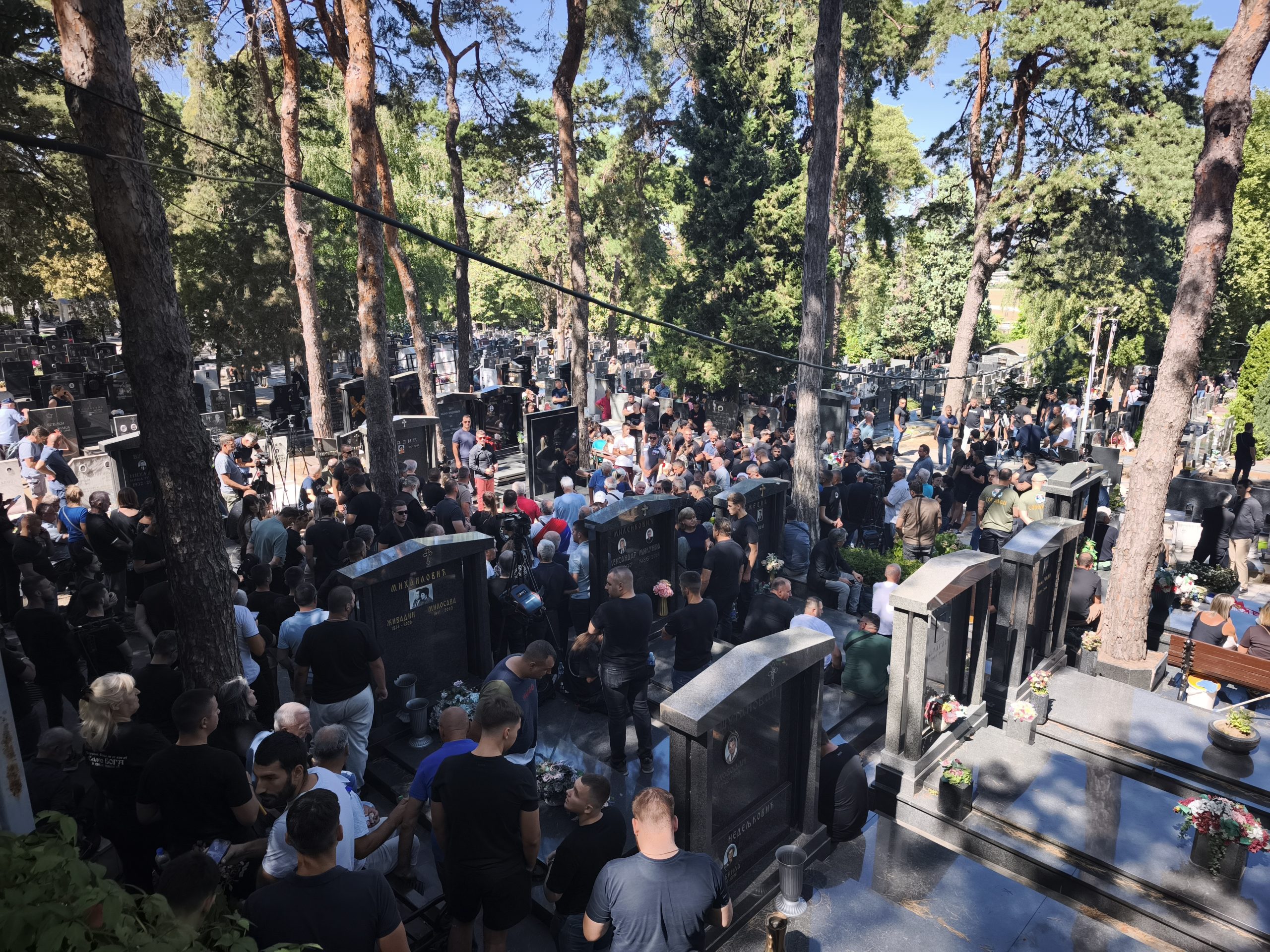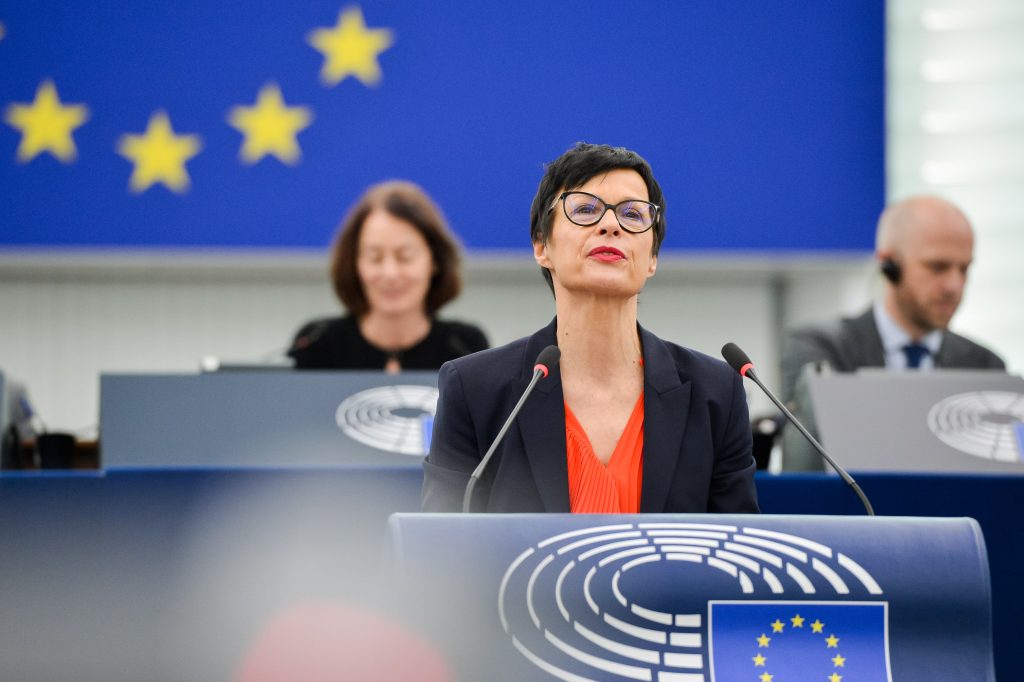
BRUSSELS – European Commissioner for Enlargement Marta Kos said that, following the funeral of Ratko Mladić, who was convicted of genocide and other war crimes in Bosnia and Herzegovina, held with state honors in Belgrade, European Union officials should clarify a very important question: whether Serbia is still a suitable candidate for EU membership.
“Serbia is now at a crossroads. As you know, the accession process also requires confronting the past and genuine reconciliation. It also concerns the rule of law and a country’s strategic orientation. We need to assess the extent to which Serbia is still sincere about its European path,” Kos said in an interview with today’s Frankfurter Allgemeine Zeitung (FAZ), as reported by Beta news agency.
Asked who in the EU should make that determination, Kos said she would first discuss it with European Commission President Ursula von der Leyen.
“Our report on the Union’s readiness for new members will be completed by the end of September and can then serve as a very good basis for a discussion in the Council of the European Union in October,” Kos said.
Kos said she was “ready to try everything to keep Serbia on the European path, but that this is also in Serbia’s hands” – “not only those of politicians, but also of the population,” adding that elections are also due to take place in Serbia soon.
Asked about the cancellation of her visit to Belgrade because of the funeral of war criminal Ratko Mladić, held with state honors, Kos replied: “How can someone who has been convicted as a war criminal be celebrated?”
“If I were to travel to Belgrade in such a situation, where so many people – and I am not talking only about politicians – glorify a war criminal, I would never again be able to look the mothers of Srebrenica in the eye,” Kos said.
“Confronting the past is one of the most difficult issues we have to deal with in the Western Balkans. It has been 31 years since the war in Bosnia and Herzegovina. It is the responsibility of political elites to heal the wounds of the past, rather than having everyone sprinkle new salt into them,” Kos said, according to Beta.
A shift toward gradual integration
Speaking about EU enlargement, Kos said geopolitical demands had forced the Union to abandon the “all or nothing” approach, whereby a country can join the EU only after fulfilling all the requirements.
“In the past, we have already introduced some elements for candidates, such as the SEPA payment system and roaming. And now we want to go a step further, for example in strategic sectors such as energy, transport or critical raw materials. We are already helping Moldova and Ukraine become completely energy-independent from Russia by the end of 2027,” Kos said, Beta reports.
Commenting on German Chancellor Friedrich Merz’s proposal for Ukraine to have associated membership in the EU, Kos said the intention was to apply gradual integration to all candidate countries, particularly those that need more time.
“And it is quite obvious that Ukraine will need more time than Montenegro. But it is not only about Ukraine. I greatly appreciate Germany’s engagement. But what other EU countries say will be decisive,” Kos said.
Analysis of the impact of enlargement on the EU by the end of September
She also said the EU needed to draw lessons from Hungary’s blocking of European consensus in decision-making.
“We must effectively ensure that new members will permanently respect our rules and values. That is why we are talking about safeguard clauses that will be anchored in future accession treaties,” Kos said.
The European commissioner also said that the Union must analyze the concrete impact of enlargement and take action in areas where admitting new members could be harmful to existing members.
“We will present a document on this at the end of September. Important elections are due to take place in Europe next year, and they will also shape all future decisions on enlargement,” Kos said, adding that electoral success for Eurosceptics, such as that recently seen in regional elections in Germany, would make the enlargement process considerably more difficult.
She added, however, that Eurosceptics are also calling for greater stability, better management of migration and better prospects for economic development.
“A stronger Europe also means better protection of our citizens’ interests. The enlargement process gives us a great opportunity to talk about ourselves as well,” Marta Kos said.