WESTERN BALKANS – At the end of May, a series of events dedicated to regional cooperation and the free movement of people within the region was held in all the capitals of the Western Balkans as a part of Mobility Week 2025.
Free movement of people is one of the core pillars of the European Union and among the most tangible benefits that South-East Europe 6 (SEE6) citizens expect from the EU integration process. To accelerate this progress, countries in the region have signed a series of mobility agreements under Central European Free Trade Agreement (CEFTA) and the Common Regional Market (CRM).
The implementation of these agreements has now become a test for the political will and institutional capacity of Western Balkan countries to act as a single market and deliver tangible results to their citizens.
In this context Cooperation and Development Institute (CDI) from Albania, together with partners from the region, held a series of events in the regions capitals, aiming to discuss the progress and challenges in advancing the CEFTA mobility agreements, the advancement of adoption of the acquis in the Internal Cluster, and the region’s gradual integration to the EU’s Single Market.
Discussion centred on eight agreements and one recommendation endorsed by CEFTA member countries in October 2024. Only three of these agreements have been ratified by all SEE6 countries.
Tirana event: Berlin Process provides political and legal framework for deepening regional cooperation
Despite political support for deeper regional cooperation across the Western Balkans, experts and officials warn during the event held in Tirana that gaps in implementation, coordination, and administrative capacity threaten to undermine progress.
“Regional cooperation is a stepping stone of economic development and of the path toward EU membership,” said Thilo Schroeter, Deputy Ambassador of Germany to Albania.
He highlighted the critical role of government and parliament in implementing these agreements, as well as the importance of civil society engagement in monitoring and advocating for their implementation.
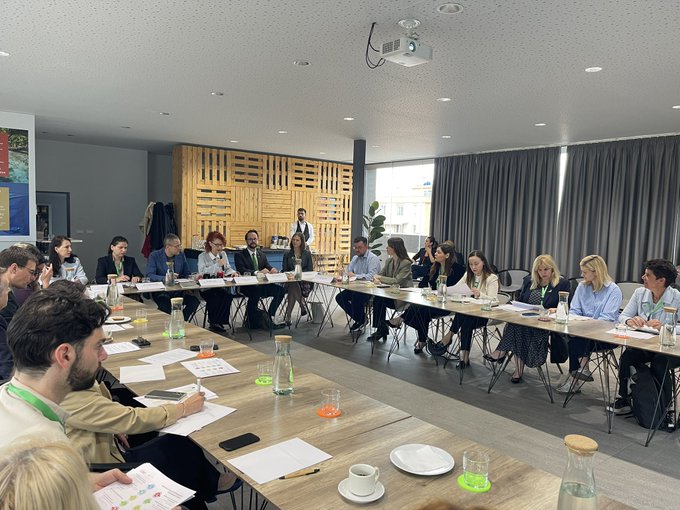
Antonela Dhimolea from the Ministry for Europe and Foreign Affairs of Albania emphasized that the Berlin Process provides both the political will and legal framework to deepen regional cooperation and serves as a concrete instrument to prepare the region for EU membership.
CDI’s senior expert, Fjoralba Caka, shared key findings from the research conducted in Albania. While noting progress at the political cooperation level, the study highlights implementation challenges, including inter-institutional coordination gaps, limited transparency, and insufficient technical capacities for sustainable execution.
Olivera Ceni Bardiqi from CEFTA – Central European Free Trade Agreement presented a detailed analysis of the ratification status of 11 agreements signed in Berlin in 2024 and Pristina in 2025. She underlined uneven harmonization among the countries as one of the pressing challenges.
During the discussion, Alketa Vejseli from the Ministry of Economy, Culture, and Innovation stressed the significant workload related to CEFTA and CRM and the urgent need to strengthen public administration capacities, especially as Albania aims to conclude EU accession negotiations by 2027.
The roundtable concluded with remarks from Mia Marzouk, Deputy Ambassador of the United Kingdom to Albania, who noted that the insights from today’s discussions will serve the preparations for the next Berlin Process Summit, scheduled to take place in the UK in October.
Pristina event: There is a need for the greater engagement with CSOs, youth and private sector
The focus of the discussion in Pristina organized by Institute fro Development Policy (INDEP) was the implementation of CEFTA agreements on the free movement of people, mutual recognition of professional qualifications, and trade in services. Participants reflected on how these agreements fit into the broader CRM agenda and what they mean in practical terms for citizens—particularly in areas such as employment, mobility, and digital integration.
Panelists underscored the role of the Berlin Process as a framework that not only advances political dialogue but also provides concrete tools for regional economic integration. They emphasized that the CRM has the potential to generate sustainable growth and move the region closer to EU integration, provided that implementation challenges are addressed effectively.
In the case of Kosovo, the discussion highlighted both progress and persistent hurdles. While institutions have taken steps toward alignment, challenges remain in inter-agency coordination, legal harmonization, and public awareness. Speakers stressed the importance of communication and transparency, calling for greater citizen engagement and stronger collaboration with civil society, youth, and the private sector.
Skopje event: CEFTA continues to play a vital role in preparing the region for the EU
Despite lacking enforcement mechanisms, CEFTA continues to play a vital role in preparing the Western Balkans for EU integration—provided its implementation is backed by political will and stronger regional coordination, it was concluded during the event held in Skopje, organized by European Policy Institute (EPI).
Participants acknowledged that while CEFTA is limited in terms of legal leverage, it serves as a crucial platform for harmonizing regional markets with EU standards and for fostering economic cooperation among Western Balkan economies.
Speakers stressed that trade and politics must go hand in hand if the CRM is to function effectively. The need for high-level political engagement was underscored as essential for translating regional commitments into concrete outcomes. In this context, it was noted that 18 out of 42 CEFTA measures under the CRM Action Plan have been fully implemented—an encouraging figure, but one that also highlights the need for more sustained efforts.
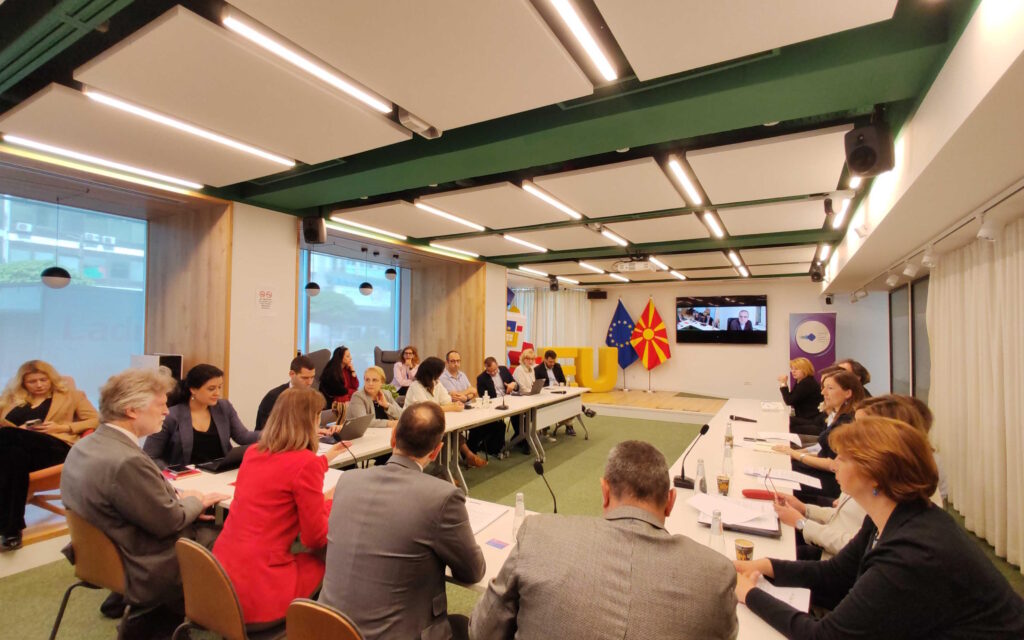
The discussion also spotlighted North Macedonia’s leadership in areas such as trade facilitation and the reduction of non-tariff barriers, offering a potential model for others in the region. However, panellists acknowledged continued disparities in standardization and certification processes among CEFTA parties, which pose obstacles to creating a cohesive economic space.
The implementation of regional mobility agreements also came under scrutiny. While these agreements—aimed at easing the movement of people and professionals—represent a major step forward, their rollout has been uneven. Experts pointed to fragmentation in implementation, a lack of clear communication, and limited accountability as key challenges. They called for more transparency, better data collection, and the inclusion of civil society from the earliest stages of policymaking.
Podgorica event: Montenegro’s institutional hurdles Undermine implementation of CEFTA mobility agreements.
While Montenegro remains committed to regional economic integration, institutional fragmentation and frequent structural changes are slowing the country’s implementation of CEFTA agreements, stakeholders warned at a recent panel discussion, it was said during the event hosted by the Institute for Strategic Studies and Projections (ISSP).
The discussion shed light on both progress and persistent structural challenges. A major concern raised was the fragmentation of institutional responsibilities: while some CEFTA-related agreements fall clearly under a single ministry, others require coordinated action between ministries and agencies—often without clearly defined roles. This ambiguity has led to delays and inconsistent implementation.
“Each time the structure changes, we have to start from scratch,” one participant remarked, noting that these shifts not only erode momentum but also place additional strain on already limited administrative capacities.

Protracted interministerial consultations, slow ratification processes, and insufficient public access to timely information were also highlighted as key barriers. Using the Authorized Economic Operator (AEO) program as a case study, speakers illustrated how businesses stand to benefit from expedited customs procedures across the region—but only if implementation bottlenecks are addressed. As one panellist summed it up, “For the private sector, time is money.”
Despite the challenges, participants agreed that CEFTA and the Common Regional Market are among the most significant frameworks for both regional cooperation and national reform. The roundtable concluded with a strong call for continued dialogue, improved transparency, and better tracking of progress—all of which are essential for turning agreements on paper into real economic gains for citizens and businesses alike.
Belgrade event: CEFTA has achieved what the Open Balkan and other initiatives have only promised
While new regional initiatives continue to emerge, experts agree that CEFTA remains the most comprehensive and functional framework for economic integration in the Western Balkans—offering legal certainty, regional inclusivity, and tangible results in trade facilitation, it was concluded during roundtable held in Belgrade, organized by Centre for Contemporary Politics (CSP).
It is added that the key challenge now lies not in creating alternative structures, but in fully implementing what already exists.
Andrea Matijević, a CEFTA expert from the Institute for Political Studies, emphasized that CEFTA is a legally binding agreement that established a free trade area as a distinct form of regional and economic integration in the Western Balkans. Unlike other regional initiatives, CEFTA has its own legal personality and is backed by a permanent secretariat, established in 2007 and based in Brussels, which oversees implementation and facilitates high-level negotiations among signatory states.
“CEFTA replaced 32 bilateral trade agreements that previously existed in the region, and for that reason alone, it remains the only framework offering a comprehensive legal basis for regional trade in goods and services,” Matijević stated. She added that the areas covered by the latest regional agreements have not introduced anything fundamentally new, but rather reaffirm what CEFTA already encompasses.
One of the main issues today, she noted, is how CEFTA relates to newly established forms of regional cooperation and economic integration, such as the Berlin Process, the Mini-Schengen initiative, and the Open Balkan.
“All the challenges being addressed through the Open Balkan can, in fact, be effectively solved within CEFTA, which already includes the entire region—not just the three countries participating in the Open Balkan,” Matijević argued. She cited CEFTA’s measurable impact on regional trade in goods as evidence supporting this claim.
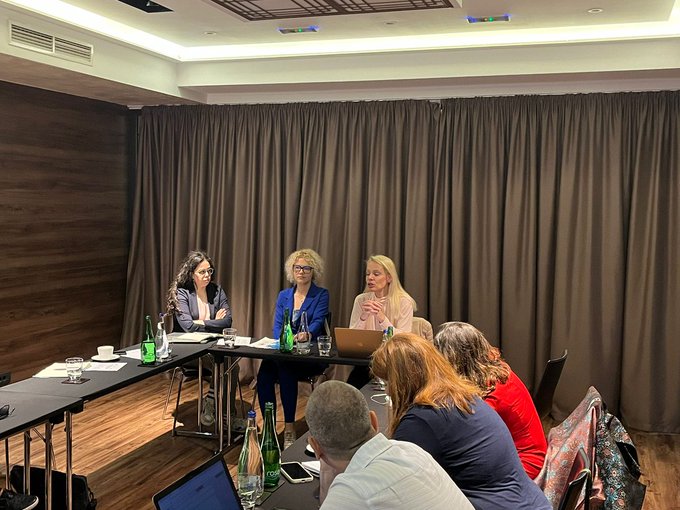
Dragana Đurica, Secretary General of the European Movement in Serbia, recalled that in 2012, the Regional Cooperation Council began working on the South East Europe 2020 Strategy—the first comprehensive economic framework in the region. While it lacked political weight, it covered crucial areas such as trade, investment, labor markets, competitiveness, industrial development, culture, rule of law, and the fight against corruption.
According to Đurica, there was genuine enthusiasm across the region at the time, with economies eager to participate—at least until 2014, when the Berlin Process was launched, aiming to connect the region through infrastructure projects that required support from people, businesses, and policies alike.
“From that point onward, the narrative became more political than economic. Around the same time, the EU entered a phase of enlargement fatigue, and while the region welcomed infrastructure investments, it grew increasingly skeptical about the reform agenda—fearing that these initiatives might serve as a substitute for full EU membership,” Đurica explained.
Sarajevo event: Ensuring political will for implementation remains one of the biggest challenges
The roundtable in Sarajevo reaffirmed the need for coordinated efforts among institutions, international partners, and civil society to advance towards a fully integrated regional market and EU integrations.
In her opening remarks, Mersiha Jaskić, Program Manager at CPCD, emphasized the essential role of civil society in ensuring transparent and inclusive implementation of regional agreements.
“Without active engagement from civil society, full implementation of CEFTA decisions and meaningful EU alignment is not possible. Civil society plays a key role in building trust and accountability”, she said.
Daniel Stinsky of the German Embassy in BiH spoke on the strategic importance of the Berlin Process and regional cooperation, while Ardian Hackaj (CDI) and Marko Mandić (CEFTA) presented updates on the implementation of CEFTA decisions related to mobility and trade.
Zada Muminović from the Ministry of Foreign Trade and Economic Relations of BiH highlighted the need for institutional support and sustainable funding. “Institutions dealing with CEFTA-related matters must have access to consistent resources to carry out their responsibilities effectively”, she said.
Aida Soko from the EU Delegation to BiH discussed how the European Union supports alignment with the EU acquis and the practical mechanisms that can facilitate implementation of regional arrangements.
Concluding the roundtable, Ed Miles, Head of the Political Section at the British Embassy Sarajevo, stated that these processes are of critical importance to the region’s European integration and will be a key focus of the upcoming Berlin Process Summit in London. “The main challenges lie in ensuring political will and capacity for coordination at all levels of government”, he concluded.