The new Entry/Exit System (EES), which, according to the official announcement of the European Commission, will be gradually introduced starting from 12 October, implies digital registration of citizens of non-EU countries, including those from the Western Balkans Six, when they travel to 29 European countries. The system will collect and store biometric data such as fingerprints, facial images and other travel information, thereby replacing the current passport stamps.
The European Commission states that the EES aims to “modernise the management of the Union’s external borders”.
“It will provide reliable data on border crossings, systematically detect overstayers as well as cases of document and identity fraud. The EES will thus contribute to preventing irregular migration and protecting the security of European citizens. Additionally, with the increased use of automated border checks, travelling will become smoother and safer for all”, the press release reads.
According to the EC, “the new system meets the highest standards of data and privacy protection, ensuring that travellers’ personal data remain protected and secure”.
In which countries will the EES come into force?
The EES system will enter into force in 29 European countries that are part of the Schengen area, including those that are members of the Union. When it comes to the EU member states, the Entry/Exit System will be introduced on 12 October in Austria, Belgium, Bulgaria, Croatia, Czech Republic, Denmark, Estonia, Finland, France, Germany, Greece, Hungary, Italy, Latvia, Lithuania, Luxembourg, Malta, Netherlands, Poland, Portugal, Romania, Slovakia, Slovenia, Spain and Sweden.
At the same time, the EES will be established in countries that are not part of the EU but belong to the Schengen area, namely: Iceland, Liechtenstein, Norway and Switzerland.
What does the “gradual introduction” of EES imply?
The Entry/Exit System will be gradually applied at the external borders of 29 European countries within 6 months. These European countries will implement various components of the EES in stages, including the collection of biometric data such as facial images and fingerprints. This means that passengers’ biometric data (facial images and fingerprints) may not be collected immediately at each border crossing, and that their personal data may not be initially registered in the system. Passports will continue to be stamped as usual.
This progressive implementation will last until 9 April 2026. Thus, from 10 April 2026, the EES will be fully operational at the external border crossing points of the European countries using the system.
To which passengers do the EES apply?
The EES applies to you if you are a non-EU national travelling for a short stay to a European country using the EES and you either: possess a short-stay visa, or do not need a visa to stay for a maximum of 90 days in any 180-day period. Your travel document data and other personal data will be collected, including your entry and exit dates, and will be registered electronically in the system.
This procedure will facilitate your border crossing. If you overstay the period allowed in the European countries using the EES, the system will identify you and record this information. In the event that the authorities refuse you entry, the system will also record this information.
Which biometric data will the EES store?
The EES will store different biometric identifiers depending on whether or not you need a short-stay visa. If you need a short-stay visa to travel to European countries using the EES, the system will store only your facial image (your fingerprints were already registered when you applied for a visa). In case you do not need a visa to travel to these countries, the system will store 4 of your fingerprints and your facial image. Currently, the fingerprints of children below 12 years old are not scanned, even if they are subject to the EES.
What is the purpose of biometric data?
Biometric data is a reliable method of accurately identifying people, significantly reducing cases of mistaken identity, discrimination or racial profiling, as well as for identifying undocumented travellers already present in the territory of the Schengen Area (irregular migrants).
These data can increase security in European countries using the EES by: preventing children from going missing or becoming victims of trafficking; reducing the risk of people being wrongfully apprehended and arrested; helping fight serious crime and terrorism. Although collecting biometrics can have an impact on travellers’ privacy, the EC stresses that the technology used in the EES ensures that people’s fundamental rights are protected.
How can you use the “self-service” system?
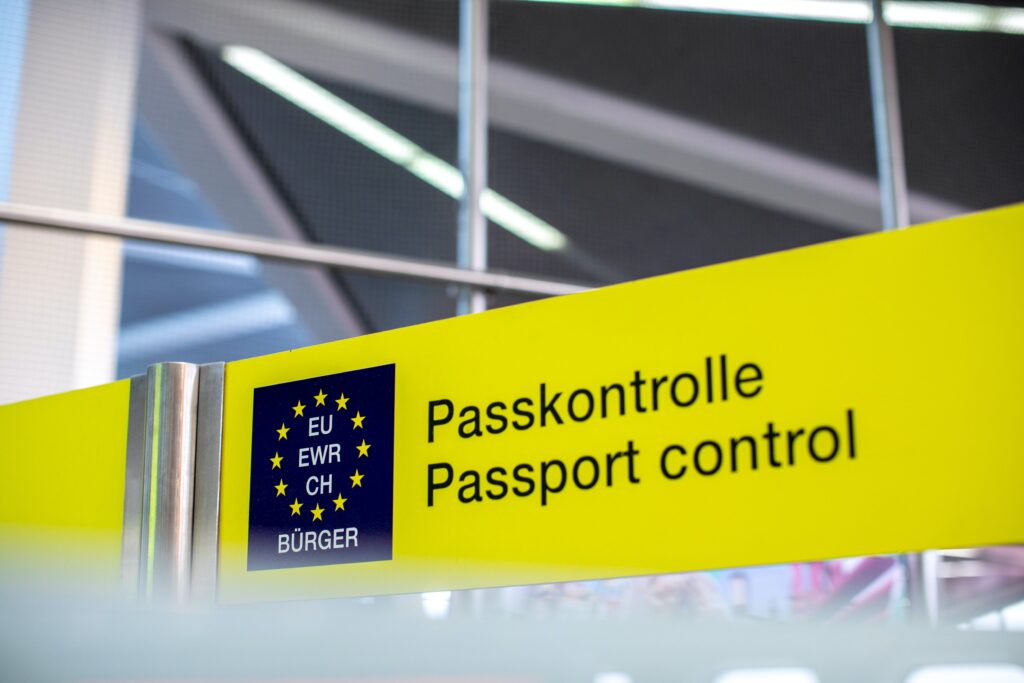
European countries using the EES may decide to further automate their processes. Automation means that non-EU nationals are able to benefit from dedicated equipment – a “self-service system”. If available at the border crossing, the self-service system allows you to: register when crossing the border; check if your data is still recorded in the EES and, if no data is present, upload it for subsequent verification by a passport control officer.
After using the self-service system, you can go to a border control lane, where the passport control officer will have already received: information from the self-service system (including checks against other databases); confirmation of your identity; the remaining duration of your stay. The passport control officer can then ask further questions before deciding to grant or refuse you access to the respective territory. The automated border processes, before reaching the passport control officer, will help to gradually reduce queues.
What kind of a passport do you need for the EES system?
In principle, both biometric (passports with a microchip) and non-biometric passports will be accepted when crossing the border, if they are valid and all other entry conditions are met. On the other hand, according to the announcement by the European Commission, in case you want to use “self-service”, you will need a biometric passport.