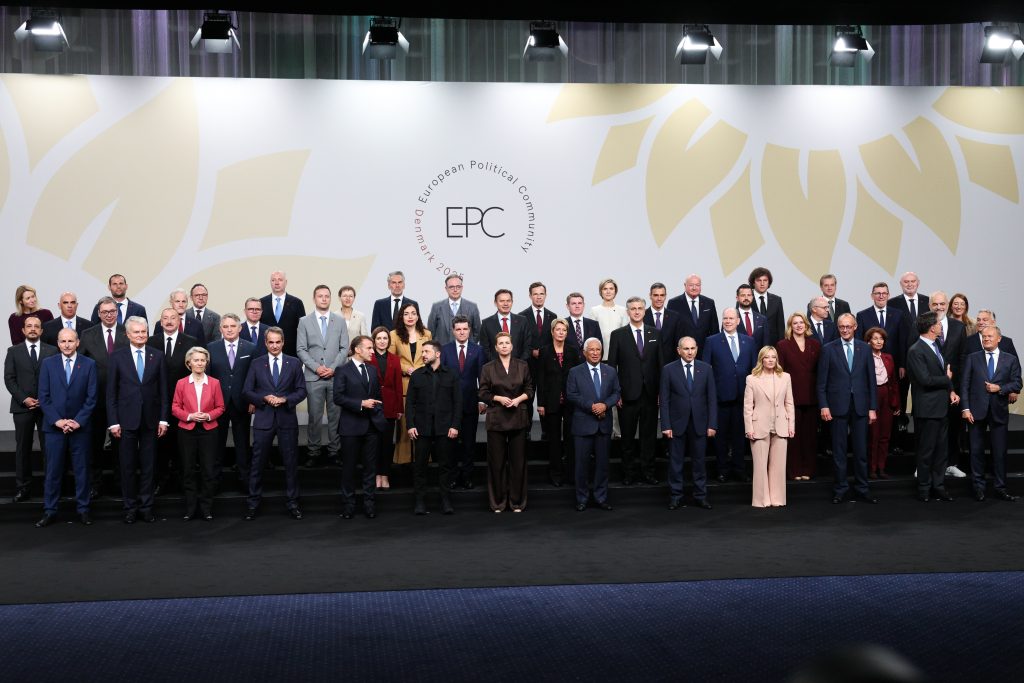
COPENHAGEN – The seventh summit of the European Political Community (EPC), which brought together leaders from around 50 countries, including the officials of the Western Balkans Six, took place today in Copenhagen.
The discussions focused on how to strengthen Ukraine, the general security situation in Europe and how to make the continent stronger in the geopolitical situation it faces.
António Costa, President of the European Council, co-chaired the meeting with Mette Frederiksen, Prime Minister of Denmark, and the EU was also represented by Ursula von der Leyen, President of the European Commission, and Kaja Kallas, High Representative for Foreign Affairs and Security Policy.
The European Political Community is a forum which brings together 47 European countries to coordinate responses to common issues and concerns.
Meetings are held twice a year, with the host for summits alternating between the EU member state holding the EU Council Presidency and non-EU members. The EPC is seen as the brainchild of French President Emmanuel Macron.
The next European Political Community meeting will take place in Armenia in the spring of 2026.
Frederiksen, Costa and Macron called for European unity
In her welcome speech, the Danish Prime Minister stressed that there was a need to make Europe as strong as possible.
“That calls for unity. Rearmament. Political determination to find solutions across our continent. And a joint understanding of support to Ukraine as an investment in the defence of Europe. Russia’s war in Ukraine was never only about Ukraine. That has become increasingly evident over the last few weeks”, Mette Frederiksen noted.
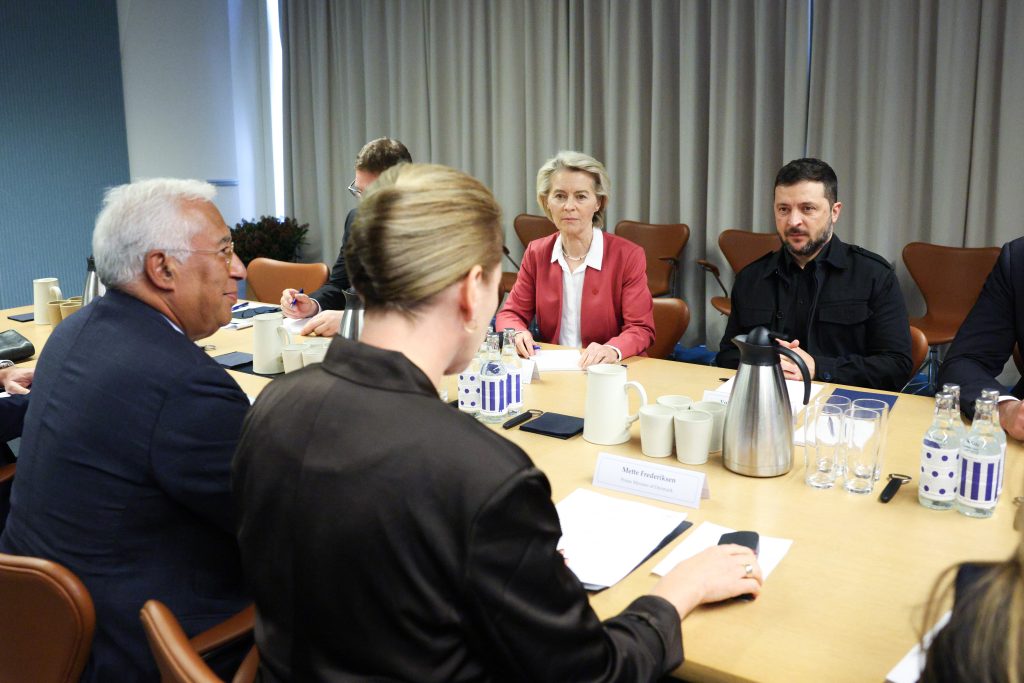
In a similar vein, President of the European Council remarked that “supporting Ukraine is not supporting war, it is supporting Ukraine’s right to a lasting peace, to a just peace”.
“If Russia were to defeat Ukraine, no country in the world could be sure of the ability of international law to cope with the threat of force and the threat of war”, António Costa claimed.
Speaking on the same topic, the French President underlined that Europe “must take a more aggressive approach towards Russia”, including shooting down drones that entered European airspace.
“We are ready and we are in the position to preserve our air and our territorial integrity. We are ready on the Eastern Flank of NATO, and we are ready at the same time and on top of that, and without reducing this commitment to provide security guarantees for Ukraine, Emmanuel Macron said.
Rama and Spajić urged the EU to embrace Albania and Montenegro
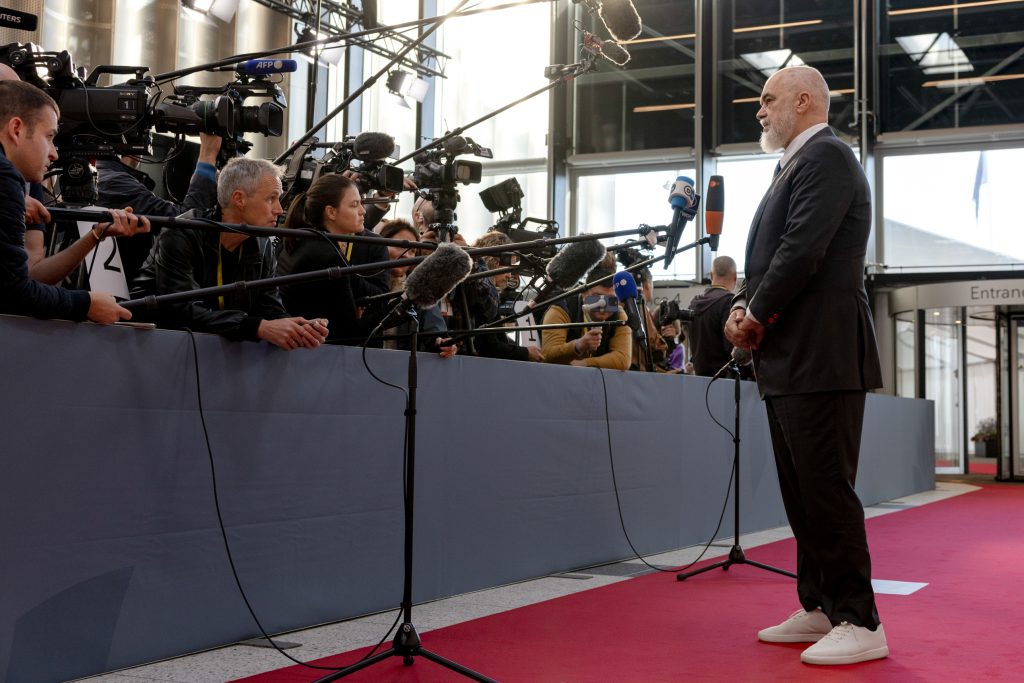
During the summit of the European Political Community, Albanian Prime Minister Edi Rama noted that the country was moving rapidly towards EU membership.
“We are not waiting for the EU, we are running very fast, we will be ready very soon and it is up to the big ones to stop waiting and embrace us and welcome us”, Rama remarked.
Similarly, Montenegrin Prime Minister Milojko Spajić urged the EU leaders to begin preparing Montenegro’s accession treaty.
“Montenegro began negotiations back in 2012, so the talks have been ongoing for almost 15 years. We are a small country, we are a NATO member, and we fully align our foreign policy with EU policy. We already use the Euro, and we are the most institutionally developed candidate country”, Spajić noted in Copenhagen.
Vučić and Osmani held separate meetings with Rutte
The summit was also attended by the Presidents of Serbia and Kosovo, Aleksandar Vučić and Vjosa Osmani.
For his part, Vučić remarked that the announcement that the NATO member states would increase their defence spending meant that everyone was preparing “for the conflicts and the war”.
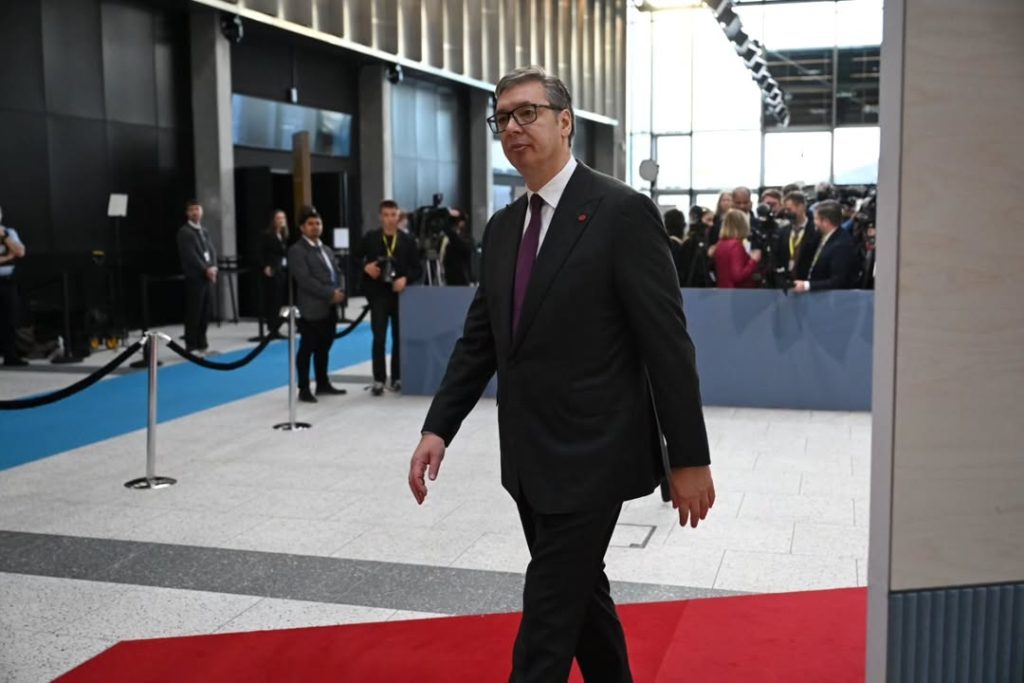
“It is only a question of which side the individual countries belong… Serbia wants to avoid conflicts”, he said to RTS.
On the sidelines of the summit, Vučić met with Mark Rutte, NATO Secretary General.
According to the Serbian President, the main point of their conversation was the situation in the Western Balkans and “Serbia’s role in preserving stability and peace in the complex circumstances in which the Serbian people live, especially in KiM”.
Vjosa Osmani also had a separate meeting with Rutte. In her words, it was “an excellent opportunity to reaffirm our commitment to regular coordination in safeguarding peace and security in Kosovo and across the Western Balkans”.