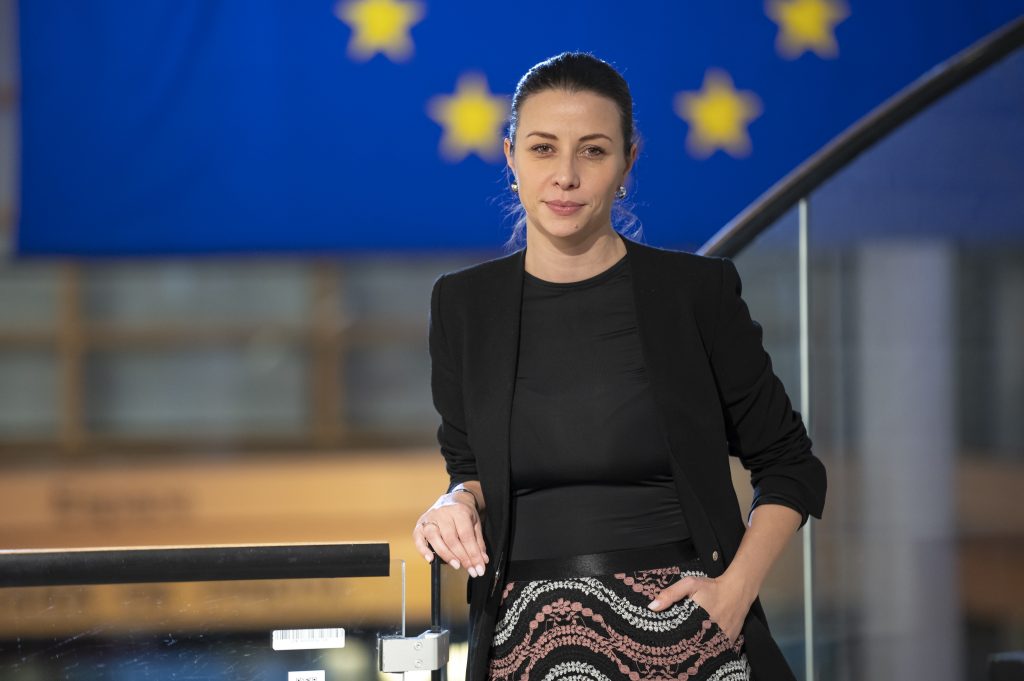
BELGRADE – “The people of Serbia are not asking Brussels to solve all their problems. What they are asking is not to be left alone in their fight. But today’s passivity, and the mixed signals coming from Brussels, only make it harder for citizens to once again see the EU as their flag of hope”, said MEP Irena Joveva for Savremena politika, a newly launched portal on Serbian politics.
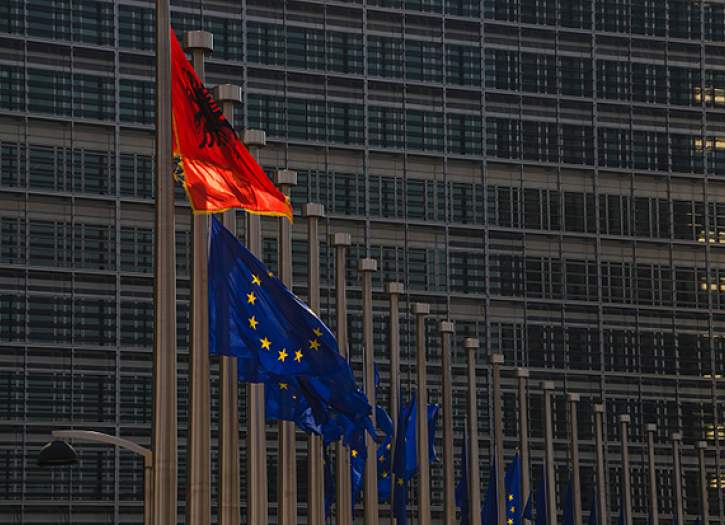
She said that during the protests against Milošević regime, EU flags were omnipresent because for citizens, after years of international isolation, the Union symbolized hope.
“Hope for democracy, rule of law, freedom, and better future. That hope has since faded, not least because of the EU’s unfulfilled promises, the constant moving of the goalposts in the accession process, and the unresolved normalization with Pristina”, she said.
According to Joveva, today’s passivity and the the mixed signals that are coming from Brussels, only make it harder for citizens to once again see the EU as their flag of hope.
“But if you ask me, I am sure the people on the streets are aware that the EU as such is the best alternative for them – just not with this regime they have at the moment. The versatility of the protestors, especially their diversity in values, beliefs, and ideologies, is one of their greatest strengths. While nationalism is certainly not unique to Serbia. we see it everywhere, it is an ideology that demands we remain shackled to old grievances. I believe it is far better to look toward the future we can build together, rather than the past that has kept us apart”, Joveva said.
Answering questions about the fact-finding mission that three political groups in the European Parliament requested, Joveva assessed that the fact-finding mission is needed.
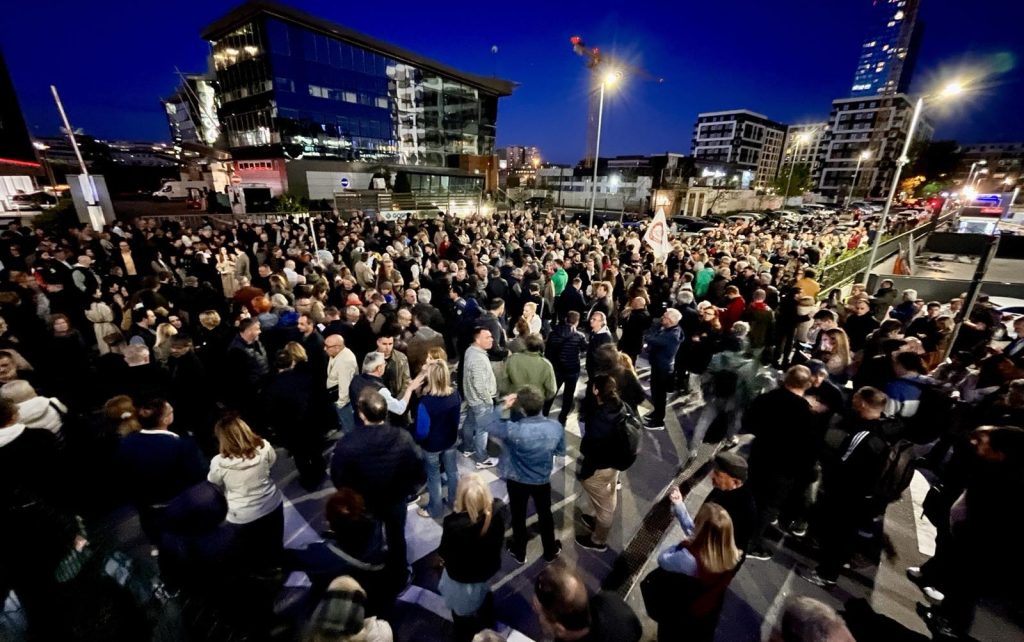
“Just think of the protests from March the 15th, when some kind of sonic weapon was used against the protestors, and then swiftly covered up by the authorities. People in Serbia deserve an independent and credible account of what is happening, not just the government’s version of (sur)reality”, Joveva said.
She added that a fact-finding mission would establish the facts, but it would also send a strong signal that Europe is watching, that transparency is not optional, and that abuses of power will not be ignored.
Joveva assessed that European institutions today are far more aware of what is truly happening in Serbia than they were before the escalation of violence and the blatant instrumentalization of the police to secure the regime’s grip on power. “This is something the EU simply cannot and must not ignore”, she added.
She said that the recent debate in the European Parliament on the police brutality in Serbia illustrated that the largest political groups are willing to condemn the violence and demand independent investigations into every single case of abuse.
“The more repression President Vučić unleashes against his own citizens, the weaker his protection will be within the Commission”, MEP Irena Joveva said.
She underlined that the real question now is whether the EPP will finally reassess its stances and its ties with ruling Serbian Progressive Party (SNS) and whether the EU will take actions against the regime beyond rhetoric.
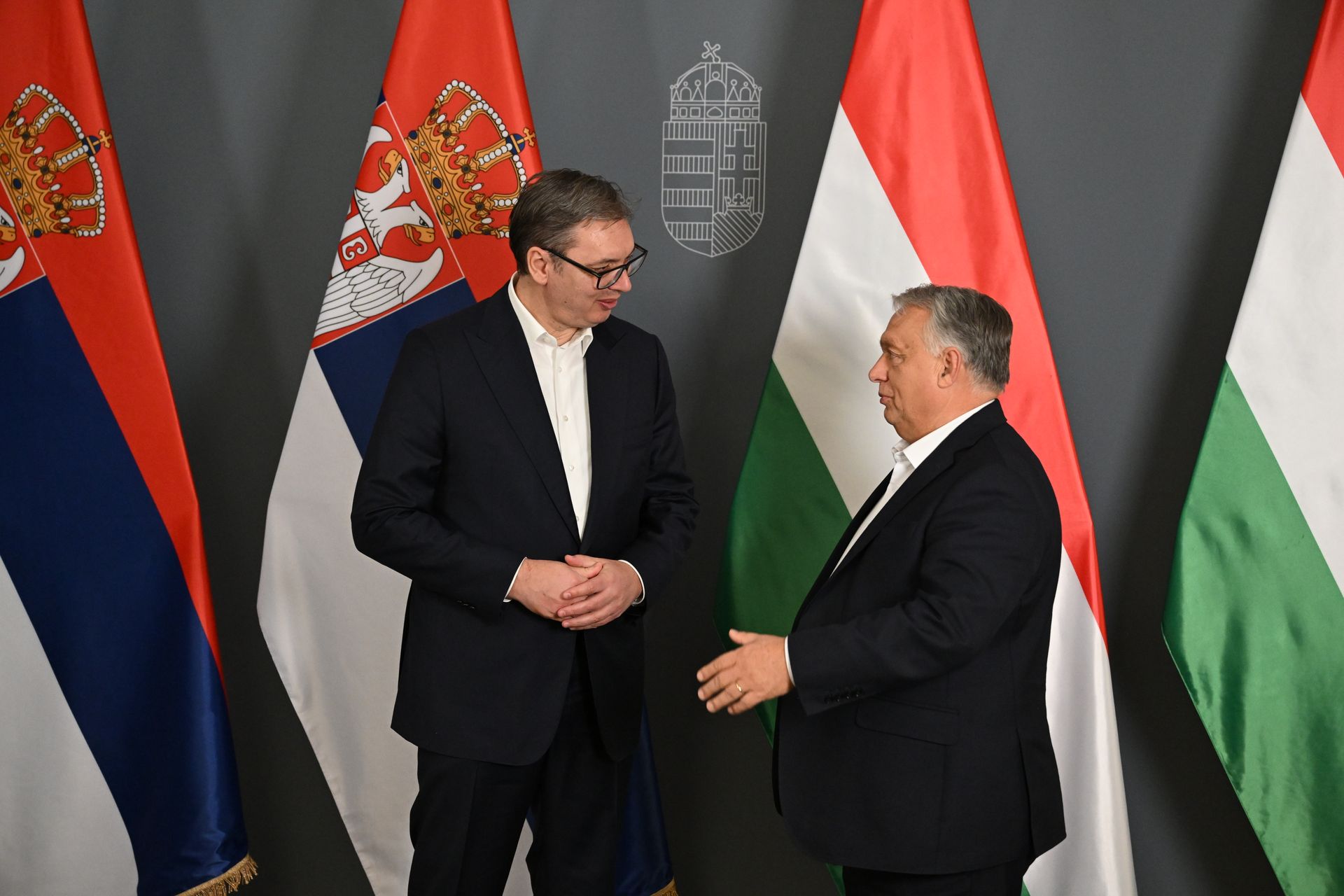
“Let me remind you that the EPP has in the past suspended Viktor Orbán’s party, ironically or not, a close ally of Aleksandar Vučić, precisely over the rule of law violations. Now, with SNS, they have opened an internal scrutiny process for reasons concerning the rule of law, yet in the same breath they emphasized that this is not, at least not yet, an official suspension procedure”, said Joveva.
According to her, ssuch hesitation is a warning and suggesting that the outcome of this process risks becoming yet another half-measure, while the seriousness of the situation in Serbia has long passed the point where half-measures are acceptable.
“Nevertheless, sooner or later, the EPP leadership must make a choice: to stand decisively with European values, or side with those who undermine them”, Joveva added.
Asked about media freedoms in Serbia and what steps the EU could take to help safeguard independent and professional journalism, Joveva said that it’s long past time for the EU to move from words to action.
“Media freedom is one of the cornerstones of Serbia’s EU accession process, which is why Brussels is right to demand a swift response to the pressures and attacks some journalists have faced or are facing. Yet the truth is that media freedom in Serbia has been eroding for years. Ten years ago, it was worrying, today it is deeply alarming”, Joveva concluded.
The full interview is available on Savremena politika.