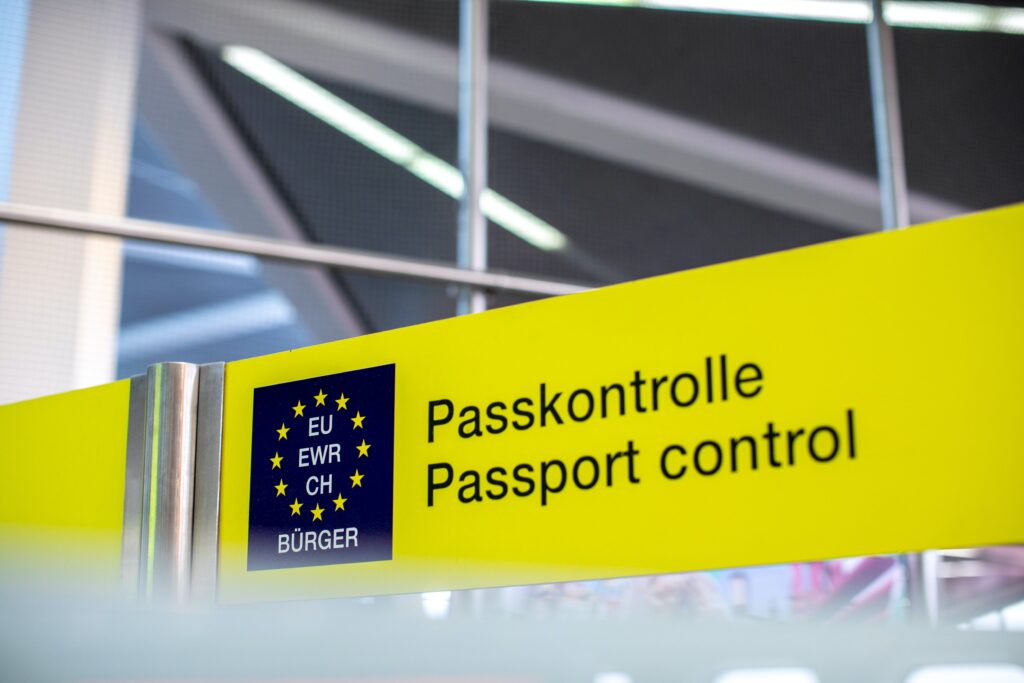
On Sunday, 12 October, the European Union officially launched the implementation of its new entry rules – the Entry/Exit System (EES) for digital registration of entries and exits from the Schengen Area.
The system applies to all non-EU nationals who do not require a visa for short-term stays of up to 90 days in the Schengen Zone. According to EU officials, the goal is to strengthen internal security and enhance the fight against illegal migration.
All citizens from the Western Balkans will be required to use this system for future travel to the EU.
The rollout of the system will be gradual over the next six months, with full operation expected to begin by 10 April next year.
Under the new procedure, travelers entering the Schengen Area will need to provide their passport information, a photograph, and fingerprints at border crossings.
Once entered, the data will remain valid in the EES for three years. Travelers will be able to check the validity of their registered data through the EES mobile application.
This will mark the end of manual passport stamping at all international airports and ports within the EU, as well as at land border crossings between EU and non-EU countries. However, during the six-month transition period, passports will continue to be stamped as before.
According to the European Union, once a traveler has entered the required data into the system, future crossings into the EU will be based solely on previously stored biometric information, significantly reducing waiting times at the border.
What happens at the border?
Upon arrival at a border crossing, travelers will proceed to a registration point equipped with devices for collecting biometric data. The entire registration process takes just a few minutes per person.
When leaving the Schengen Area, the system will automatically record the traveler’s exit time and location, linking this information with their entry data.
Children under the age of 12 will not need to provide biometric data, while parents will be responsible for registering the data of minors aged 12 and older.
As announced, during October, the system will operate for four hours per day, with the duration gradually increasing until it becomes fully operational.
During the trial phase, EU border police may temporarily suspend the use of the system in case of heavy traffic at border crossings and resume it once traffic flow returns to normal.
All information about the new EU entry system is available at this link.