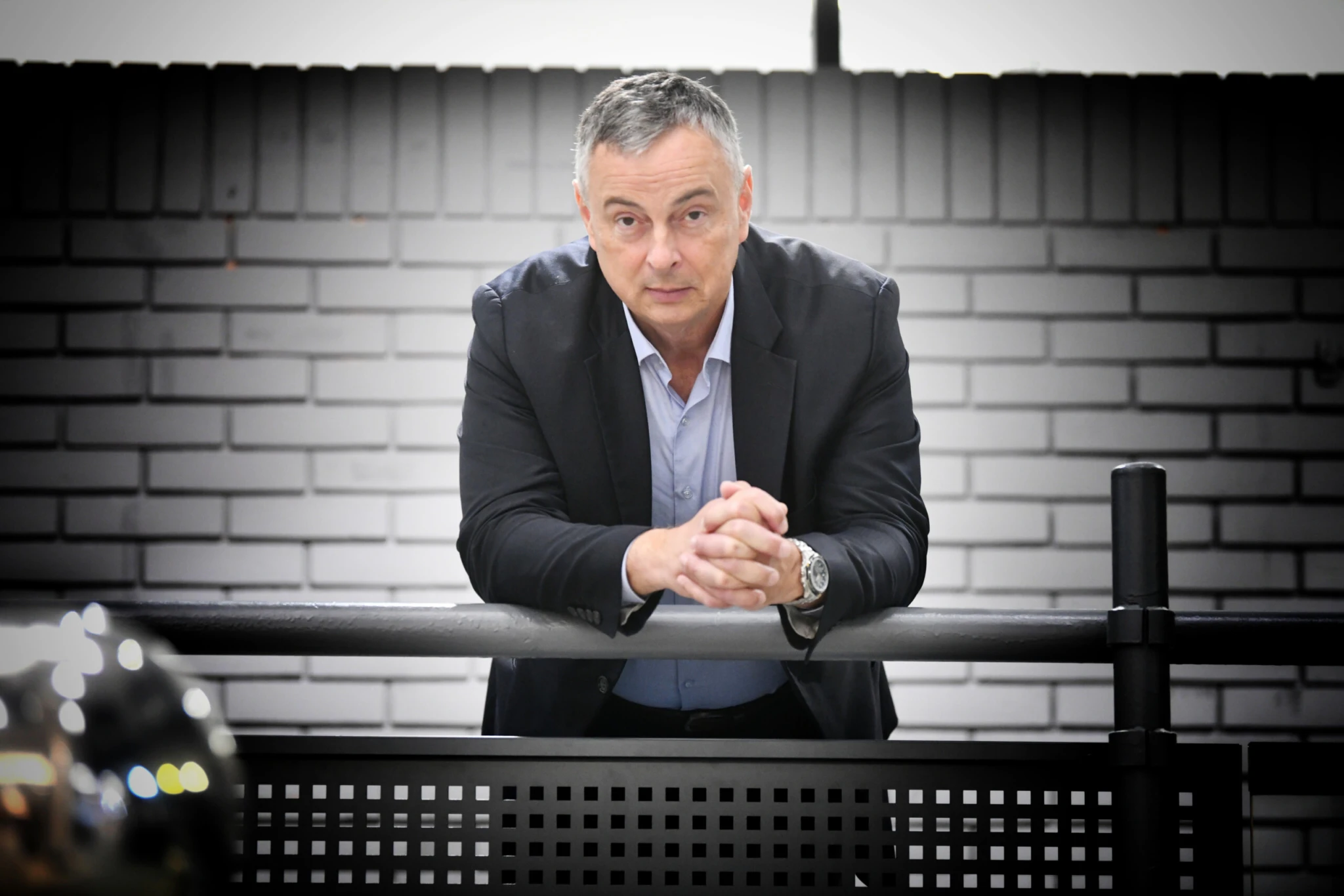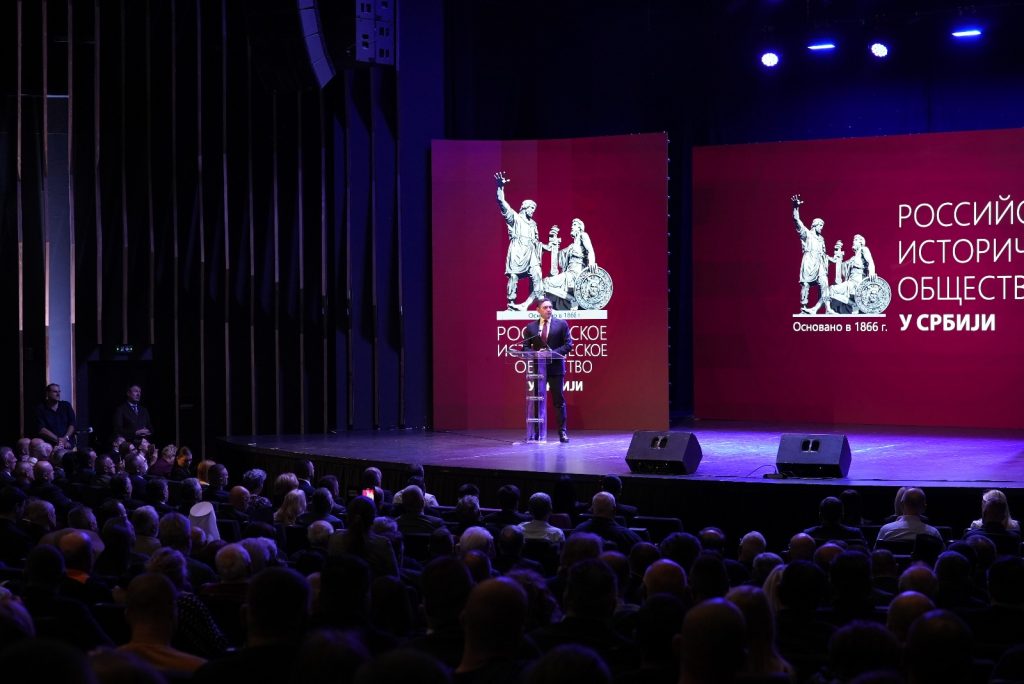
BELGRADE – The Inaugural Assembly of the Russian Historical Society was held on Sunday, 26 October. Former Vice-President of the Serbian Government Aleksandar Vulin was elected as the president of the council of the Society’s Belgrade branch.
In his address, Vulin said that “history teaches us that where there are Serbs and Russians, there is justice,” N1 reported. He greeted both the “Serbian and Russian worlds” before the gathered audience.
“If you do not know where justice and victory lie, look for where the Serbs and Russians are. The closeness of our two peoples can be measured only by the closeness of the values they uphold. Within the Russian Historical Society, we are fighting against all attempts to revise the history of the Serbian and Russian peoples,” Vulin said.
The event was attended by Minister of Internal Affairs Ivica Dačić, Deputy Speaker of the National Assembly Nevena Đurić from the ruling Serbian Progressive Party (SNS), Serbian Orthodox Patriarch Porfirije, and Russian Ambassador to Serbia Aleksandr Botsan-Kharchenko.
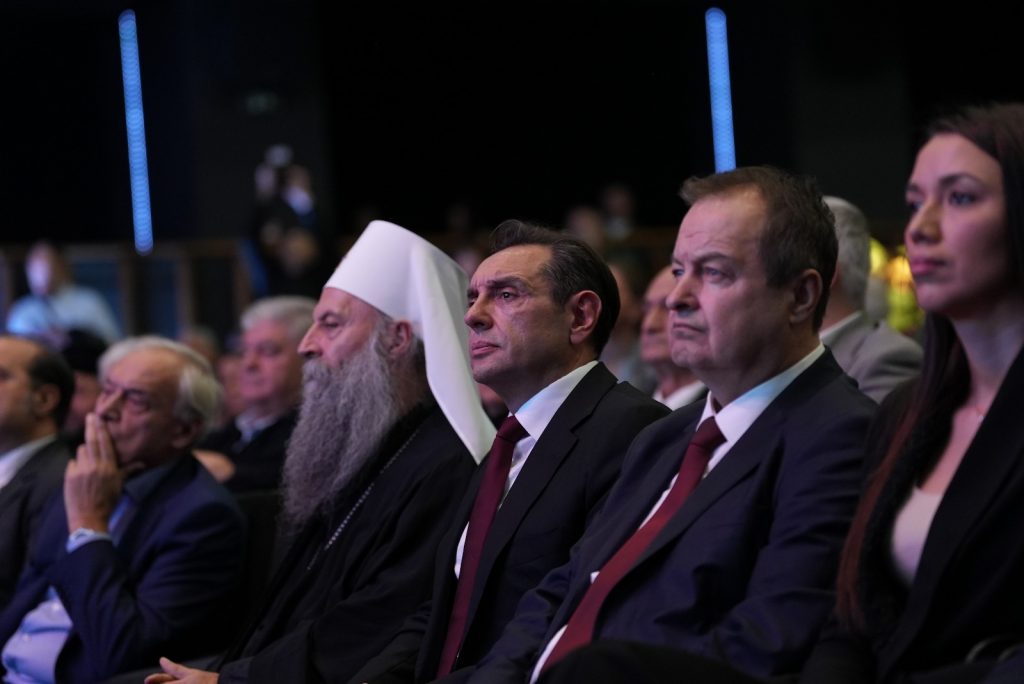
Patriarch Porfirije stated that the establishment of the Russian Historical Society confirms “the continuous spiritual bond between the Serbian and Russian peoples, who have lived in harmony and kinship throughout history,” adding that the founding of this organisation in Belgrade is “crucial in an era of historical revisionism.”
The Russian Historical Society is headed by Sergei Naryshkin, director of the Foreign Intelligence Service (SVR). The decision to open a branch in Serbia was made in May at a meeting of the Society’s General Assembly.
As previously reported by Sputnik, Russia and Serbia are planning to organize the first Forum of Rectors of Russian and Serbian higher education institutions, and are also considering the creation of a Russian-Serbian association of universities.
The Russian Historical Society is a state-backed organization established in 2012 at Naryshkin’s initiative. Among its founders are the Russian Academy of Sciences and state media outlets such as RIA Novosti and Interfax.
Officially, the Society is dedicated to promoting Russia’s historical heritage, preserving “historical truth,” and popularising Russian history.
The Society closely cooperates with Russian institutions such as the Ministries of Education and Foreign Affairs, and its members include senior government officials, representatives of the Church, and academics aligned with the Kremlin.