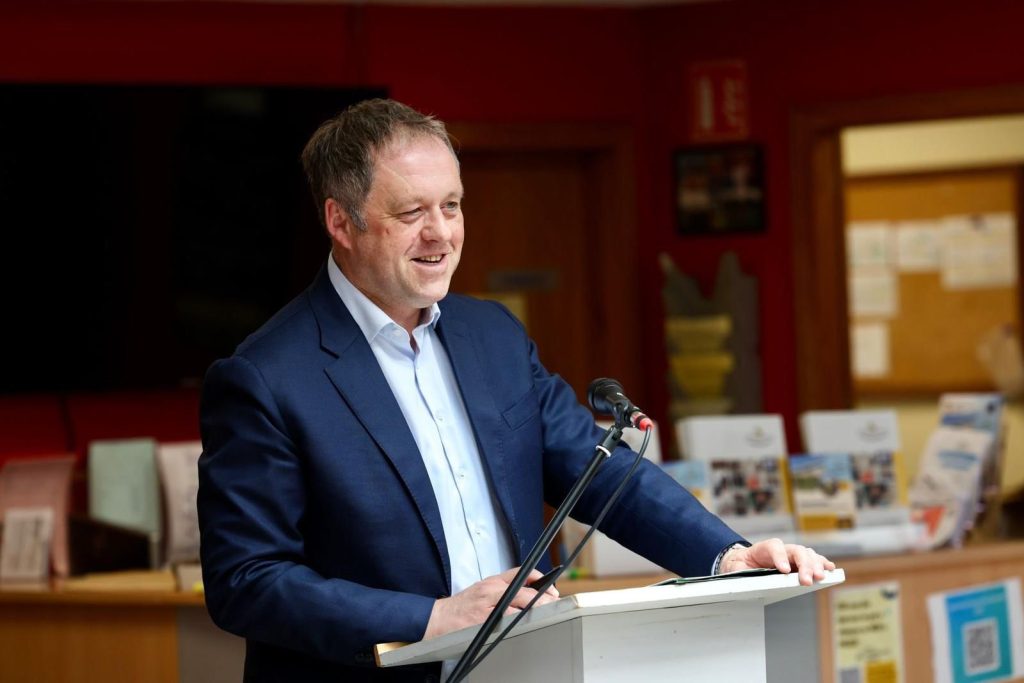
DUBLIN – Ireland sees fresh momentum for EU enlargement and will focus on moving the accession process forward as efficiently as possible when it takes over the presidency of the Council of the EU on 1 July, Irish European Affairs Minister Thomas Byrne said.
Speaking to Politico Playbook, Byrne said Montenegro was seen as “front of the line” in the enlargement process, while Ukraine would also remain a priority for Dublin during its presidency.
“Montenegro best in class,” Byrne said, stressing that Ireland’s focus would be on ensuring that the EU accession process advances in a practical and efficient manner.
His remarks come as Montenegro is seeking to maintain momentum in its accession negotiations, after entering what EU officials have described as the final stage of the process. The country has repeatedly stated its ambition to close all negotiating chapters by the end of 2026 and become the next member state of the European Union.
Byrne also said Ireland would treat the EU’s long-term budget, competitiveness and enlargement as some of its main priorities during its presidency of the Council of the EU.
According to the Irish minister, negotiations on the EU’s 2028–2034 budget are approaching a key moment, with net contributors and cohesion countries increasingly setting out their competing positions. He said the recent General Affairs Council marked the first real “crunch point” in the budget talks.
“In every negotiation you need a crunch point or a point of significant difference. I feel that we had that [at the GAC] for the first time,” Byrne said.
Cyprus, which currently holds the presidency of the Council, is expected to present a negotiating framework for the EU budget, which leaders will discuss at the June European Council. Once Ireland takes over the presidency, Byrne said Dublin would be able to begin discussions with member states on their “bottom lines”.
The Irish minister also pointed to competitiveness as one of the defining issues for the EU, describing the current efforts to deepen the single market as a potential “historic generational moment”. However, he warned that success would require member states to reconsider long-held red lines and accept compromises.