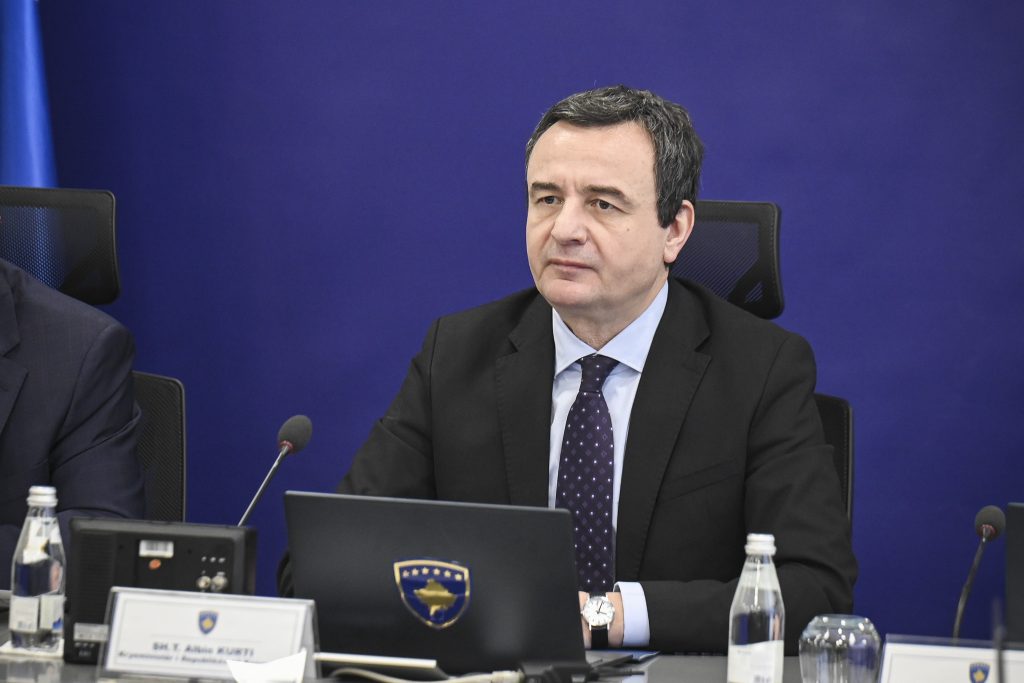
According to the interlocutors of EWB, the new parliamentary elections are likely to be held in Kosovo after the failed attempt by acting Prime Minister Albin Kurti to form a new government at an extraordinary session of the Kosovo Assembly on 26 October. However, the early voting is not a guarantee that the long-standing political deadlock will be broken, as no party would emerge as a clear winner.
At the extraordinary parliamentary session that took place on Sunday, Kurti, leader of Vetëvendosje (VV), did not manage to gain sufficient support to form his third government. A total of 56 MPs voted in favour of the proposed cabinet, 52 voted against, and 4 abstained, falling short of the required 61 votes needed for approval. In the February elections, VV won the most votes but secured only 48 seats in the Assembly, whereas the Democratic Party of Kosovo (PDK) came in the second place.
Deputies from PDK, the Democratic League of Kosovo (LDK), the Alliance for the Future of Kosovo (AAK), the Serb List (SL), and representatives of the Bosniak and Egyptian minorities all voted against Kurti’s government.