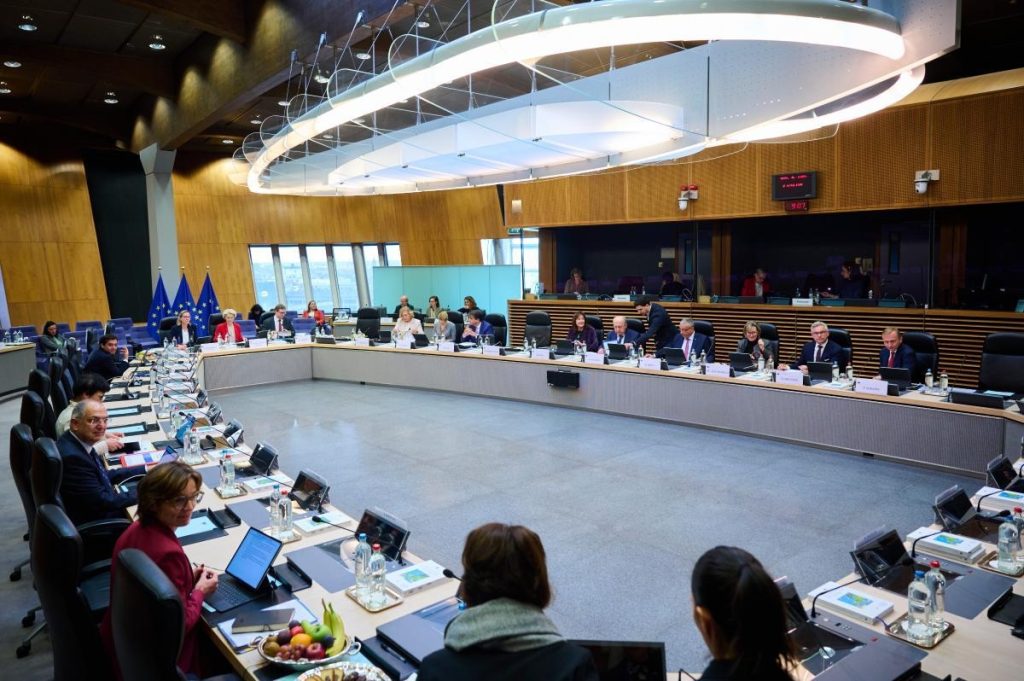
BRUSSELS – Today, the European Commission released its annual reports on the state of play of each candidate country across 33 negotiating chapters. In the Western Balkans, Montenegro has recorded the biggest progress compared to 2024, improving its score in 12 negotiating chapters.
The European Commission assigns two descriptive assessments each year for every negotiating chapter. The first refers to the overall level of preparation of the candidate country in that area, and the second to the progress achieved over the past year.
When it comes to the first assessment, the level of preparation, there are five categories: “early stage,” “some level of preparation,” “moderate level,” “good level,” and “well advanced.”
Compared to 2024, Montenegro has improved its score in 12 chapters, including Chapter 23: Judiciary and Fundamental Rights, Chapter 5: Public Procurement and Chapter 13: Fisheries. It now holds the highest grade, “well advanced”, in chapters on foreign policy and intellectual property law.
Albania has improved its level of preparation across six chapters, including chapters on the internal market, as well as chapters on science, research, education and culture.
Kosovo, while still at an early stage in many areas, also recorded improvements in three chapters, including Chapter 14: Transport policy.
Meanwhile, Serbia, North Macedonia and Bosnia and Herzegovina only improved their level of preparation in one chapter each. Serbia recoded an assessment of “backsliding” in the area of freedom of expression, which recorded the absence of a functioning media regulator, verbal attacks on journalists by state officials, SLAPP charges, as well as a concerning political and economic influence on media.
If the scores for level of preparation were quantified and assigned numbers from 1 to 5, Montenegro would have by far the highest average score in the region: 3.45. It would be followed by Serbia with 3.12 and North Macedonia with 3.11, both countries recording a very limited improvement in recent years.
Albania currently stands at 2.9, though it has seen significant improvement in recent years. Kosovo and Bosnia and Herzegovina remain behind the rest of the region, with 2.11 and 1.7, respectively.
According to the European Commission, the pace of the reforms, in particular in the areas of democracy, the rule of law and fundamental rights, directly impacts the speed of accession of candidate countries.
Ursula von der Leyen, President of the European Commission said today that the EU was more committed than ever to turning EU enlargement into a reality.
“Because a larger Union means a stronger and more influential Europe on the global stage. But it must and will remain a merit-based process. Our package provides specific recommendation to all our partners. And to all of them we say: EU accession is a unique offer. A promise of peace, prosperity and solidarity. With the right reforms and a strong political will, you all can seize this opportunity”, von der Leyen said.