The European Commission published its annual enlargement reports yesterday. We report the key findings of the Report on Albania in the area of democracy, rule of law and economic criteria:
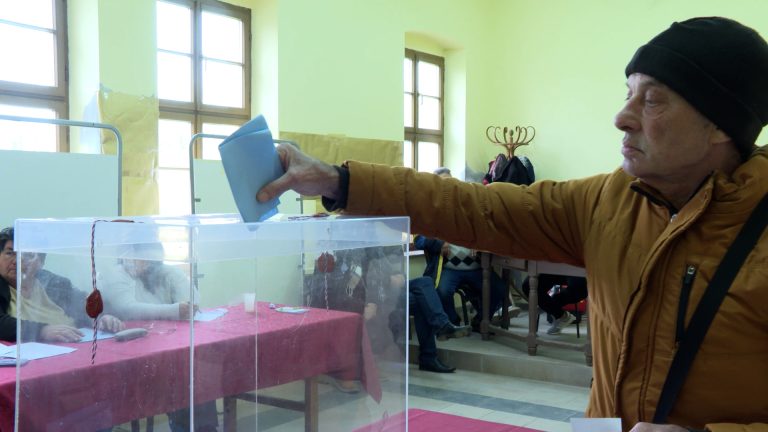
“The overall framework allows for generally free and fair elections. The parliamentary elections held on 11 May 2025, which followed a partial electoral reform, resulted in a fourth consecutive term for the ruling party. The preliminary conclusions of the Organization for Security and Co-operation in Europe (OSCE) / Office for Democratic Institutions and Human Rights (ODIHR) election observation mission noted that elections were competitive and professionally conducted, but identified some shortcomings, including the lack of a level playing field and abuse of public resources. The partial electoral reform amended the Electoral Code but failed to address a number of longstanding recommendations from the OSCE/ODIHR and the Venice Commission. A comprehensive electoral reform is needed.
Parliament can exercise its powers in a partially effective way. Political polarisation, lack of genuine political dialogue and clashes between the ruling majority and parts of the opposition continued to affect Parliament’s activity, while public consultation processes remained limited. Parliament is also hampered by limited oversight over the executive, while the politicisation of parliamentary appointments to top positions in constitutional bodies or independent institutions established by law remains a serious issue. Concerns were noted regarding the work, methodology and impact of the ad hoc parliamentary committee on deepening reforms for good governance, rule of law and anti-corruption. Following the 11 May elections, the number of standing committees increased from eight to eleven, of which four are chaired by opposition.
The government continued to show its commitment to EU integration. Following the 11 May parliamentary elections, a new government took office in September 2025. The division of responsibilities between local and central government remains an issue Albania’s bodies in charge of the EU integration process are in place. They successfully coordinated national positions, leading to the opening of negotiations on five of the six clusters during the reporting period. EU integration expertise, planning and interinstitutional mechanisms will need to be further strengthened to sustain Albania’s ambition to speed up the reforms required by the EU accession process. The EU integration process needs to be more inclusive, cross-party, and supported by effective consultation mechanisms. Communication efforts on EU integration should intensify.
Civil society organisations (CSOs) operate in a partly enabling environment. They face challenges regarding registration requirements and limited public funding, along with an increase in negative narratives and online smear campaigns.
Albania remains moderately prepared in the area of public administration reform (PAR). It made some progress during the reporting period, resulting in the adoption of the new Intersectoral Strategy Against Corruption (ISAC) 2024–2030 and Medium-Term Revenue Strategy 2024–2027 in December 2024, and of the Cross-Cutting Strategy on Public Administration Reform 2025-2030 in July 2025. Amendments to the laws on civil service and on the organisation of state administration remain to be adopted, with the latter submitted for public consultation. The practice of budget revisions carried out through normative acts adopted by the executive continues. Clear political steer for the PAR agenda from the Minister of State for Public Administration and Anti-Corruption continued.
Albania is between having a moderate and a good level of preparation and has made some progress on the functioning of the judiciary. Albania continued implementing the justice reform. The vetting process for all judges and prosecutors was finalised in first instance, further strengthening judicial independence and accountability. Vetting procedures on appeal have increased in pace and are now on track to meet the constitutional deadline of June 2026. The High Judicial Council (HJC) has adopted by-laws enhancing its procedures and standards applicable to its members and to judges. The High Prosecutorial Council (HPC) has also enhanced standards applicable to magistrates. The HJC has proceeded with new appointments of magistrates, contributing to a reduction of vacancies at first instance level. Challenges in the appointments of non-magistrate members of the HJC and HPC, and in conducting timely and qualitative evaluations, appointments, promotions, and transfers of magistrates remained. While the resilience of the judiciary has improved overall, increased attempts by public officials or politicians to exert undue interference and pressure on the judicial system remained an issue of serious concern. A new Cross-Sector Justice Strategy for 2024-2030 was adopted. Sufficient budget was allocated to develop a modern, integrated, electronic case management system, but full establishment is currently foreseen only for 2030. Pressing issues on judicial efficiency, quality and integrity still need to be addressed, in line with the best European standards and practices.
Albania is moderately prepared and has shown some progress in the fight against corruption. The Anti-Corruption Strategy for 2024-2030 has been adopted. The Specialised Structure Against Organised Crime and Corruption (SPAK) further consolidated its positive results in fighting high-level corruption and made tangible progress towards a solid track record in the fight against corruption. However, corruption remained widespread across vulnerable sectors, affecting both the public and private spheres. The institutional framework for prevention of corruption continued to have a limited impact and coordination with law enforcement remained weak. Shortcomings regarding transparency and effectiveness of asset declaration checks still need to be addressed.
Albania’s legal framework sets out a generally good basis for the protection of fundamental rights. Significant achievement was made during the reporting period with the adoption of a new Law on personal data protection and seven of its ten accompanying pieces of implementing legislation, in full alignment with the EU acquis, as well as the adoption of implementing legislation on the rights to persons belonging to national minorities, in the core areas of self-identification and the use of minority languages, consistent with European standards. The enjoyment of media freedom and pluralism, of the right to property and of the rights of persons belonging to minorities remain problematic. Implementation efforts need to intensify overall.
Albania is between having some and a moderate level of preparation in the area of freedom of expression and made limited progress during the reporting period. The situation remains largely unchanged, with media independence and pluralism continuing to be affected by the overlap of business and political interests, the lack of transparency of financing sources, the high concentration of media ownership, intimidation and precarious working conditions for journalists. The launch of a structured dialogue between Albanian institutions and media actors as well as the adoption of soft measures on journalise safety were positive developments. Concerns were raised, however, regarding the legality and due process observed during the eviction by the authorities of a media outlet from the public-owned offices it occupied.
Albania is moderately prepared in aligning with the EU acquis in the area of justice, freedom and security and has made good progress in this area. The capacity and effectiveness of the Specialised Structure Against Organised Crime and Corruption (SPAK) to disrupt organised crime groups increased and the use of financial investigations improved. Although their full functionality still needs to be demonstrated, an asset recovery office and a national early warning system on the detection of new psychoactive substances were set up within the Albanian State Police. A national drugs observatory has been established within the Ministry of Health, though it is still to become operational. Albania continued to implement its migration strategy, which is aligned with EU priorities. Further efforts are needed to improve access to asylum and to align the country’s visa policy with the EU’s.
Albania is moderately prepared in the fight against organised crime. Good progress was made in meeting last year’s recommendations by increasing SPAK’s capacity in financial investigations, strengthening the fight against money laundering and seizing assets linked to organised crime. SPAK has also further consolidated cooperation with its international counterparts, in particular with EU Member States and EU agencies, to investigate and crack down on high-risk criminal groups with initial tangible results. Albania needs to speed up work on aligning its legal framework on organised crime with the EU acquis, strengthen law enforcement capacity and improve the efficiency of investigations, including through the development of criminal and financial analysis capabilities.
Albania has a good level of preparation in developing a functioning market economy and made some progress in this area. The economy maintained a strong growth momentum in 2024 thanks to robust domestic demand and tourism. Inflation fell below the central bank’s target while fiscal consolidation accelerated, and the public debt ratio continued to decline. Despite increases, government revenue as a share of GDP remains low, while spending on public investment is repeatedly under-executed. The labour market situation improved, but structural problems persist. The banking sector remained stable, well capitalised and liquid, while lending to the private sector increased. The business environment remains affected by a weak rule of law, limited access to finance, and shortcomings in the oversight and governance of state-owned enterprises.
Albania has some level of preparation to cope with competitive pressure and market forces within the EU and made limited progress in this area. The education system still faces numerous challenges, skills gaps persist, and the youth not in education, employment or training (NEET) rate remains a concern. Transport and digital infrastructure improved, but infrastructure gaps remain. Albania remains competitive as a tourism destination, offering an expanding scope of services, but industry and agriculture remain low-productivity sectors that have been contracting. Manufacturing exports fell due to weak demand, exchange rate appreciation, and businesses’ low pricing power.”