The European Commission published its annual enlargement reports yesterday. We report the key findings of the Report on Bosnia and Herzegovina in the area of democracy, rule of law and economic criteria:
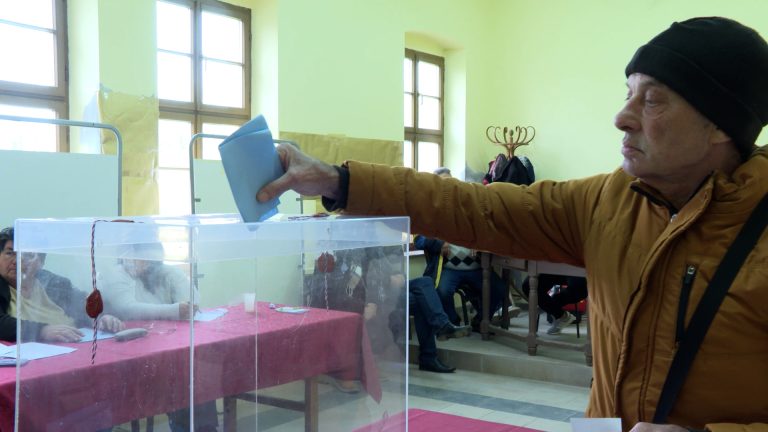
“The general framework for elections requires substantial reforms. Constitutional reforms are needed to ensure political equality and non-discrimination for all citizens. Electoral integrity needs to be improved, in line with recommendations of international bodies. Political parties should respect the independence of the Central Electoral Commission (CEC).
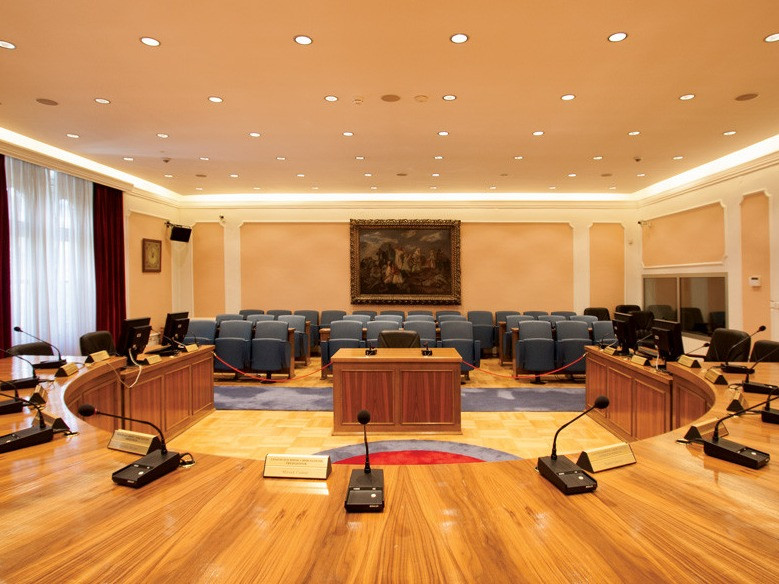
Parliament can exercise its powers in only a partially effective way. Legislative output decreased. Oversight over the executives also remained weak. The Republika Srpska entity assembly adopted in February several laws in breach of the legal and constitutional order, which were subsequently repealed in May by the Constitutional Court.
Governance is increasingly unsatisfactory. Presidency members continued to present diverging stances. The functioning of the Council of Ministers deteriorated with the end of the ruling coalition, and a new Minister of Security remains to be appointed. The executives have little capacity for coordination and policy planning. Independent institutions remain weak.
All levels of government show signs of political capture, directly affecting the daily life of citizens. The Republika Srpska entity should fully recognise and enforce the decisions of the Constitutional Court of Bosnia and Herzegovina and swiftly appoint judges to the two vacant positions on the Constitutional Court.
The institutions in charge of the EU integration process are broadly in place. Following the European Council decision to open accession negotiations, the country needs to appoint an operational chief negotiator with a view to the screening process.
Civil society organisations operate in a constrained environment. In particular, in the Republika Srpska entity, criminal penalties for defamation and a new law targeting civil society groups as ‘foreign agents’ (subsequently repealed by the Constitutional Court) further restricted the space for civil society. Bosnia and Herzegovina needs to ensure meaningful and systematic consultations with civil society as part of an inclusive policy dialogue and adopt a framework for the transparent funding of civil society organisations, thus ensuring an enabling environment for civil society
Bosnia and Herzegovina has some level of preparation to implement the EU acquis and European standards in the area of the judiciary and fundamental rights. No progress was made during the reporting period, including on addressing the related
Bosnia and Herzegovina is between an early stage of preparation and having some level of preparation and no progress was made on the functioning of the judiciary (Opinion key priority 6), including on addressing the findings of the expert report on rule of law issues (the ‘Priebe Report’). The poor functioning of the judicial system continued to undermine citizens’ rights and the fight against corruption.
Bosnia and Herzegovina is between an early stage of preparation and having some level of preparation in the fight against corruption (Opinion key priority 7). No progress was made. Political authorities failed to tackle widespread corruption and actively obstructed progress, leading to long-term stagnation and increasing signs of State capture. The State-level Law on the prevention of conflict of interest is still not implemented effectively. The Federation entity finally set up specialised anti-corruption departments, after 11 years of delay. Anti-corruption legislation is still not harmonised across the country. No action was taken to remedy operational inefficiency and political interference (including pressure and intimidation) which have led to selective and non-transparent judicial follow-up to corruption cases of public resonance. As a result, the track record on fighting corruption remains weak, with very few convictions, in particular in high-level cases.
The general framework for fundamental rights is largely in place but needs to be improved. The country needs to urgently adopt constitutional and electoral reforms to ensure that all citizens are able to effectively exercise their political rights, notably bring the country’s Constitution into line with the Sejdić-Finci case law of the European Court of Human Rights (Opinion key priority 4.f), as well as implement relevant decisions of the Constitutional Court. Further progress is required across key priorities 9-13.
There is some level of preparation in the area of freedom of expression. No progress was achieved during the reporting period, including in guaranteeing freedom of expression and of the media, and the protection of journalists (Opinion key priority 12). Bosnia and Herzegovina continues to experience deep stagnation in media freedom, with worrying signs of deterioration. The financial sustainability of public broadcasters is ever more in danger. A countrywide network was set up to monitor cases of violence against journalists.
Bosnia and Herzegovina has some level of preparation in the area of justice, freedom and security.
Bosnia and Herzegovina is between an early stage of preparation and having some level of preparation in the fight against serious and organised crime. Some progress was made, in particular with: (i) the adoption of the strategy on trafficking in human beings and the strategy and action plan on small arms and light weapons (SALW); and (ii) enforcement operations supported by Europol. However, systemic shortcomings continue to hinder the 8 operational cooperation and investigative capacity of law-enforcement agencies due to fragmented criminal legislation, poor institutional coordination and insufficient resources.
The existence of a functioning market economy Bosnia and Herzegovina is at an early stage of preparation – and there was no progress during the reporting period – in establishing a functioning market economy. Economic activity remained resilient despite a deteriorating political situation, with GDP growth slowing down to 2.6% in 2024, and to about 1.7% in the first half of 2025. Employment growth decelerated further, while a significant outflow of workers from the country continued to result in labour shortages and created upward pressure on wages.
Bosnia and Herzegovina is between an early stage of preparation and having some level of preparation in its capacity to cope with competitive pressure and market forces in the EU. It made no progress in this area during the reporting period. The overall quality of education remains inadequate. The country continues to lag behind in the energy and digital transitions. Economic integration with the EU remains high, but overall trade with the EU is below potential”.