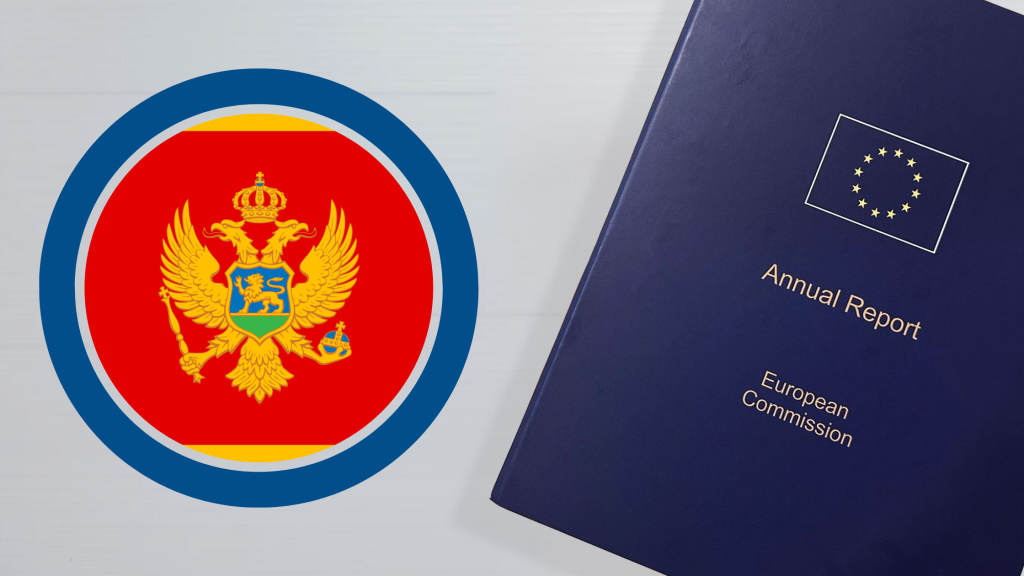
European Commission published its annual enlargement reports yesterday. We report the key findings of the Report on Montenegro in the area of democracy, rule of law and economic criteria:
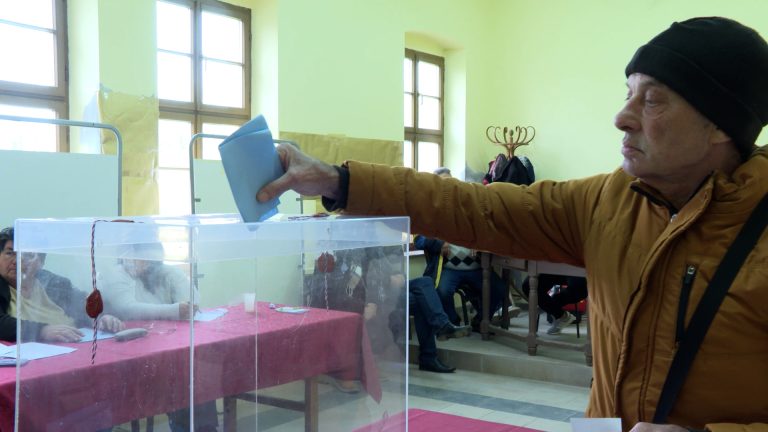
“The general framework provides a basis for the democratic conduct of elections. After a long delay, the Parliamentary Committee in charge of developing a comprehensive electoral reform adopted in July amendments to the Law on Election of Councillors and Members of Parliament, and to the Law on Financing of Political Entities and Election Campaigns. However, these amendments were not consulted in substance with relevant stakeholders, including the European Commission, and only partially addressed existing recommendations from the OSCE/ODIHR and GRECO. The legal framework requires further changes, through a transparent and inclusive consultation process with all relevant stakeholders, to address all existing shortcoming and fully align with the EU acquis and European standards on inclusive, transparent and resilient electoral processes.
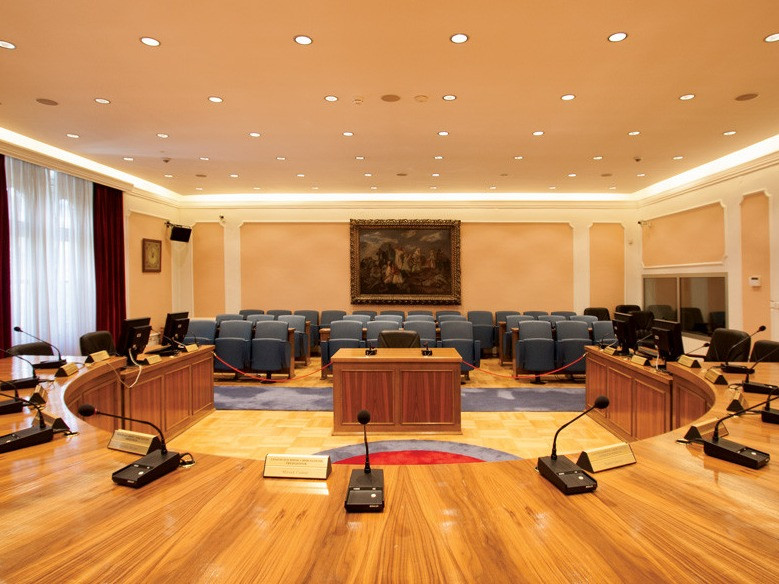
Parliament can exercise its powers, including control of the executive and involvement in the legislative process, in an overall effective way, although the Prime Minister’s irregular appearances before Parliament raised some concerns. At the end of 2024, a serious institutional and political crisis emerged over the decision of Parliament to unilaterally declare the retirement of a Constitutional Court judge and terminate its mandate, raising concerns about respect for the independence of the Constitutional Court and the principle of separation of powers enshrined in the Constitution. The crisis stemmed from a lack of clear rules on judicial retirement for judges due to conflicting secondary legislation. A political agreement was reached with the opposition in mid-March and paved the way for the resumption of parliamentary work. The agreement also requested a Venice Commission opinion on Parliament’s decision, which was published mid-June. Its recommendations must be implemented urgently. Despite these developments, the Parliament’s procedure for selecting a replacement of the concerned Constitutional Court judge continued.
The government has been operating and delivering in an overall stable environment, despite a large ministerial composition and a diverse coalition of parties. Nevertheless, governance has been suffering from lack of ministerial coordination and overall steering. The institutions in charge of the EU integration process are in place. Montenegro maintained its focus on the EU integration agenda, although the legislative EU alignment process on certain negotiation chapters slowed in early 2025, notably with regards to chapter 23 and 24, due to domestic political challenges. The negotiation structure in charge of EU accession negotiations generally fulfils its coordination role but would benefit from further strengthening and building up its technical expertise. Civil society organisations (CSOs) in Montenegro overall operate in an enabling environment. The main legal and institutional framework for civil society to operate freely is in place. The involvement of civil society in policymaking is formalised, but at times purely formal and not consistently taking place. The Council for Cooperation between the government and nongovernmental organisations (NGOs) has still not resumed work. The practice of launching calls for proposals to finance NGO projects is not consistently carried out by all ministries. Legislative changes are needed to further strengthen CSOs’ involvement on policymaking as are efforts to ensure genuine and meaningful cooperation between the government and CSOs.
Montenegro is moderately prepared in the area of public administration reform and has made some progress. A new action plan on public administration reform and public financial management has been developed and adopted. The regulatory framework for public administration reform still needs to be finalised in the area of free access to information and merit-based remuneration. Despite adoption of a new law on civil service in July for a more professional civil service, administrative capacities remain weak also due to delayed recruitments of open vacancies, high number of acting positions and temporary positions. In this regard the government is planning to undertake key steps for the optimisation of administrative capacities. In addition, the framework’s implementation has not yet led to improved performance and accountability in public administration.
Montenegro’s judicial system is between a moderate and a good level of preparation and has made some progress on the implementation of key judicial reforms. The new President of the Supreme Court was unanimously appointed by the Judicial Council through a meritbased and transparent procedure, while the timely filling of high level judicial and prosecutorial positions remains a challenge. Implementation of the previously improved legal framework has yielded some initial positive results. The work on implementing the 2024-2027 Judicial Reform Strategy is ongoing, yet not all planned activities for 2024 have been fully implemented. A 30% salary increase for holders of judicial functions has been adopted, making an important contribution to the attractiveness of the judicial career addressing a longstanding recommendation of the European Commission. Montenegro has initiated the process to amend its Constitution addressing some of the recommendations of the European Commission. The track record on judicial accountability remains limited. The justice system needs to substantially improve capacity in terms of human resources, budget, infrastructure and ICT. Furthermore, some positive developments were observed in the area of efficiency, while the backlog remains significant. Montenegro continues to make good progress in the domestic handling of war crimes.
Montenegro is moderately prepared in the fight against corruption. Some progress was made on the implementation of reforms. The implementation of the previously improved legal framework is ongoing, in particular with the adoption of eight implementing laws. Further efforts are needed to ensure full enforcement and alignment with several outstanding GRECO, Venice Commission and European Commission recommendations. The Agency for the Prevention of Corruption continued to carry out its tasks, despite some disruption caused by delays in appointing its management and resource constraints. Montenegro must urgently appoint a full-term Director.
The legislative and institutional framework for fundamental rights is largely in place, and Montenegro continues to largely meet its international obligations on human rights. However, more effort is needed to fully implement this framework and to ensure access to justice and enforcement of rights in administrative and judicial proceedings, in particular for people in vulnerable situations. A new law on the Ombudsperson’s Office is being drafted to fully align with the Paris Principles and help secure an upgraded accreditation to ‘A’ status of the National Human Rights Institution (NHRI).
Montenegro is moderately prepared in the area of freedom of expression. Some progress was achieved on the implementation of reforms. Montenegro continues to uphold a zerotolerance policy to violence against journalists. In July, the Parliament appointed three new members of the Council of the Radio Television of Montenegro (RTCG). However, there are delays in appointing members to the Council of the Agency for Audiovisual Media Services (AMU). The national media strategy continued to be implemented, and Montenegro continues to enjoy a pluralistic media environment and provides adequate legal guarantees for the freedom of expression and an enabling environment for the media to operate freely, independently and professionally.
Montenegro is between a moderate and a good level of preparation in the area of justice, freedom and security. Limited progress was made, with work starting on the improvement of border surveillance equipment, an ongoing recruitment campaign to hire new border police officers, and the installation of equipment for the electronic registration of migrants at the border police premises in Božaj and Pljevlja. In December 2024, Montenegro granted visa exemptions to two additional countries Bahrain: (permanently) and Uzbekistan (seasonally) and upgraded the seasonal exemption for Saudi Arabia to a permanent exemption. By adding these countries, Montenegro severely regressed on its alignment with the EU’s visa policy. However, in October, Montenegro abolished the visa-free regime with four countries: Kuwait, Egypt, Armenia, and Uzbekistan.
Montenegro is moderately prepared in the fight against serious and organised crime. Good progress was made on the preparation of the new draft law on weapons and the adoption of the strategy for the fight against transnational organised crime 2024-2027 and the mid-term review of the serious and organised crime threat assessment (SOCTA). In line with the EU acquis, in April 2025, the police administration set up the International Operational Room 24/7 Single Point of Contact (SPOC).
Montenegro has made some progress and is between a moderate and a good level of preparation in developing a functioning market economy. Economic growth slowed down amid weaker tourism exports in 2024 and the first half of 2025. The budget deficit increased in 2024 but was in line with the revised target; however, fiscal vulnerabilities remain given the high debt rollover needs and recent measures that weakened the government’s revenue base and raised social spending. The labour market situation continued to improve, but structural problems persist, such as high youth and long-term unemployment rates. The banking sector remained well capitalised and liquid. Some progress was made in improving the business environment and preparing the reform of state-owned enterprises (SOEs).
Montenegro has made some progress and is between a moderate and a good level of preparation to cope with competitive pressure and market forces in the EU. The education system still faces numerous challenges, which are being gradually addressed by the authorities. Efforts to advance the green and digital transitions have continued at a slow pace. Further efforts are needed to diversify Montenegro’s narrow production base. The economy’s high reliance on services, in particular tourism, together with the small size of 9 local companies and their low level of participation in exports are obstacles to increasing the productivity and competitiveness of local firms”.