European Commission published its annual enlargement reports yesterday. We report the key findings of the Report on North Macedonia in the area of democracy, rule of law and economic criteria:
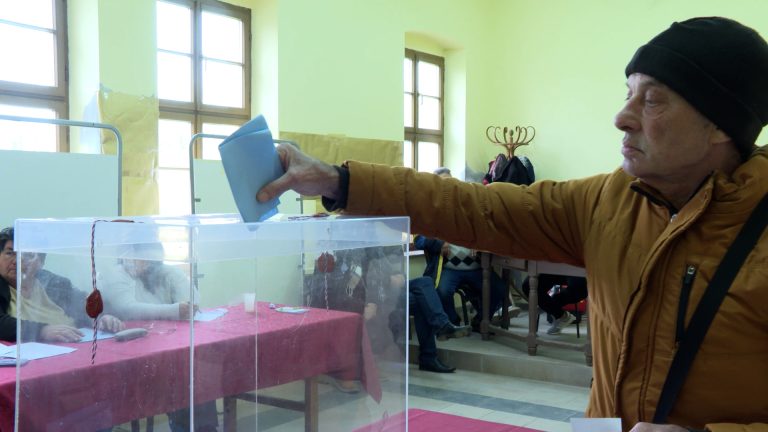
“The election legislation provides a suitable framework for holding democratic elections. The Electoral Code was amended in March 2024. The review was very limited and not transparent. No progress was made on addressing the outstanding recommendations of the Organisation for Security and Cooperation in Europe (OSCE)/Office for Democratic Institutions and Human Rights (ODIHR) and the Venice Commission.
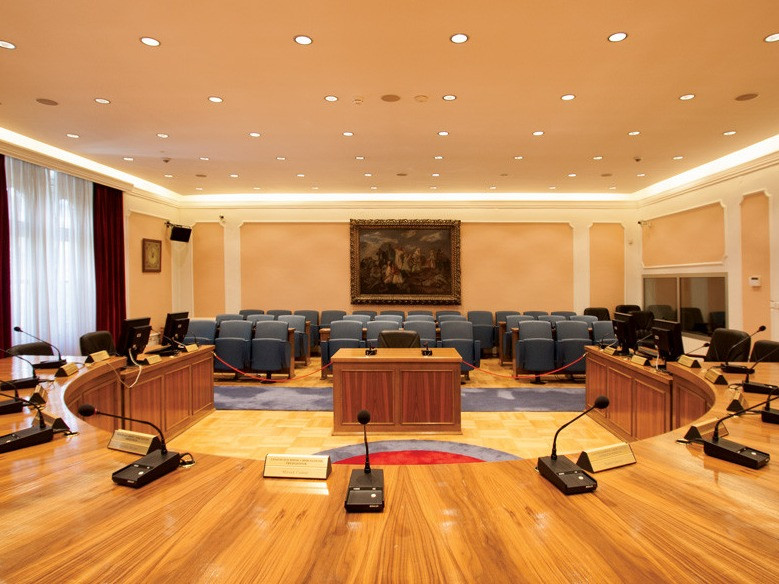
Parliament was found to exercise its powers in an overall effective way. However, political polarisation in Parliament persisted, delaying the adoption of important reforms and several long-overdue appointments. Parliament maintained a broad consensus on the implementation of the new rules of procedure. These rules have so far had a positive effect on Parliament’s operational efficiency; however, their long-term impact is yet to be determined. Parliament should accelerate necessary reforms for the EU integration process. In addition, Parliament should plan and adopt its agenda diligently and limit the use of shortened legislative procedures.
No attempts were made to adopt the relevant constitutional changes referred to in the Council Conclusions of 18 July 2022, which the country committed to launch and achieve, with a view to ensuring that the Constitution covers citizens who live within the borders of the State and who are part of other peoples, such as Bulgarians. Permanent and decisive steps are needed to accelerate the implementation of all EU-related reforms beyond those of the Reform Agenda and to move forward in the EU accession negotiation process. Cross-party collaboration is vital in this regard.
Despite some progress, a comprehensive reform of local self-government is still urgently needed, and the dialogue between different levels of government should be strengthened. Inter-ethnic relations remained stable, and the Ohrid Framework Agreement continued to be implemented.
The institutions in charge of the EU integration process are in place. North Macedonia needs to continue strengthening its EU negotiating structures and achieve sound coordination across line ministries and institutions, while further developing EU acquis-related expertise across the public administration.
Civil society organisations (CSOs) in North Macedonia generally operate in an overall enabling environment. The government adopted a decision for appointing members of the Council for Cooperation between Government and Civil Society. This development brought the Council’s long-awaited reactivation, in line with the Commission’s recommendations. Looking ahead, the Council now needs to effectively fulfil its role. The government should increase its efforts to ensure that civil society is involved in all priority areas and in consultation activities. The necessary amendments to the current legal and financial frameworks for ensuring transparent public funding to CSOs have not yet been adopted.
North Macedonia remains moderately prepared in the area of public administration reform. Some progress was made in the e-government area, with the amendments to the Law on electronic documents, electronic identification and trusted services transposing eIDAS 2.0 Regulation and introducing the Digital Identity Wallet. Efforts were made towards digitalisation of institutional registers, simplification of electronic procedures and increase of data exchange. The long-awaited laws on administrative servants and on public sector employees were adopted in July 2025. The two laws improve selection procedures, temporary employment, working conditions, and data collection in the human resources management area. However, rules governing civil servants remain fragmented. The country pursued the reorganisation of several state institutions in line with amended Law on state organisation.
The judicial system of North Macedonia is between having some and a moderate level of preparation and made no progress. The country started implementing the Strategy for Judicial Reform (2024-2028) and continued to implement the recommendations of the 2023 peer review mission on the Judicial Council. The overall independence and financial autonomy of the judiciary is undermined by the interference and pressure from other state branches, including attempts by Parliament to pressure members of the Judicial Council to resign, and the limited financial resources allocated. The staffing shortages in the judiciary are a concern as it affects the quality and efficiency of the justice system.
North Macedonia is between having some and a moderate level of preparation and made no progress on the prevention and fight against corruption. Corruption remains prevalent in many areas and is an issue of serious concern. The tragedy of 16 March 2025 in Kochani, during which a fire tore through a club killing 62 and injuring over 190 people, revealed enduring systemic challenges over the enforcement of anti-corruption measures. The preventive measures and the effective repression of corruption needs to be improved. The indictment imposed on the President of the State Commission for the Prevention of Corruption (SCPC), which led to her resignation, have brought the institution’s credibility into question. The SCPC needs to proactively provide policy guidance to prevent corruption, detect and report alleged instances of corruption and increase its efficiency in verifying asset declarations and oversight of election campaign financing. In parallel, its recommendations need to be followed up effectively.
The legal framework on fundamental rights is partially aligned with the EU acquis and European standards. The country continues to meet its general obligations on fundamental rights, but legislation should be implemented in a systematic manner. A new Ombudsman and eight new deputy ombudspersons, for the regional and Skopje offices of the Ombudsman, are still to be elected. No progress has been made on the protection of personal data. The overall situation, in particular living conditions, in prisons remains appalling, although infrastructure was partially renovated and improved in several prison facilities.
North Macedonia is between having some and a moderate level of preparation on freedom of expression and has made limited progress in this area. The legal framework governing the media is still not fully aligned with EU acquis, particularly the European Media Freedom Act (EMFA), although some progress was achieved on the Law on media. The financial independence of the Agency for Audio and Audiovisual Media Services has improved, and the new members of its Council were elected by Parliament. The public service broadcaster faces challenges, despite improvements in its funding and the appointment by the Parliament of its Council. Challenges remain concerning transparency of media ownership. The framework for allocation of state advertising raises concerns about the potential misuse of political funds and the disruption of the market.
North Macedonia is moderately prepared to implement the EU acquis in the field of justice, freedom and security and has made limited progress in this area. North Macedonia should increase its capacities to fight all forms of serious and organised crime. On migration and asylum, there was no further alignment with the EU acquis.
North Macedonia is in between having some and a moderate level of preparation in the fight against serious and organised crime and has made limited progress in this area. Further progress on alignment with the EU acquis is still expected.
North Macedonia has made limited progress and is at a good level of preparation in developing a functioning market economy. Real GDP growth accelerated in 2024, driven by private consumption and public investment. The external position deteriorated and inflation, after falling substantially, has surged again since September 2024. The 2024 fiscal deficit exceeded the initial plan as a result of rising public sector wages and pensions, delaying fiscal consolidation and adherence to the fiscal rules. The execution of planned capital expenditure continues to suffer from weak public investment management. Efforts to formalise the informal economy have stalled. The central bank started to cautiously ease monetary policy and the macroprudential framework was strengthened. The banking sector remained resilient amidst a solid rise in credit growth. The labour market situation improved, but structural problems persist, including low participation rates, substantial emigration and a large gender gap.
North Macedonia has made some progress and is moderately prepared to cope with competitive pressure and market forces within the EU. A new Law on vocational education and training includes some measures to address significant skills mismatches. The digitalisation of the economy is advancing, and new school curricula provide for better teaching of IT skills. Sizeable investment needs in transport and energy infrastructure persist. Projects to improve road and rail infrastructure and to digitalise public services have progressed somewhat but need to be strengthened to have a positive impact on the competitiveness of domestic companies. The share of energy production from renewable sources increased further. Integration with the EU in trade and investment, as well as overall trade openness, remained high in 2024″.