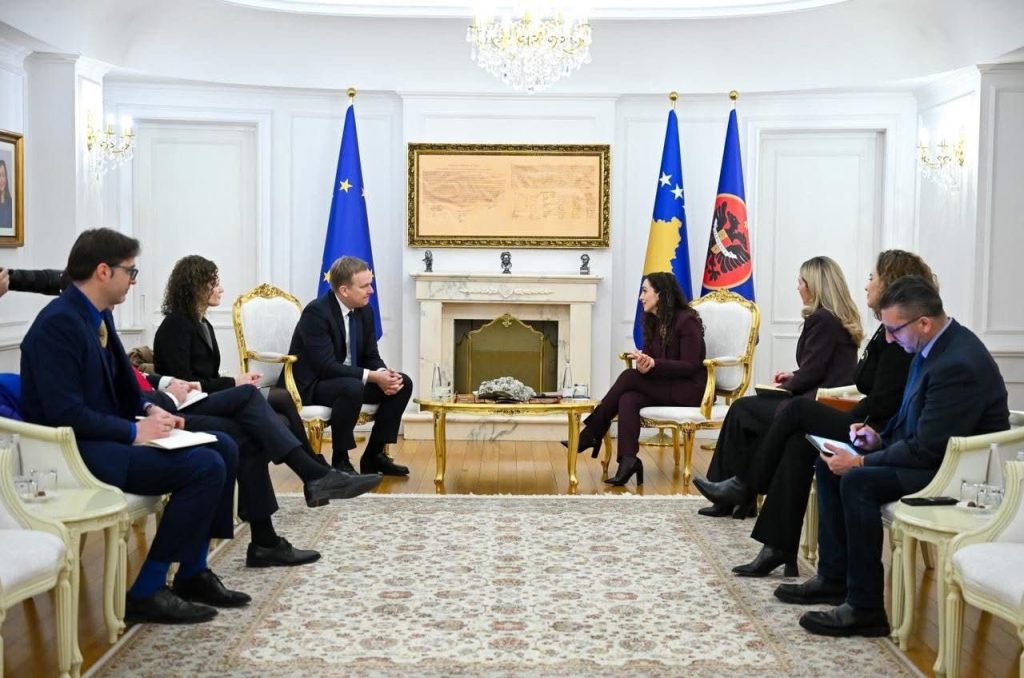
PRISTINA – On 14 January, Peter Sørensen, EU Special Representative for the Belgrade-Pristina Dialogue, visited Pristina, where he met with President Vjosa Osmani and acting Prime Minister Albin Kurti. Two days later, he also visited Belgrade, where he met with several government ministers.
Elaborating on his visit to Kosovo, Sørensen stated on X that he had “valuable meetings and open discussions on next steps in the EU-facilitated Dialogue to ensure 2026 delivers tangible results for the people of Kosovo”.
“Continued engagement remains essential for progress on Kosovo’s EU future”, he wrote today
It was Sørensen’s first visit to Kosovo since his second term of office as the EU Special Representative for the Belgrade-Pristina Dialogue began. During his first term, which lasted one year, Sørensen hosted only two meetings between key negotiators, and both failed to produce concrete results.
During his stay in Pristina, Sørensen expressed hope that the Belgrade-Pristina Dialogue would continue this year.
“What the international community has asked us, in our role as a mediator in the dialogue, is to ensure that both sides sit down and talk. So, we will have to find a way to make it happen”, he said, adding that “he hopes that 2026 will bring what last year failed to achieve”.
Sørensen stressed that the High Representative (Kaja Kallas) had visited both Pristina and Belgrade, and indicated that “a meeting will occur when the time is right”.
After she met with Peter Sørensen, Vjosa Osmani stated that “Kosovo is ready for its next European chapter”.
“In my meeting with Peter Sørensen, we discussed Kosovo’s European integration process, the dialogue with Serbia, and regional security. Following the lifting of the unjust measures, we are prepared to work closely with our European partners to move decisively toward EU candidate status”, Osmani wrote on X.
Koha Ditore reported that in his meeting with Sørensen, Albin Kurti reiterated the conditions for the continuation of the dialogue with Serbia – “the withdrawal of former Prime Minister Brnabić’s letter, the surrender of terrorist leader Milan Radoičić, and the signing of the Basic Agreement and the Implementation Annexe”.
In Serbia, on Friday, January 16, Sorensen met with Foreign Minister Marko Đurić, Minister of European Integration Nemanja Starović, as well as the head of the Office for Kosovo and Metohija, Petar Petković.
In a post on Instagram, Marko Đurić wrote that during the talks he emphasised Belgrade’s continued constructive role, as well as “the need for increased international engagement in the province and the fact that the rights and security of Serbs must be respected.”
He also stressed that the establishment of the Community of Serb Municipalities and the fulfilment of all agreed obligations are necessary for restoring meaningful dialogue and enabling lasting stability.
“The obstructive, destabilising, and confrontational rhetoric and actions of representatives of the Provisional Institutions of Self-Government in Pristina continue to harm the dialogue and undermine peace and security throughout the entire region,” Đurić wrote in a post on social media.