BERLIN – Rising tensions between the United States and the European Union risk undermining cooperation in the Western Balkans, prompting a new transatlantic initiative aimed at reinforcing democratic resilience, regional cohesion, and opportunities for young people, according to a publication released by the Aspen Institute Germany and its partners.
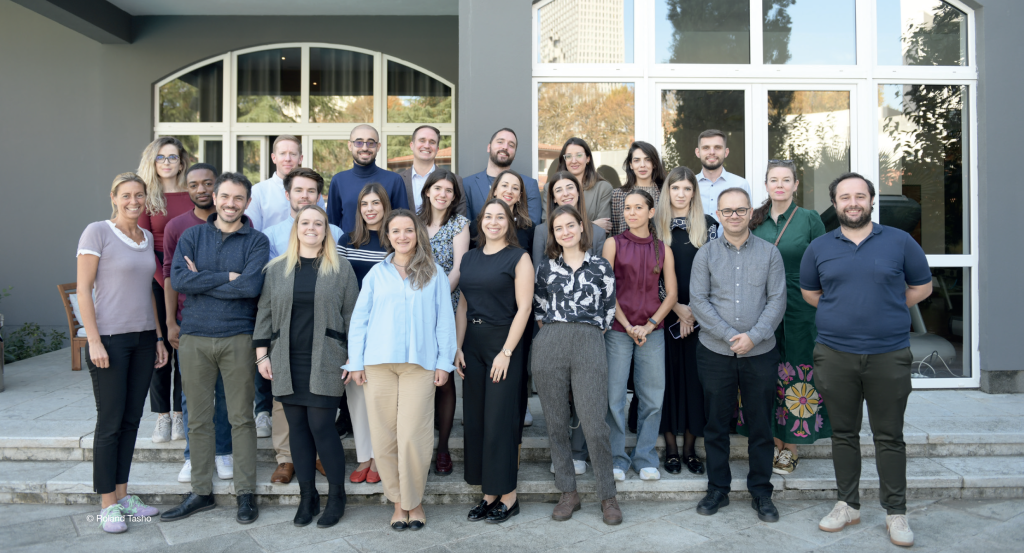
The initiative, titled Solidarity in Action, was launched in 2025 by Aspen Institute Germany in cooperation with the Aspen Strategy Group, Aspen Institute Romania, and Aspen Institute Italia. It brought together 20 emerging civil society leaders from the Western Balkans, the United States, and the European Union to develop policy recommendations addressing the region’s most pressing political and socio-economic challenges.
Through a series of virtual discussions and a working meeting in Tirana, participants produced a set of action-oriented proposals intended for policymakers on both sides of the Atlantic. The recommendations aim to strengthen cooperation at a time when diverging priorities between Washington and Brussels threaten to weaken their traditionally close partnership in the region.
The publication identifies three major challenges facing the Western Balkans: structural inequalities and limited opportunities for youth and marginalized communities, declining accountability and transparency, and weakening social cohesion within and between countries.
Among the key proposals is the creation of transatlantic public–private partnerships to expand merit-based traineeships and employment opportunities for young people. The initiative also calls for the establishment of regional civic service and mobility programmes designed to promote community development and cross-border cooperation.
To address governance concerns, the recommendations include strengthening investment screening mechanisms and transparency standards to reduce vulnerability to foreign influence. The report also proposes the development of digital tools that would allow citizens to monitor government decision-making and hold institutions accountable.
In addition, the initiative emphasizes the need to reinforce regional cooperation frameworks, including data-sharing systems and reconciliation programmes, in order to rebuild trust across societies and national borders.
To enable data-driven policymaking, the U.S. State Department and the European Commission’s Directorate-General for Digital Services (DG DIGIT) should support national ministries and statistical institutions in the Western Balkans in developing, within the next five years, an intra-regional mechanism for exchanging and comparing standardized socioeconomic data.
The aim is to improve the analytical use of harmonized statistics through simple, comparable reporting formats, allowing comprehensive assessments of regional cohesion, trust, and governance. The recommendations also call for the prompt establishment of a staff exchange program to strengthen mutual learning and enhance regional cooperation in data collection and interpretation.
Within the next year, the institutions should provide technical assistance to map existing datasets, methodologies, and reporting systems, identify inconsistencies and gaps, and develop a regional methodological framework for standardized data collection and protection. The mechanism should also include a publicly accessible digital platform, modeled on the Digital Economy and Society Index Dashboard, to visualize and share non-confidential data with the public, civil society, and academic institutions.
At the same time, Western Balkan governments, in coordination with the Western Balkans Fund and the Regional Youth Cooperation Office (RYCO), should establish a dedicated fund within the next five years to support reconciliation and transitional justice initiatives. Managed by a consortium of civil society organizations, the fund would support structured dialogue, joint activities, and community-building efforts aimed at addressing the legacy of past conflicts and fostering peace across the region.
These initiatives should be implemented by civil society organizations in cooperation with local authorities, educational institutions, cultural centers, and faith-based groups through small-group dialogues, workshops, exchanges, and community activities. Between the second and third years, trained facilitators should be selected and supported through specialized training programs to deliver peace education, mediation, and psychological support, ensuring that sensitive issues are addressed in a safe and ethical manner.
Stormy-Annika Mildner, Executive Director of Aspen Institute Germany, said the initiative reflects the urgency of renewed transatlantic engagement in the region.
“Amid growing international tensions and widespread polarization, initiatives like Solidarity in Action are more needed than ever to show that the transatlantic partnership can and must be strengthened to advance peace and stability in the Western Balkans and beyond,” Mildner said.
The authors of the publication argue that closer cooperation between the United States, the European Union, and regional actors will be essential to support democratic institutions, counter external influence, and ensure long-term stability in the Western Balkans.