One of the many questions raised by the landslide election victory of the opposition Tisza party on 12 April, which ended the 16-year rule of Viktor Orbán’s Fidesz, concerns the impact of the change of government in Budapest on Hungarian communities in neighbouring countries, including those living in the Serbian province of Vojvodina. While Hungary’s support for these communities is expected to continue, its potential redistribution and reorganisation have created expectations that political dynamics within these communities might change.
“I will cooperate with the Alliance of Vojvodina Hungarians, despite the fact that they fully supported the campaign of Viktor Orbán, contrary to the position of many Hungarians from Vojvodina… They will continue to receive the same support as before, but the money they receive will no longer be largely embezzled by people close to Viktor Orbán, but will actually reach Hungarians”, said the Prime Minister-elect of Hungary Péter Magyar during his press conference on 13 April.
For years, the Alliance of Vojvodina Hungarians (VMSZ) has been the dominant party within the Vojvodina Hungarian community, which numbers around 180,000 citizens. It has served as the only Hungarian party represented in the national and provincial parliaments, as well as in almost all local assemblies.
The level of dominance enjoyed by VMSZ among Hungarians contrasts with the more competitive political environments among some other national minorities in Serbia, including the Bosniak and Albanian communities. According to analysts, this consolidation of power has been achieved in large part thanks to the support of Orbán’s government.
One of the most frequently cited examples is the financing of the Prosperitati Foundation, whose goal is to strengthen the economic position of Hungarians in Serbia. VMSZ has been accused of using the foundation to build a clientelist network. Another example has been the financial support provided by the Hungarian state-owned Bethlen Gábor Foundation to Hungarian-language media in Serbia close to VMSZ.
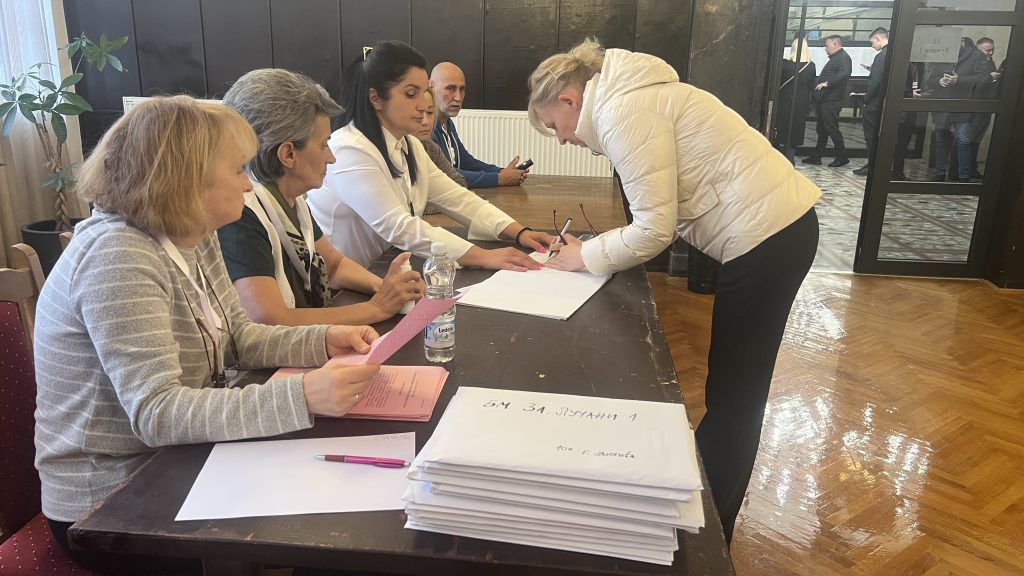
In return for Budapest’s backing, the Alliance of Vojvodina Hungarians has acted as a reliable machine for delivering tens of thousands of postal votes for Fidesz in Hungarian elections. On the night of 12 April, VMSZ leader Bálint Pásztor posted on his Facebook page that more than 60,000 Hungarians from Vojvodina had voted for Fidesz in the parliamentary election.
This, however, was not enough to prevent a convincing defeat of the Hungarian ruling party. Video footage released by Serbian media, showing Pásztor and VMSZ Vice-President Elvira Kovács leaving Fidesz headquarters on election night in a gloomy mood, attracted considerable attention.
Speculation that the incoming government of Péter Magyar could reshape its policy toward Hungarians abroad has sparked hope not only among opposition-minded Hungarians in Serbia, but also among opponents of the ruling Serbian Progressive Party (SNS) more broadly. With its six MPs, VMSZ supports the current SNS-led government at the national level, and its backing could become even more crucial after the next parliamentary election, in which SNS is expected to face its strongest challenge yet.
Some opposition commentators were quick to speculate that VMSZ might immediately exit coalitions with SNS in Vojvodina municipalities, which would lead to changes in local governments in several of them.
On 15 April, however, Bálint Pásztor confirmed that VMSZ would remain in coalition with SNS. He thanked Viktor Orbán for 16 years of cooperation, but also stated that his party would seek to cooperate with Hungary’s new government.
“I spoke today on the phone with Péter Magyar, and we will begin personal consultations in Budapest, in the interest of the Hungarian community in Vojvodina, even before he takes office as Prime Minister,” Pásztor wrote.
Opposition groups within the Hungarian community are nevertheless raising their voice. On 18 April, a new organisation was formed – Vojvodina Hungarian Relaunch – bringing together several existing groups, including the so-called “Tisza Islands” in Serbia. They released a nine-point manifesto expressing their intention to take part in the “system change” promoted by Tisza.
“We expect the leadership of VMSZ to accept responsibility for manipulating Hungarian voters in Vojvodina, deceiving them, and serving the authoritarian politics of the past two decades on both the Hungarian and Serbian sides by resigning,” one of the points reads.
The new organization also called for full independence of Hungarian media, depoliticization of cultural, educational, and academic networks, and accountability for the Prosperitati Foundation.
The following weeks and months will apparently be crucial for defining the future relations between the Magyar government and Hungarian communities abroad. Zsuzsanna Végh, program officer at the German Marshall Fund of the United States, says for European Western Balkans that Magyar pledged to support Hungarian communities in neighbouring countries, but that he also wants to do away with any potential corrupt practices in such relations.
“Early indications suggest that he and his foreign minister designate would want to depoliticise these relationships – including those with the neighbouring countries and return to minority rights support and pragmatic cooperation respectively, instead of instrumentalizing the minority issue”, Végh says. She adds that this is most relevant regarding Ukraine.
Csaba Pressburger, a journalist from Vojvodina, stresses that the differences between Tisza and Fidesz regarding the support for Hungarians living abroad are not particularly stark.
“There is no question of stripping Hungarians living outside the borders of the citizenship they received during the time of Viktor Orbán, nor of the voting rights that come with it. A similar approach applies to the support policy: however, it is announced that financial assistance will in the future be provided through a transparent system and will not be distributed based on political criteria”, Pressburger says.
While he recalls that Bálint Pásztor called Péter Magyar a “charlatan” on the eve of the election, he believes that, at the moment, cooperation between Tisza and VMSZ is inevitable.
“But it is almost certain that the new Hungarian government will not leave that party full control over the distribution of funds coming from Hungary. And the position of the Alliance of Vojvodina Hungarians will largely depend on what kind of relationship Magyar manages and wants to build with the regime of Aleksandar Vučić, of which Pásztor’s party is an integral part”, Pressburger concludes.
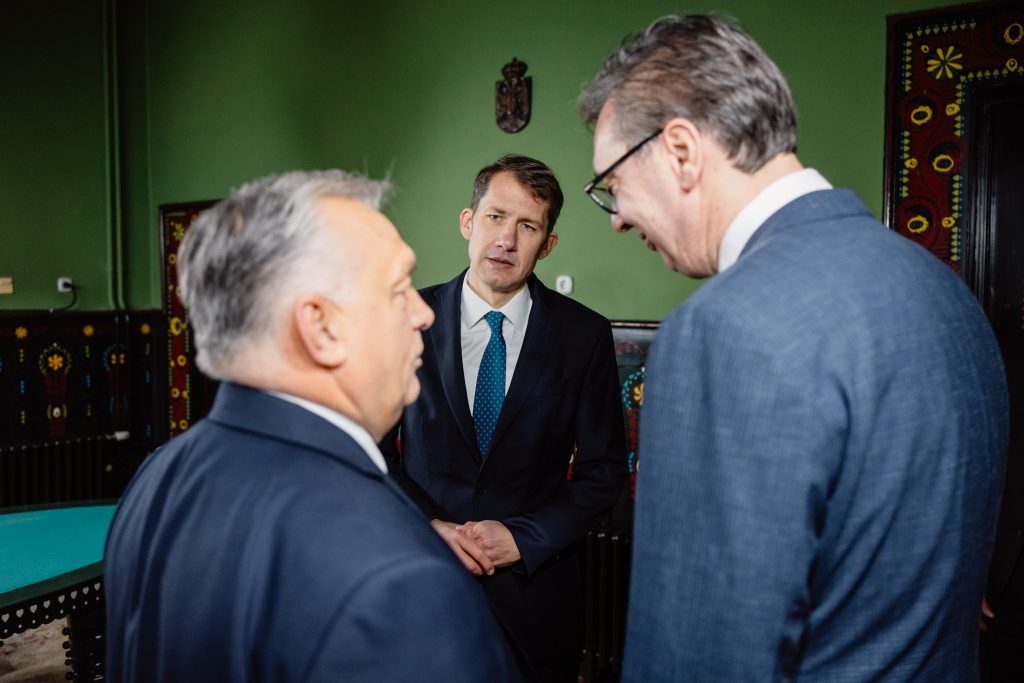
President Vučić – a longtime Orbán ally – and incoming Prime Minister Magyar seemingly got off to a bad start, trading not-very-friendly remarks the day after the election. One of the initial stumbling blocks between the two leaders will be the investigation into the case of an explosive found near the Serbian-Hungarian pipeline one week before the election, which many described as a political “false flag” operation.
Nevertheless, several commentators in the days following the election have expressed a belief in the pragmatism of both sides, suggesting that cooperation at the government level is still likely.